Why Is My Dishwasher Pod Not Dissolving? Top Fixes Explained
Your dishwasher pod doesn’t dissolve because it’s not getting enough water flow or heat to break down its film. The most common culprits are a clogged spray arm, a blocked detergent door, water that’s not hot enough, or a door latch that opens too soon.
We dug into the research and found that pods fail for a handful of very fixable reasons. Stuff like hard water buildup, overloading the racks, or even how you store your pods can all play a role. Many experts also point to wet or clumped pods, which fuse together before the cycle even starts.
Here’s the quick rundown:
- Poor water flow from clogged or worn spray arms is the top reason pods don’t dissolve.
- Water below about 120°F can’t fully break down the pod’s outer film.
- Blocked detergent doors and overcrowded racks stop the pod from releasing properly.
- Storing pods somewhere humid makes them stick together and dissolve unevenly.
- Most fixes take under ten minutes and don’t require any tools.
Below, we walk through each cause step by step and show you exactly how to fix it. By the end, your pods will dissolve like they’re supposed to — and your dishes will actually come out clean. If dishes still come out dirty after fixing the pod, our dishwasher cleaning troubleshooting guide covers the next checks.
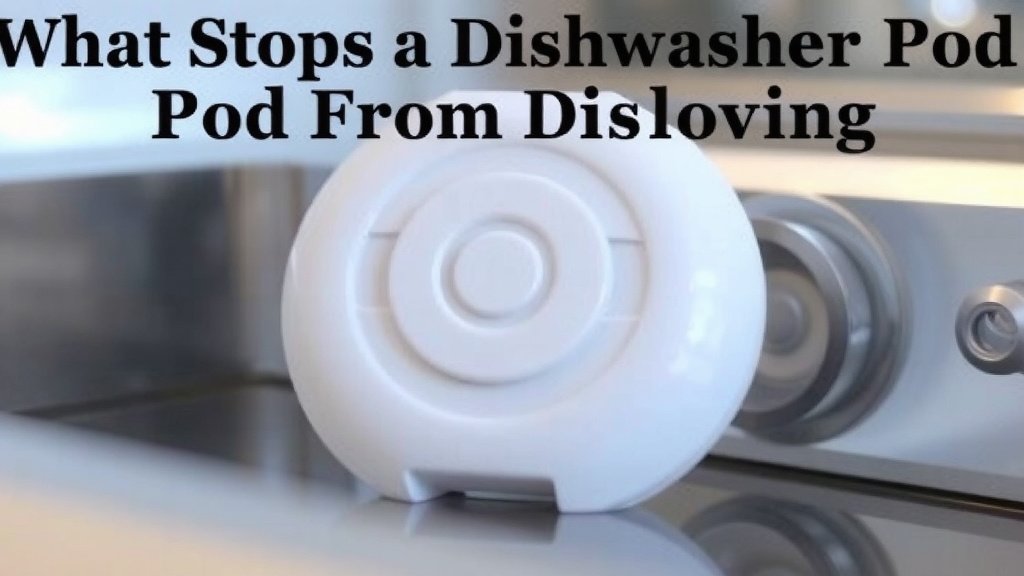
What Stops a Dishwasher Pod From Dissolving
The short answer: your pod needs hot water, good spray, and enough room to work. Take away any of those three, and the pod just sits there like a stubborn piece of candy.
We dug into the research and found that most pod failures come down to a handful of fixable issues. Let’s walk through each one, starting with the biggest culprit.
Clogged or Worn Spray Arms
Your spray arms are the little spinning fans under the racks. When they clog with food bits or hard water deposits, water can’t reach the detergent door. No water on the pod means no dissolving.
Many experts recommend checking the spray arm holes first. Pop the arm off if you can, rinse it under warm water, and poke debris out of the holes with a toothpick. It takes about five minutes.
Quick Spray Arm Test
Run an empty cycle and crack the door open after a few minutes. If the arms aren’t spinning or spraying, you’ve found your problem. Sometimes a worn bearing makes the arm wobble instead of spin, which means it’s time for a replacement part.
Blocked Detergent Door
Your detergent door pops open partway through the cycle to release the pod. If a pan lid or cookie sheet sits in front of it, the pod gets trapped. It dissolves slowly, or not at all.
We found that this is the number one user error — and honestly, the easiest to fix. Load big items on the back or sides of the bottom rack. Keep the area around the door clear.
How to Check Your Door Release
- Open the door and locate the detergent dispenser flap.
- Look for old detergent gunk or a stuck latch.
- Wipe the flap clean with a damp cloth.
- Run a cycle and listen for the door “click.”
That click matters. If you never hear it, the latch may be broken or misaligned and needs attention.
Water Temperature Problems
Pods need water around 120°F to fully dissolve their polyvinyl film. Cooler water leaves behind that annoying gel blob stuck to your dishes or the door.
The U.S. Department of Energy notes that many dishwashers heat water internally, but only if your home’s water heater supplies enough heat to begin with. If your heater is set low, the dishwasher can’t catch up. Our guide to how dishwashers get hot water explains the heater settings and internal elements behind this.
Fixing Cold Water at the Start
Here’s a trick that works: run the kitchen faucet on hot for a few seconds before starting the cycle. This clears the cold water sitting in the pipes, so your dishwasher’s first fill is already warm.
It sounds silly. But it saves the pod from sitting in lukewarm water for the first ten minutes of the cycle.
Hard Water and Mineral Buildup
If you live in an area with hard water, minerals coat everything inside your dishwasher. That includes the spray arms, filters, and even the pod itself as it dissolves.
The CDC notes that hard water is common across much of the United States, especially in the Midwest and Southwest. Minerals like calcium and magnesium interfere with detergent, making it less effective.
Cleaning the Filter and Interior
Twist out the filter at the bottom of your tub and rinse it under hot water. Use an old toothbrush and a little dish soap. A clogged filter recycles dirty water, which coats your pod in grease and grime.
Run an empty cycle with a dishwasher cleaner tablet once a month. It melts mineral buildup in places you can’t reach by hand.
Overloading and Poor Loading Habits
We get it — nobody wants to run two loads. But stuffing the racks blocks water from reaching the pod and from rinsing the dishes after it dissolves.
Water needs room to move. Think of it like a sprinkler in a crowded parking lot. If cars (pots and pans) park over every spray zone, nothing underneath gets wet.
Smart Loading Checklist
- Big items go on the sides and back of the bottom rack.
- Bowls face down and angled inward.
- Nothing blocks the detergent door.
- Leave gaps between dishes for water to flow.
- Utensil basket isn’t packed solid with spoons nesting together.
- Spray arms spin freely by hand before you start.
Storage Issues That Ruin Pods
Pods are coated in a water-soluble film called PVA or PVOH. It’s designed to dissolve — which is great in the wash and terrible in a humid kitchen.
If you store pods under the sink next to a leaky pipe or above a steaming dishwasher vent, they absorb moisture. They clump, fuse, and dissolve unevenly later.
Best Way to Store Pods
Keep them in their original sealed container or an airtight tub. Store them in a cool, dry cupboard away from the dishwasher itself. Research on PVA films shows they begin breaking down the moment they meet humidity, even in the air.
And one more thing: always dry your hands before grabbing a pod. Wet fingers start the dissolving process early.
Cycle Selection and Timing
Quick wash and eco cycles use less water and lower heat. That’s great for your energy bill, bad for pods. We found that many pod complaints trace back to short cycles that simply don’t run long enough.
Matching the Cycle to the Load
| Cycle Type | Pod Dissolves? | Best For |
|---|---|---|
| Normal / Auto | Yes | Everyday loads |
| Heavy / Pots & Pans | Yes, best | Greasy, baked-on messes |
| Quick / Express | Often not | Lightly soiled dishes only |
| Eco / Energy Saver | Sometimes | Full loads, extra rinse help |
If your pod keeps failing on a quick cycle, switch to normal. Problem solved more often than not.
When the Dishwasher Itself Is the Problem
Sometimes it’s not you — it’s the machine. A weak water inlet valve, a failing heating element, or a broken dispenser spring can all stop pods from dissolving.
Signs You Need a Repair
- Water pools at the bottom after cycles.
- Dishes feel cold right when the cycle ends.
- The detergent flap never opens.
- You hear the fill valve struggle or hum.
Many manufacturers publish free diagnostic guides on their support sites. Check yours before calling a tech — you might fix it yourself in ten minutes.
Conclusion
Most of the time, a pod that won’t dissolve isn’t a mystery or a broken machine. It’s water flow, water temperature, or loading habits getting in the way. Start with the simple stuff: check your spray arms, clear the area around the detergent door, and run the kitchen faucet hot before you start a cycle. Then make sure your pods live in a dry spot instead of a steamy cabinet under the sink. We dug into the research and found these small fixes solve the majority of pod problems without a single tool. So here’s your next step: open your dishwasher right now and spin the spray arms by hand. If they move freely, run a normal cycle with a fresh, dry pod and see the difference for yourself.
Frequently Asked Questions
Can I just throw the pod in the bottom of the dishwasher instead of the dispenser?
You can, and some people swear by it. Dropping the pod into the tub’s bottom lets hot water hit it sooner, so it often dissolves faster. The trade-off is that detergent releases at the start of the cycle instead of at the ideal time, which can slightly affect cleaning on very dirty loads.
Why is there a sticky gel blob left on my dishes or the door?
That blob is undissolved PVA film, usually from water that never got hot enough or a pod that fell against a dish. Scrape it off with a damp sponge and rewash the item. Then try the hot-faucet trick before your next cycle to prevent a repeat.
Are gel packs or powder a better choice than pods?
Powder is the most forgiving option because it dissolves even in cooler, shorter cycles. Gel packs fall somewhere in between. If your home has hard water or you like quick wash cycles, powder may give you more consistent results than pods.
Can expired or old pods stop dissolving properly?
Yes. Pods lose their punch over time, especially after a year or more in humid conditions. The film can degrade and the detergent inside can clump. If your box has been open for ages, buy a fresh container before troubleshooting your machine.
Should I use two pods for really dirty loads?
No. Two pods won’t dissolve any better than one, and you risk leaving suds and film behind on everything. Instead, use a heavy or pots-and-pans cycle, scrape food off first, and give your spray arms a quick clean if they look grimy.