Why Your Dishes Feel Gritty After the Dishwasher: 7 Causes
Your dishwasher dishes feel gritty because of hard water minerals and leftover food particles that redeposit during the wash cycle. Low water temperature, too much or too little detergent, and a dirty filter can also leave that annoying sandy film behind.
Why does it seem to happen on the “clean” plates only? It turns out the grit often comes from your dishwasher filter getting clogged, or from hard water leaving calcium deposits as dishes dry. Many experts say these two culprits cause most gritty dish complaints in US homes.
TL;DR — Quick answers:
- Hard water minerals can leave a chalky, sandy coating on dishes.
- A clogged dishwasher filter recirculates food bits back onto your plates.
- Overloading the racks stops water from rinsing dishes properly.
- Wrong detergent amounts — too much or too little — often cause residue.
- Simple fixes like cleaning the filter and using rinse aid usually solve it.
We researched the most common causes and fixes, so you don’t have to guess. Below, we break down exactly why this happens and how to get your dishes genuinely clean again.
What That Grit on Your Dishes Actually Is
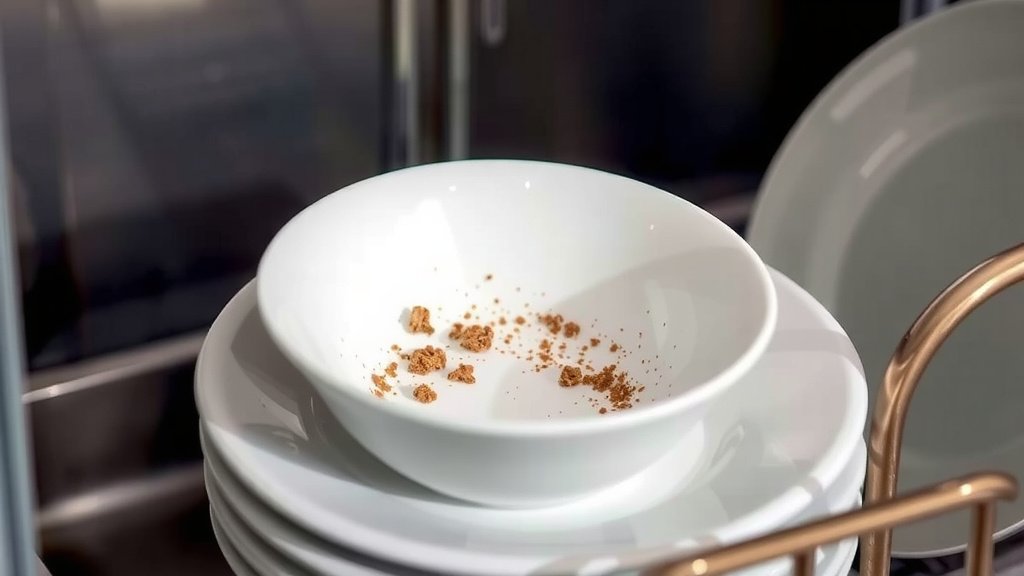
That sandy stuff on your plates is usually a mix of calcium deposits and tiny food particles that never made it down the drain. Sometimes it’s undissolved detergent powder. All three feel gritty, but they have different fixes.
Here’s a quick way to tell them apart. Rub a little white vinegar on the gritty spot. If it fizzes away or wipes clean easily, you’re dealing with hard water minerals. If it smears or smells like food, it’s debris from the filter.
Why does this matter? Because treating the wrong cause is like taking cold medicine for a broken leg. You’ll feel busy, but nothing gets better.
Hard Water: The Sneaky Mineral Culprit
About 85% of US homes have hard water, according to the US Geological Survey. That means your tap water carries extra calcium and magnesium. When dishes air dry, those minerals stay behind as a chalky, sandy film.
Hard water also makes detergent less effective. The minerals bind with soap before it can clean anything. So your dishes get hit twice: less cleaning power plus more leftover film.
How to Confirm You Have Hard Water
Not sure if hard water is your problem? Look for these signs around your kitchen:
- White spots on glasses, even right after washing.
- Chalky buildup on your faucet or showerhead.
- Soap that barely lathers in the sink.
- Scale inside your kettle or coffee maker.
If you checked two or more boxes, hard water is likely part of your gritty dish story. Many water utility websites also post local hardness data, so a quick search with your zip code can confirm it.
Fixes That Actually Work for Mineral Film
Use Rinse Aid Every Single Load
Rinse aid helps water sheet off dishes instead of pooling and drying into spots. It’s the single cheapest fix for mineral film. Most dishwashers have a dispenser you fill once a month or so.
Add a Dishwasher Cleaner Monthly
Run an empty cycle with a dishwasher cleaning tablet once a month. This dissolves mineral buildup inside the machine itself, so it stops redepositing on your dishes.
Consider a Water Softener
If your water is extremely hard, a whole-home softener is the long-term answer. It’s an investment, but it protects your appliances too. The CDC notes that softened water poses no health concerns for most people, though those on low-sodium diets sometimes discuss options with their doctor.
Your Dishwasher Filter Is Probably the Real Problem
We’ll be honest with you. When we researched gritty dish complaints, the clogged filter came up again and again. Every modern dishwasher has a filter at the bottom that catches food bits. If you never clean it, that food gets sprayed right back onto your “clean” plates.
Think of it like running your laundry with a full lint trap. Everything comes out worse than when it went in. Gross, right?
How to Clean Your Dishwasher Filter (5 Minutes, We Promise)
- Pull out the bottom rack so you can see the floor of the tub.
- Twist the round filter assembly counterclockwise and lift it out.
- Rinse it under hot water in your sink.
- Scrub gently with an old toothbrush and a drop of dish soap.
- Rinse again, then twist it back in until it locks.
Many manufacturers suggest cleaning the filter every one to three months. If you run loads daily or skip pre-rinsing, aim for monthly. Your plates will thank you.
Detergent Mistakes That Leave a Sandy Coating
More detergent does not mean cleaner dishes. We found that both too much and too little detergent cause residue. Too much leaves undissolved powder grit. Too little lets food and minerals settle on everything.
Powder detergent is a common offender here. If it doesn’t fully dissolve, you get literal sand on your spoons. Gel and pods dissolve more reliably in most machines.
Getting the Detergent Amount Right
- Use one pod per load. Never two, no matter how dirty the dishes.
- With powder, start with one tablespoon and adjust from there.
- Fill the detergent cup only, not the tub floor.
- Store detergent in a cool, dry place. Clumpy detergent dissolves poorly.
If you have soft water, use even less detergent. Soft water cleans with far less soap, so extra product just becomes residue.
Water Temperature: The Silent Dealbreaker
Your dishwasher needs water at least 120°F to dissolve grease and detergent properly. Cooler water leaves detergent undissolved, and that powder hardens into grit on your dishes. If pods are the issue, our pod not dissolving guide walks through temperature and placement fixes.
Here’s a simple test. Run the hot water at your kitchen sink before starting a cycle. If it doesn’t feel hot after a minute, your water heater may be set too low, or the run from the heater is just long. Pre-flushing the line with hot tap water fixes this instantly.
Many appliance makers also recommend checking your home’s water heater setting. Keep it near 120°F. That’s hot enough to clean, cool enough to be safe, since the Mayo Clinic warns about scald risks at higher settings, especially with kids around.
Overloading and Bad Loading Habits
Cramming every dish into one load is tempting. But overloaded racks block the spray arms, and blocked sprays mean unrinsed residue. Dishes nest together like spoons in a drawer, and nothing between them gets clean.
Try this quick checklist before every load:
- Spin the spray arms by hand. Nothing should block them.
- Face dirty surfaces toward the center spray.
- Keep big items like cutting boards out of the way.
- Don’t let plates touch or nest together.
- Put bowls and cups upside down so water drains off.
- Load silverware loosely, mixed handles up and down.
A few extra minutes of smart loading saves you from re-washing an entire rack later. That’s math we can get behind.
When the Dishwasher Itself Needs Attention
Sometimes the machine is the problem, not your habits. A worn spray arm, a weak drain pump, or a broken heating element can all leave grit behind. If your dishes come out cool and wet, the heating element may be failing, and wet dishes collect mineral residue as they sit.
Use this table to match what you’re seeing with the likely cause:
| What You Notice | Likely Cause | First Fix to Try |
|---|---|---|
| Chalky white film | Hard water minerals | Rinse aid + monthly cleaner |
| Food bits stuck on plates | Clogged filter | Clean the filter now |
| Powder clumps on utensils | Undissolved detergent | Use less; check water temp |
| Grit only on top rack | Blocked spray arm | Reload and clear the arms |
| Grit plus cold, wet dishes | Heating element issue | Call a repair tech |
Your Quick Weekly Grit-Prevention Routine
Once you know the causes, prevention takes almost no time. Here’s the short version we recommend:
- Rinse the filter every two to four weeks.
- Keep the rinse aid dispenser topped up.
- Run hot tap water before starting each cycle.
- Use one pod or one tablespoon of detergent, max.
- Run a dishwasher cleaner tablet monthly.
- Load racks loosely and check the spray arms spin freely.
Do these six things, and gritty dishes become a rare event instead of a daily annoyance. Your glassware might even squeak again, in the good way.
Conclusion
Gritty dishes almost always come down to one of a few fixable issues: hard water minerals, a dirty filter, wrong detergent amounts, cool water, or overcrowded racks. We found that the filter and rinse aid are the two biggest wins for most homes. You don’t need a new dishwasher to solve this. Start small: pull out that filter tonight, give it a rinse, and top off your rinse aid dispenser. Then run your next load with one pod and hot water. If the grit still shows up after a week of these fixes, it’s time to look at your water hardness or call in a repair tech. Your dishes deserve better than a sandy coating.
Frequently Asked Questions
Can I use vinegar in my dishwasher to fix gritty dishes?
Yes, but use it carefully. Place a bowl of white vinegar on the top rack and run a hot cycle to dissolve mineral buildup. Skip the vinegar if your machine has rubber seals the manufacturer warns about, since frequent acid exposure can wear them down over time.
Why do my dishes feel gritty even after switching to pods?
Pods dissolve well, but they can’t fix a clogged filter or hard water on their own. If grit persists after switching detergents, the problem is likely inside the machine or in your water supply. Clean the filter and add rinse aid before blaming the pod.
Is gritty residue on dishes harmful to my health?
Generally, no. Mineral film and small food particles aren’t dangerous, though they’re unpleasant. People with sensitive stomachs or weakened immune systems may prefer to rewash dishes until the issue is fixed, just to be safe.
Should I pre-rinse dishes before loading the dishwasher?
A full pre-rinse isn’t necessary with modern machines and detergents, which actually need some food soil to work well. But scraping off large chunks helps your filter keep up. A quick scrape is the sweet spot between clean dishes and a clean machine.
How often should I deep clean my dishwasher?
We recommend a monthly deep clean with a dishwasher cleaning tablet, plus a quick filter rinse every two to four weeks. If you notice odors, standing water, or returning grit, don’t wait for the schedule. Clean it right away and the machine will reward you.