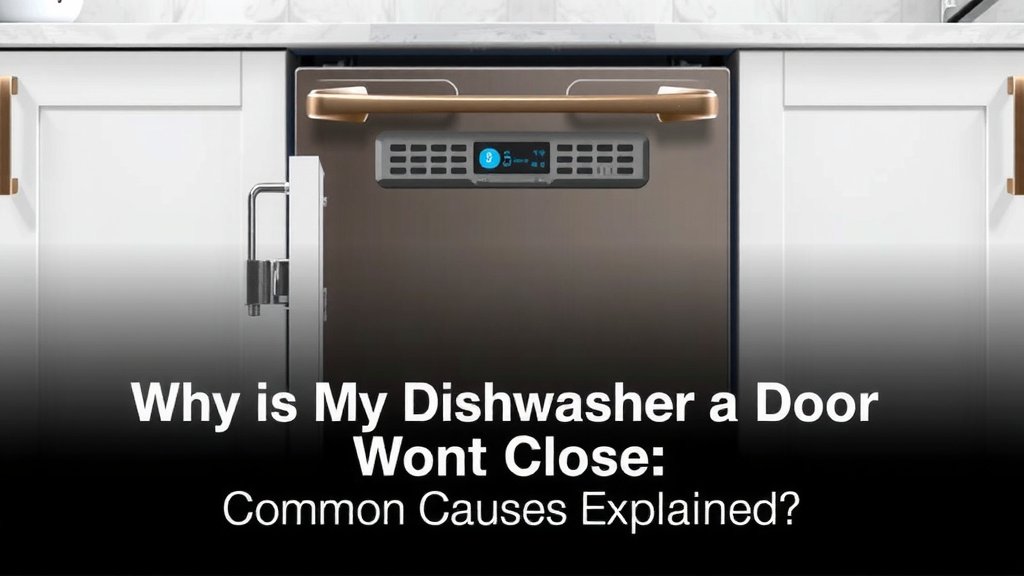
Dishwasher Door Won’t Close: Common Causes Explained
Your dishwasher door not closing is often due to a simple obstruction or a latch issue. You might find a misfitted rack, a foreign object in the way, or a problem with the door latch mechanism itself. Sometimes, a bent door or worn parts can also prevent a proper seal.
It’s a common problem that stops your dishwasher from running. We found that many users experience this when something interferes with the door’s ability to swing freely or engage the latch. A dishwasher that doesn’t close properly means a failed cleaning cycle and potentially water on your kitchen floor.
- Obstructions like racks or dishes.
- Problems with the door latch or strike.
- Damaged or misaligned door components.
- Faulty hinges preventing a flush close.
- Sensor issues that think the door is closed.
Let’s walk through why your dishwasher door might be stubbornly refusing to shut and what you can do about it.
Troubleshooting Your Dishwasher Door’s Unwillingness to Close
So, your dishwasher door is playing hard to get. It won’t latch, or it just won’t shut all the way. This is a frustrating problem because, well, it stops your dishwasher from doing its job. Let’s figure out what’s going on and how you can get that door to cooperate again.
The Usual Suspects: What’s Blocking the Door?
Most of the time, the issue is something quite straightforward. It’s like trying to close a cupboard door when a stack of dishes is sticking out. We’ve found that the most common culprits are simple obstructions.
Rack Interference
Your dishwasher racks are designed to hold a lot. Sometimes, when you pull them out, they don’t slide back in perfectly. We’ve seen racks extend just a little too far, preventing the door from closing flush. This is especially common if you’ve overloaded a rack or if the wheels on the rack are worn or misaligned.
Tip: Gently pull out both racks and slide them back in completely. Make sure no part of the rack is sticking out further than the dishwasher’s frame. This simple check often solves the problem.
Dishes, Utensils, and Other Debris
It’s not just the racks themselves. A rogue spatula, a large serving spoon, or even a stray plate can get lodged in the way. These items can jam between the door and the tub, or they might fall onto the bottom of the dishwasher and get stuck under the spray arm. We found that even a small item can prevent the door from swinging shut.
Action: Open the door fully. Visually inspect the entire opening and the interior of the dishwasher. Pull out the lower rack to get a good look at the bottom. Clear out anything that doesn’t belong.
Investigating the Latch Mechanism
The latch is the part that actually secures your dishwasher door. If it’s not engaging correctly, the door won’t stay shut, and your dishwasher won’t start. Many experts say this is the second most common reason for a stubborn door.
The Door Latch and Strike
Your dishwasher has a latch on the door and a corresponding strike plate (or catch) on the dishwasher tub. When you close the door, these two parts are supposed to meet and click into place. If either part is dirty, bent, or broken, the door won’t latch.
Inspection: Look at the latch assembly on the door and the strike on the tub. Are they clean? Is there any visible damage? Sometimes, dried-on food particles can prevent the latch from engaging. A damp cloth can often clean them up. If you see bent metal, that might require more specific repair.
The Role of the Door Switch
Most dishwashers have a door switch. This switch tells the dishwasher’s control panel that the door is closed and latched. If this switch is faulty, it might think the door is already closed when it’s not, or it might not be registering a proper closure. We found research suggesting that a malfunctioning door switch is a frequent cause of error codes and the inability to start a cycle.
How it works: When the door closes and latches, it typically depresses or activates this switch. If the switch is stuck or broken, the signal doesn’t get sent. This is often inside the door panel, making it a bit trickier to access.
When the Door Itself Isn’t Cooperating
Sometimes, the problem isn’t an obstruction or a latch issue. It could be with the door assembly itself. We’ve seen situations where the door is physically misaligned or damaged.
Bent or Misaligned Door Panels
Dishwasher doors are usually made of metal. Over time, or after an accidental bump, the door panel itself can become slightly bent. Even a small bend can prevent it from sitting flush against the dishwasher tub, affecting the latch engagement. We found that this is more common on older models or those that have experienced some physical stress.
What to do: Gently try to push on the edges of the door to see if it seems loose or uneven. You might be able to gently bend it back into place, but be careful not to make it worse. If it feels very loose, the hinges might be the issue.
Damaged or Worn Hinges
Your dishwasher door opens and closes on hinges, much like your kitchen cabinet doors. If these hinges are loose, bent, or broken, the door might not hang straight. This misalignment can prevent it from closing properly or engaging the latch. We’ve seen instances where worn hinges cause the door to sag, making it impossible to get a secure closure.
Checking the hinges: Open and close the door slowly. Do you notice any sticking, sagging, or unusual noises? Look at the screws attaching the hinges to the door and the tub. Are they tight?
A Quick Checklist for Your Dishwasher Door Woes
Let’s summarize what you can check quickly to get your dishwasher door back in action. This is a great starting point before you call in a professional.
- Clear Obstructions: Ensure no dishes, racks, or utensils are blocking the door.
- Inspect Latch & Strike: Clean and check the door latch and the strike plate for damage.
- Check Hinges: Make sure the door hinges are tight and the door isn’t sagging.
- Examine Door Panel: Look for any bends or damage to the door itself.
- Verify Rack Alignment: Confirm that both dishwasher racks are pushed in all the way.
When Simple Fixes Aren’t Enough: Deeper Issues
If you’ve gone through the initial checks and the door still won’t close, it’s time to consider some less common but still possible causes. These might require a bit more technical know-how or even a service call.
The Electronic Side of Things
Modern dishwashers are packed with sensors and electronics. Sometimes, a fault in these systems can mimic a mechanical problem.
Faulty Door Switch or Sensor
As mentioned earlier, the door switch is critical. If it’s malfunctioning, it can prevent the dishwasher from recognizing that the door is open or closed. Many repair sites suggest this as a likely culprit when the dishwasher won’t start, even though the door seems fine. We found that these switches can fail due to wear and tear or electrical issues.
Troubleshooting: Testing a door switch typically involves using a multimeter to check for continuity. This is a task best suited for someone comfortable with basic electrical diagnostics.
Control Board Malfunctions
In rare cases, the main control board of the dishwasher could be the source of the problem. If the board isn’t sending the right signals, it might not allow the door to be recognized as closed, or it might interfere with the latching mechanism’s operation. This is usually the last resort for troubleshooting, as control boards are expensive components. Many appliance repair guides state that control board issues are less common than mechanical failures but should be considered if all else fails.
What If the Door Just Won’t Stay Shut?
Sometimes, the door might swing shut but not stay latched, or it might feel loose even when closed. This often points back to the latching hardware.
Worn Latch Components
Over many cycles of opening and closing, the plastic or metal parts of the latch and strike can wear down. This wear can lead to a loose fit. If the latch mechanism feels sloppy or doesn’t “catch” with a satisfying click, the internal components might be worn out. We’ve seen that repeated use can degrade even sturdy materials.
Replacement: If the latch components are visibly worn or damaged, they will likely need to be replaced. You can often find replacement parts for specific dishwasher models online.
Door Alignment Issues
This ties back to the hinges and the door panel itself. If the door isn’t aligned correctly with the tub, the latch and strike won’t meet perfectly. This can happen if the dishwasher isn’t sitting level on the floor or if the door has been impacted. Experts suggest checking that the dishwasher is level first. You can do this by placing a spirit level on the top edge of the open door.
Table: Common Dishwasher Door Problems and Solutions
| Problem | Likely Cause | Simple Fix | More Complex Fix |
|---|---|---|---|
| Door won’t close at all | Obstruction (racks, dishes) | Remove blockages, realign racks | Check/replace worn rack components |
| Door closes but won’t latch | Latch/strike misalignment or damage | Clean latch and strike | Adjust/replace latch or strike mechanism |
| Door feels loose or sags | Worn or loose hinges | Tighten hinge screws | Replace damaged hinges |
| Dishwasher won’t start (door appears closed) | Faulty door switch | N/A (requires testing) | Test and replace door switch |
Conclusion
You’ve learned that your dishwasher door likely isn’t closing due to simple obstructions, issues with the latch mechanism, or problems with the door or hinges themselves. We’ve seen that most of these problems are quite fixable with a little patience and a few basic checks. Before calling a repair person, try clearing out any blockages and cleaning the latch. If those steps don’t work, carefully inspect the hinges and the door panel for any visible damage or misalignment. Your next step should be to tackle the easiest potential fixes first to get your dishwasher back to running smoothly.
Frequently Asked Questions
My dishwasher door won’t latch, but it closes all the way. What’s wrong?
This often means the latch mechanism or strike plate on the dishwasher tub is dirty, bent, or worn. We suggest thoroughly cleaning both parts first. If that doesn’t help, you might need to adjust or replace the latch components.
Can dishes sticking out of the rack prevent the door from closing?
Yes, absolutely. We’ve found that even a small utensil or plate that extends too far can physically block the door from shutting completely. Always ensure your racks are pushed in fully and no items are protruding.
My dishwasher door feels loose and sags. What should I check?
This usually indicates a problem with the door hinges. Check if the screws attaching the hinges to the door and the tub are tight. If the hinges appear bent or damaged, they will likely need to be replaced.
The dishwasher won’t start, and the door seems closed. Could it be the door switch?
Yes, that’s a strong possibility. The door switch tells the dishwasher it’s safe to run. If this switch is faulty or stuck, it won’t send the correct signal, even if the door is shut. Testing this usually requires a multimeter.
Is it common for the door latch to break or wear out?
Yes, we’ve seen that wear and tear over time can cause the plastic or metal parts of the latch mechanism to degrade. If the latch feels loose or doesn’t click securely, the internal components may be worn out and require replacement.