
Test Your Dishwasher Heating Element: A Simple Guide
Yes, you can test a dishwasher heating element yourself. It’s a common DIY fix for a dishwasher that isn’t heating water. You’ll typically use a multimeter to check for continuity. This process is often simpler than you think and can save you money on repair calls. Don’t let a cold wash cycle get you down!
A faulty heating element is a frequent culprit behind dishes coming out dirty or still wet. You might also notice your dishwasher isn’t finishing its cycle properly. Testing it helps you pinpoint the exact problem before buying expensive replacement parts. We’ve researched the common troubleshooting steps for this issue.
- The heating element heats your dishwasher’s water.
- A broken element means dirty or wet dishes.
- A multimeter is your best friend for testing.
- Checking continuity is the key step.
- DIY testing can save you money and time.
Let’s walk through how to safely test your dishwasher’s heating element step by step.
Troubleshooting Your Dishwasher’s Heating Issues
A dishwasher that isn’t heating water is a common headache. You’ve probably noticed dishes coming out less than sparkling. Maybe they’re still wet, or worse, greasy. This is often a sign of a problem with your dishwasher’s heating element. But before you call a repair person, you can often test this component yourself. We found that testing the heating element is one of the most **effective DIY fixes** for this issue.
What Does the Heating Element Do?
Your dishwasher’s heating element is basically a big resistor. When electricity flows through it, it gets hot. This heat is essential for a few key things during the wash cycle. It heats the water to the optimal temperature for cleaning. It also helps to dry your dishes at the end of the cycle. If this element isn’t working, your dishwasher can’t perform these vital tasks. Many appliance manuals confirm its role in both washing and drying phases.
Gathering Your Tools for the Test
Before you start poking around inside your dishwasher, you need the right tools. Safety is our top priority here. You’ll need a few basic items to make this test safe and accurate. We’ve found that having these on hand makes the process much smoother. Don’t worry, you likely have most of these in your home already.
The Essential Multimeter
The star of our testing show is the multimeter. This handy gadget measures electrical properties like voltage, current, and resistance. For our purpose, we’ll be using its resistance setting to check for continuity. Think of continuity as a continuous path for electricity. If there’s a break in the heating element, the multimeter will tell us. You can find a decent multimeter at most hardware stores or online retailers. We recommend one with an **auto-ranging feature** for easier use.
Other Necessary Items
Besides the multimeter, you’ll need a few other things. A screwdriver set is usually necessary to open up access panels on your dishwasher. You might need a Phillips head or a flathead, depending on the screws used. A flashlight is a must-have for seeing into those dark nooks and crannies. Lastly, some electrical tape can be useful for temporarily insulating wires if needed. Safety gloves are also a good idea to protect your hands.
Safety First: Preparing for the Test
Working with electricity can be dangerous if you’re not careful. So, let’s go over the safety steps. We cannot stress enough how important this part is. Your **personal safety** comes before anything else. Following these steps will help you avoid any shocks or injuries.
Disconnecting Power is Non-Negotiable
This is the most critical step. You absolutely must turn off the power to your dishwasher before you start. The easiest way to do this is by locating the circuit breaker for your dishwasher and flipping it to the OFF position. If you’re unsure which breaker it is, you can turn off the main breaker for your home, though this is less convenient. Some people prefer to simply unplug the dishwasher from the wall outlet if it’s accessible. Always double-check that the power is truly off. You can do this by trying to turn on the dishwasher after the breaker is off; nothing should happen.
Accessing the Heating Element
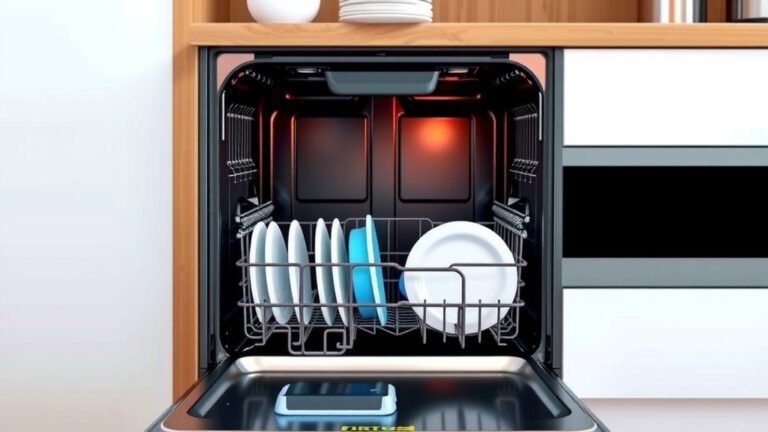
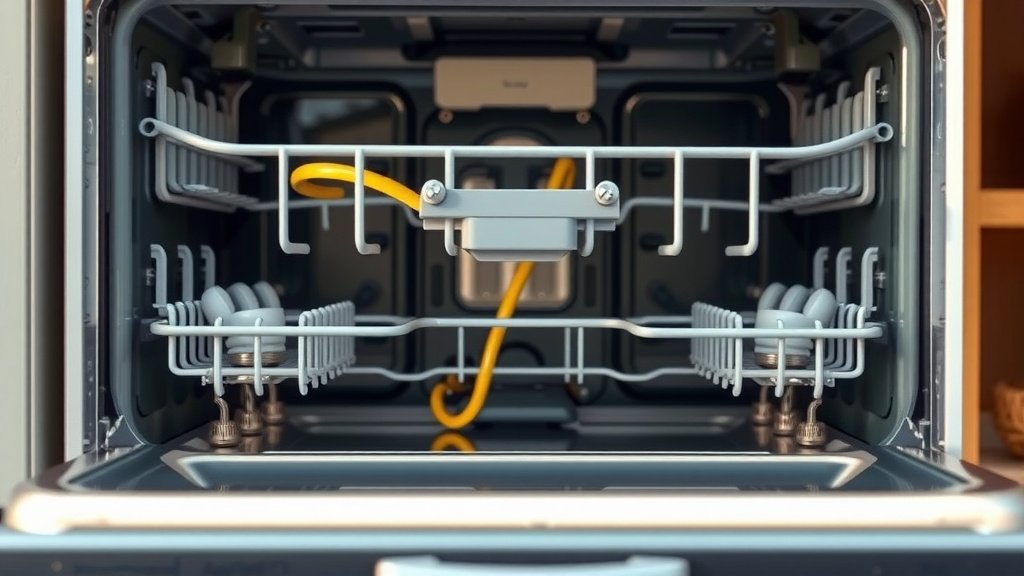
The heating element is usually located at the bottom of the dishwasher tub. You’ll likely need to remove one or more access panels to get to it. These panels are typically on the front or the back of the appliance. Consult your dishwasher’s user manual if you’re unsure where to find these panels or how to remove them. You’re looking for a metal, U-shaped or circular rod. It’s often mounted at the base of the dishwasher tub.
Performing the Continuity Test
Once you’ve safely accessed the heating element and confirmed the power is off, you’re ready to test. This is where your multimeter comes into play. We found that checking continuity is a straightforward process that provides clear results.
Understanding Resistance and Continuity
A heating element is essentially a wire coil that heats up. This coil has a specific electrical resistance. If the coil is intact, it will show a measurable resistance when tested. If the coil has broken somewhere inside, there will be no path for electricity to flow. This is what we call an “open circuit.” A multimeter set to resistance (often indicated by the Greek letter Omega, Ω) will show “OL” (Over Limit) or a very high, infinite reading if there’s no continuity. If it shows a low, finite number (typically between 20-50 ohms, but check your manual for specifics), the element has continuity.
Steps for Testing Continuity
Here’s how to perform the test:
- Set your multimeter: Turn the dial to the resistance (Ω) setting. Choose a range that will likely capture the element’s resistance, or use the auto-ranging feature if available.
- Locate the element’s terminals: On the back or bottom of the dishwasher, you’ll see the heating element connected by wires to electrical terminals.
- Disconnect wires: Carefully disconnect the wires from the heating element terminals. This is important so you’re only testing the element itself, not the entire circuit. You might need pliers or a screwdriver.
- Touch the probes: Place one multimeter probe firmly on one of the heating element’s terminals and the other probe on the second terminal.
- Read the display: Observe the reading on your multimeter.
Interpreting Your Results
After placing the probes, your multimeter will display a number.
- Good Element: If you get a reading within a reasonable range (e.g., 20-50 ohms, but always consult your manual for the exact spec), your heating element has continuity and is likely working fine.
- Bad Element: If the meter reads “OL,” “infinite,” or a very, very high number, the element is broken and needs replacement.
- Another Check: As an extra step, many experts recommend checking for a short to ground. Touch one probe to a terminal and the other probe to the metal body of the dishwasher. You should get an “OL” reading. If you get any resistance, the element is likely shorted and needs replacement.
If your heating element passes the continuity test, the problem lies elsewhere. This could be your dishwasher’s control board, thermostat, or wiring harness. But if it fails, you’ve found your culprit!
What to Do After Testing
So, you’ve tested your dishwasher’s heating element, and the results are in. Now what? The next steps depend entirely on what your multimeter told you. We found that understanding these follow-up actions is key to resolving your dishwasher’s heating problem efficiently.
If the Element is Good
If your test showed that the heating element has continuity, congratulations! You’ve ruled out a common cause. This means the issue is likely with another component. It could be the thermostat, which tells the element when to turn on and off. The main control board could also be faulty. Sometimes, a bad temperature sensor can cause problems. Checking these components usually requires more advanced electrical testing or consulting a repair professional. Many diagnostic guides suggest checking the thermostat and water inlet valve next if the element is functional.
If the Element is Bad
If your multimeter indicated that the heating element has no continuity, then you’ve likely found the reason for your cold wash cycles. The good news is that replacing a heating element is a common DIY repair. You’ll need to order the correct replacement part for your specific dishwasher model. Online appliance parts stores are a great resource. Once you have the new element, you’ll essentially reverse the steps you took to remove the old one. Make sure to **order the exact part** to ensure compatibility.
Quick Checklist for Testing:
- Confirm power is OFF at the breaker.
- Locate and remove the access panel.
- Safely disconnect wires from the element.
- Set multimeter to resistance (Ω).
- Test for continuity across terminals.
- Check for shorts to ground if possible.
Testing your dishwasher’s heating element is a manageable DIY task for most homeowners. By following these steps carefully and prioritizing safety, you can often diagnose the problem yourself and save on repair costs. If the element tests bad, replacing it can get your dishwasher back to heating properly.
Conclusion
You’ve now learned how to test your dishwasher’s heating element using a multimeter. This DIY test can save you time and money by helping you pinpoint a common cause for cold washes. Remember, safety first – always disconnect power before you begin. If your test shows a good element, you know to look for issues elsewhere, like the thermostat or control board. But if it fails the test, you’ve found your culprit and can confidently order a replacement part. Getting your dishwasher to heat properly again is within your reach!
Frequently Asked Questions
How do I know if my dishwasher heating element is bad without a multimeter?
While a multimeter is the most accurate tool, you might notice obvious signs of a failing element. If your dishwasher consistently leaves dishes wet or they feel cold after the cycle, it’s a strong indicator. Some elements might also show visible signs of damage or corrosion. However, for a definitive answer, a continuity test with a multimeter is recommended.
Can I just unplug my dishwasher to test the heating element?
Unplugging the dishwasher is an alternative to flipping the circuit breaker, but it’s less reliable for ensuring complete power disconnection. Always check the circuit breaker as the primary method for safety. Ensure the power is truly off by trying to start the dishwasher after you’ve cut the power; nothing should happen.
What does “OL” mean on my multimeter when testing the heating element?
“OL” on a multimeter typically stands for “Over Limit” or “Open Loop.” When testing for continuity, this reading means there is no electrical path. For a heating element, it indicates that the element is broken and needs to be replaced. It signifies an open circuit.
How much resistance should a good dishwasher heating element have?
The resistance of a good heating element usually falls within a specific range, often between 20 to 50 ohms. However, this can vary by manufacturer and model. Your best bet is to consult your dishwasher’s user manual or search online for the specific resistance values for your appliance model.
If the heating element tests bad, can I replace it myself?
Yes, replacing a dishwasher heating element is a common and manageable DIY repair for many homeowners. You’ll need to order the correct replacement part for your specific dishwasher model. Then, carefully reverse the steps you took to access and remove the old element, installing the new one securely.