Why Your Dishwasher Smells Musty and How to Fix It
Your dishwasher smells musty because trapped food scraps, grease, and moisture have built up in places you can’t see, like the filter, spray arms, and door seals. That damp, dark environment is the perfect breeding ground for odor-causing bacteria and mold. The good news? It’s completely fixable with a good cleaning and a few simple habits.
We’ve all been there: you open the dishwasher expecting fresh dishes, and instead you get a whiff of wet basement. Yikes. The smell often comes from trapped water sitting in the filter or a clogged drain, and running cycle after cycle won’t fix it. Many experts say a musty dishwasher can also mean leftover detergent residue or standing water in the drain hose. We researched the most common causes and found a handful of simple fixes that work for almost every situation.
Quick Takeaways: Why Your Dishwasher Smells Musty
- Trapped food and grease in the filter are the number one cause of musty smells.
- Standing water in the drain or drain hose breeds odor-causing bacteria fast.
- Mold and mildew love the damp, hidden spots around door seals and spray arms.
- Old detergent residue can build up and sour the whole machine.
- Simple cleaning routines can keep your dishwasher smelling fresh year-round.
Below, we break down why your dishwasher smells musty, where that funky odor hides, and exactly how to get rid of it step by step. Let’s dive in.
What Causes That Musty Smell in Your Dishwasher
The smell almost always starts with organic buildup — food bits, grease, and soap scum sitting in warm, wet spots. Over a few days, bacteria and mold move in and start producing that sour, damp odor. Think of your dishwasher’s filter like a coffee maker’s basket: anything that gets trapped there just keeps brewing until you clean it out.
Many experts say damp indoor environments are where mold and bacteria thrive best, and the inside of a dishwasher checks every box — moisture, darkness, warmth, and a steady food supply (CDC).
The Filter: Ground Zero for Dishwasher Funk
Most modern dishwashers have a removable filter at the bottom of the tub. Its whole job is catching food scraps so they don’t clog the drain. The catch? Those scraps stay put until you remove them.
We found that a dirty filter is the most common culprit behind a musty dishwasher. If you’ve never pulled yours out, brace yourself. It can look like a tiny swamp. The good news is that it takes about five minutes to fix.
Hidden Spots You Often Miss
Even a clean filter won’t fix everything. Odor can hide in a few sneaky places around the tub.
Door Seals and Gaskets
The rubber seal around your door traps moisture and gunk in its folds. Wipe it with warm, soapy water and run a cloth into every crevice. You’ll be surprised what comes out. Left alone, that gunk grows mildew, which smells like a wet towel someone forgot in a gym bag.
Spray Arms
Spray arms have tiny holes that can clog with food debris and mineral deposits. When water can’t flow through cleanly, it sprays leftover gunk back onto your dishes. Pop the arms off if they’re removable and rinse them under hot water. A toothpick or paper clip clears stubborn holes.
Standing Water and Drain Problems
Water that never fully drains is a big smell factory. When a small puddle sits at the bottom of your tub between cycles, bacteria multiply fast in it. Many experts note that standing water is one of the fastest ways to grow odor-causing microbes in a household appliance.
Check the Drain Hose
The drain hose runs from your dishwasher to your sink’s plumbing. If it sags or gets pinched, waste water pools inside it and slowly backs up odors into the tub. Straighten any kinks and make sure the hose loops upward before connecting to the drain. That loop keeps dirty water from flowing back in.
Don’t Forget the Air Gap
If your sink has a small cylinder next to the faucet, that’s an air gap. Food sludge collects there over time. Unscrew the cap and pull out any debris with tweezers. It’s a gross-but-quick job that can make a real difference in how your kitchen smells overall.
Old Detergent Residue and Suds Buildup
Too much detergent — or the wrong kind — leaves behind a slippery film that traps odors. This happens a lot with regular dish soap or old powder detergent in hard-water areas. If you see chalky residue or greasy film on the tub walls, that’s your sign.
Switch to a detergent made for dishwashers, and use the amount listed on the label. More suds does not mean more clean. It usually just means more residue to scrub off later.
How to Deep Clean a Smelly Dishwasher
Once you know where the smell hides, a full deep clean clears it out. Here’s the order we found works best, based on guidance from appliance manufacturers and cleaning experts.
Step One: Clear the Big Debris
Start with the machine empty. Remove the bottom rack so you can reach the filter and drain area. Scoop out any standing water with a cup, then soak it up with a towel. Check the drain hole for glass shards, seeds, or labels — anything that shouldn’t be there.
Step Two: Wash the Filter and Parts
Twist out the filter and rinse it under hot tap water. Use an old toothbrush and a drop of dish soap to scrub both sides. Wash the spray arms and door seal while you’re at it. Let everything air dry before reinstalling.
Step Three: Run a Cleaning Cycle
Now flush out what you can’t reach by hand. Here’s how the popular methods compare:
| Method | What It Tackles | How to Use It |
|---|---|---|
| Vinegar rinse | Grease, light mineral buildup | 1 cup in a bowl on the top rack, hot cycle |
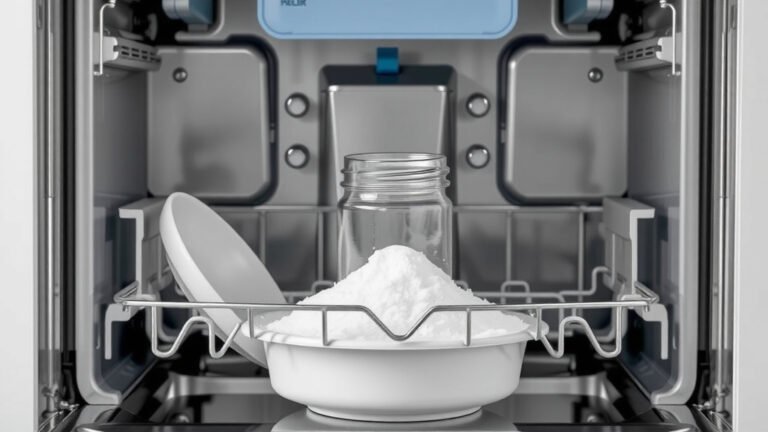
| Baking soda | Lingering odors, freshening | 1 cup sprinkled on the tub floor, short cycle |
| Commercial cleaner | Grease, limescale, detergent film | Tablet or liquid, per package directions |
A quick word of caution: some dishwasher manufacturers warn against vinegar because its acidity can damage rubber parts over time. Check your manual first. Commercial dishwasher cleaners are formulated to be safe and are often the safest bet for a first deep clean.

Your Quick-Fix Checklist
Short on time? Knock out these six things and you’ll handle about 90% of musty-dishwasher cases:
- Pull and scrub the filter with hot, soapy water.
- Wipe the door seal, including every fold and crevice.
- Clear the spray arm holes with a toothpick.
- Scoop out standing water from the tub floor.
- Run a hot cleaning cycle with a dishwasher cleaner.
- Crack the door open after cycles so the tub dries out.
Habits That Keep the Smell From Coming Back
Cleaning once helps. Simple habits keep it fresh for good.
Scrape, Don’t Rinse
Scrape big food chunks into the trash before loading. But skip the full pre-rinse — modern detergents actually need some food soil to work properly. A quick scrape gives the filter less to trap without wasting water.
Run It Regularly
A dishwasher that sits for a week with dirty dishes inside turns into a stagnant pond. Run it at least every few days, even if it’s not full. Regular hot cycles keep bacteria populations down and water moving.
Let It Breathe
After each cycle, leave the door cracked open for an hour. Airflow dries the tub, the filter, and the door seal. Mold needs moisture to grow, so drying things out is your cheapest defense. Many experts recommend this single habit above nearly all others for mold prevention in appliances (CDC).
When the Smell Means Something Bigger
If you’ve deep cleaned and the odor still hangs around, look at the plumbing side. A dried-out or missing trap under the sink can push sewer gas back through the dishwasher drain. That smell is sharper and more like rotten eggs than mildew.
Also check for slow draining between cycles. If water lingers for hours, the drain line or your home’s drain may be partly clogged. That’s a job for a plumber, not a vinegar cycle. And if you see heavy black mold on surfaces you can’t remove or reach, it’s worth getting a professional to inspect the machine and surrounding area.
How Often Should You Clean Your Dishwasher?
Here’s a simple schedule we found keeps most machines odor-free without much effort:
- Weekly: Wipe the door seal and check the filter for large debris.
- Monthly: Remove and scrub the filter, and run a cleaning cycle.
- Every 3 months: Clean the spray arms and check the drain hose and air gap.
Stick to that rhythm and the musty smell should stay gone. Your dishes will come out actually smelling clean — which, let’s be honest, is the whole point.
Conclusion
A musty dishwasher isn’t a sign your machine is dying — it’s a sign it needs attention. The smell almost always traces back to a dirty filter, trapped moisture, or gunky hidden spots like the door seal and spray arms. We found that a single deep clean, plus habits like cracking the door open after cycles and running the machine every few days, solves the problem for most people. If the odor survives all that, shift your focus to the plumbing and call in a pro. Start today with the filter — it takes five minutes, and it’s where you’ll get the biggest win. Your nose will thank you.
Frequently Asked Questions
Is it safe to run my dishwasher if it smells musty?
Yes, it’s generally safe — the smell is unpleasant, not dangerous. Your dishes still get washed, though they may pick up some odor. Clean the filter first so you’re not spraying gunk back onto everything.
Can I put bleach in my dishwasher to kill the smell?
We recommend skipping bleach unless your manual explicitly allows it. It can damage stainless steel tubs and rubber seals. A dishwasher cleaner tablet or a hot cycle does the job safely for most machines.
Why does my dishwasher smell worse when it sits unused?
When a dishwasher sits idle, leftover moisture and food particles just ferment in place. Running it at least every few days keeps water moving and bacteria populations down. If you’ll be away, clean it out first and leave the door cracked.
Should I clean my dishwasher filter if my dishes look clean?
Absolutely. Clean dishes don’t mean a clean filter — the filter still traps scraps every single cycle. By the time dishes look dirty or the smell shows up, buildup has already been sitting there for weeks.
Do dishwasher cleaning tablets actually work?
Yes, for grease, limescale, and detergent film. We found they work best as a follow-up after you’ve manually removed the big stuff, not as a substitute. The filter still needs a hands-on scrub — no tablet reaches it properly.