How a Dishwasher Timer Works to Control Every Cycle
A dishwasher timer is a control device that runs your dishwasher through its cycle by telling each part, like the water pump and heating element, exactly when to turn on and off. Think of it as the conductor of an orchestra, cueing every component at just the right moment. Without it, your dishes would sit in a confused puddle of lukewarm water.
Older dishwashers use a mechanical timer with a motor-driven dial, while newer models rely on an electronic control board instead. We found that both do the same basic job: they sequence the fill, wash, drain, and dry steps. When the timer fails, your dishwasher may stall mid-cycle, skip steps, or refuse to start at all. Sound familiar? If your machine already stalls partway through, our guide to a dishwasher stops mid-cycle problem walks through the other likely culprits.
TL;DR
- A dishwasher timer controls the timing of every step in the wash cycle.
- Mechanical timers use a rotating dial; modern machines use electronic control boards.
- It signals the water valve, pump, motor, and heater when to switch on and off.
- A faulty timer can cause cycles to stall, skip, or never start.
- Most timer problems are fixable, and we found some are surprisingly simple.
Below, we walk you through exactly how this little part runs the whole show, what goes wrong, and what you can do about it. Let’s get into it.
Understanding the Dishwasher Timer
A dishwasher timer is the part that decides what happens next during a wash cycle. It sends power to each component at the right moment. Without it, the machine would just sit there, full of good intentions but no instructions.
Think of it like a train dispatcher. It tells the water valve when to open, the pump when to run, and the heater when to kick in. We found that most “my dishwasher is haunted” problems trace back to this one part.
The Main Types of Dishwasher Timers
There are two kinds you’ll run into: mechanical and electronic. Both do the same job. They just go about it differently.
Mechanical Timers (The Classic Dial)
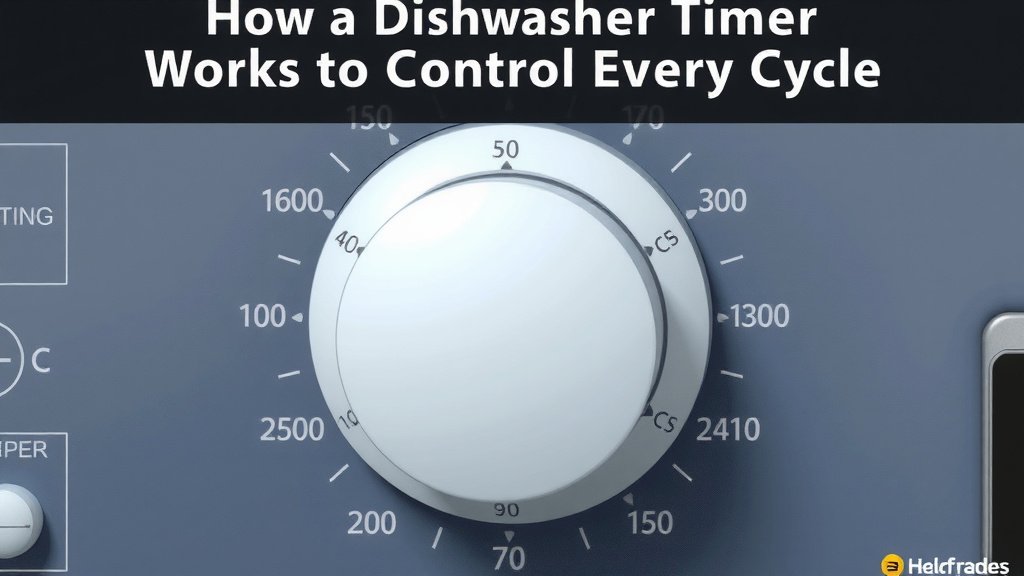
If your dishwasher has a knob you twist, you have a mechanical timer. A small motor slowly turns a geared cam. As the cam rotates, it opens and closes tiny switches that power each part of the cycle.
It’s old-school, but it works. Many of these timers ran happily for 20 years or more.
Electronic Control Boards (The Modern Brain)
Newer dishwashers swap the dial for a control board — basically a small computer. It uses sensors and software to time each step and adjust water levels on the fly.
We found that many boards also track things like water temperature and turbidity, or cloudiness, to decide when a rinse is done (U.S. Department of Energy).
Which One Do You Have?
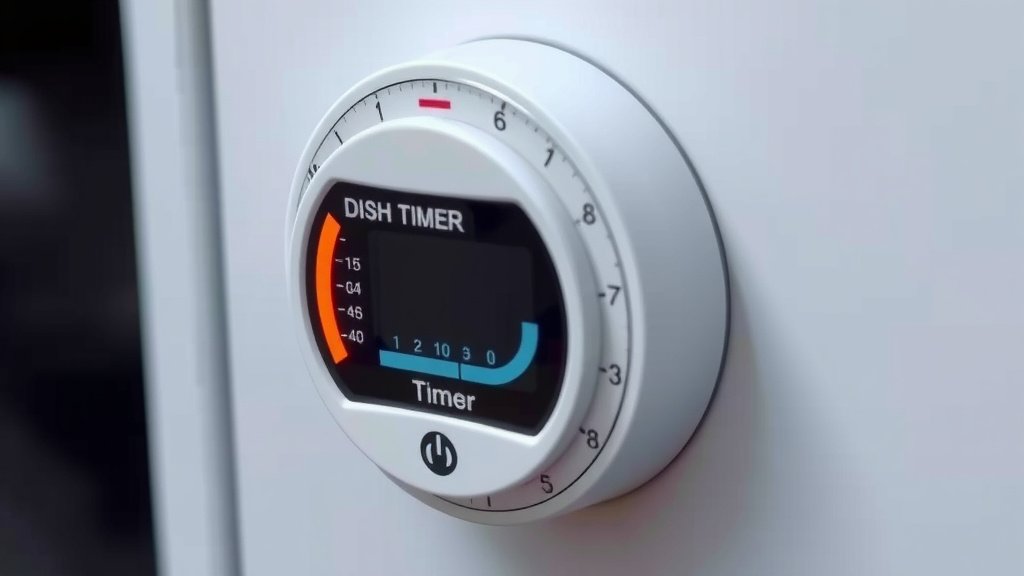
Easy check: if you twist a physical dial that clicks and slowly turns back, it’s mechanical. If you press buttons and see lights or a display, you’ve got an electronic board.
How the Timer Runs Each Step of the Cycle
Every cycle follows the same basic rhythm. Here’s the sequence the timer conducts from start to finish:
- Fill: The timer opens the water inlet valve to let water in.
- Heat: The heating element warms the water to the right temperature.
- Wash: The pump and motor spray water through the wash arms.
- Drain: The drain pump pushes dirty water out.
- Rinse: Fresh water comes in and the spray starts again.
- Dry: Heat (or a fan) helps your dishes dry off.
Each step gets a set window of time. The timer closes one switch, opens another, and keeps the whole show moving. Pretty neat for a part most people never think about, right?
What Happens When the Timer Advances
On a mechanical timer, you can sometimes hear a soft click-click as the dial advances. Each click means a new switch has opened or closed. On electronic models, the transition is silent — the board simply moves to the next step in its program.
Mechanical vs. Electronic Timers: A Quick Comparison
| Feature | Mechanical Timer | Electronic Control Board |
|---|---|---|
| How it works | Motor-driven dial and switches | Software and relays |
| Cycle flexibility | Fixed sequences | Adjusts to sensors |
| Repair cost | Usually cheaper | Often pricier |
| Failure signs | Dial gets stuck | Random errors, dead panel |
| Lifespan | Very long, simple parts | Sensitive to power surges |
Signs Your Dishwasher Timer Might Be Failing
The good news? A bad timer usually announces itself. We found these are the most common warning signs:
- The cycle stalls at the same point every time.
- The dial spins but the machine does nothing.
- Your dishwasher skips the drain or dry step.
- It won’t start at all, even with power and a latched door. For a full checklist, see our guide to a dishwasher not starting and its quick fixes.
- The cycle runs far longer (or shorter) than normal.
- You hear clicking but no water fills.
One warning before you blame the timer: several other parts can mimic these symptoms. A faulty door latch, drain pump, or thermal fuse can all look like timer trouble. Many repair guides recommend testing the simpler parts first before ordering a new timer or board.
How to Test a Timer at Home
Unplug the dishwasher first. Always. Then remove the control panel and locate the timer or board. With a multimeter, you can check the timer motor for continuity. No continuity usually means a dead motor.
For electronic boards, testing gets trickier. You’re often better off checking the wiring harness and connections first. Burnt or corroded connectors cause a surprising number of “dead board” diagnoses.
Safety First, Please
Dishwashers combine water and electricity — not a fun mix. Cut power at the breaker, not just the console. And if you smell burning or see scorch marks, stop and call a professional. Some jobs are worth handing off (Consumer Product Safety Commission).
Can You Replace a Dishwasher Timer Yourself?
Often, yes — especially on mechanical models. It’s usually four screws, a few wires, and a bit of patience. Take a photo of the wiring before you disconnect anything. Future-you will be grateful.
Electronic boards are a similar swap, but they cost more. We found that replacement boards can run anywhere from modest to “maybe I should buy a new dishwasher” territory. Check your model’s part price before committing.
Quick Pre-Repair Checklist
- Unplug the dishwasher or flip the breaker off.
- Snap a photo of all wiring connections.
- Confirm the replacement part matches your model number.
- Keep screws and clips in a small labeled bowl.
- Test the machine with a short cycle before closing everything up.
Keeping Your Timer Healthy for the Long Run
Timers don’t ask for much. Still, a few habits help them last longer:
- Run the dishwasher regularly — long idle periods aren’t great for electrical contacts.
- Use a surge protector to protect electronic boards.
- Clean the filter monthly so the pump doesn’t strain.
- Don’t force the dial if it resists; forcing it can snap the cam inside.
That’s really it. Treat your timer kindly, and it’ll keep cueing the orchestra for years. And if it ever falters, now you know exactly who’s to blame — and how to fix it.
Conclusion
Your dishwasher timer might be small, but it runs the entire show — cueing the fill, wash, drain, and dry steps at exactly the right moments. Whether your machine uses a classic mechanical dial or a modern electronic board, the goal is the same: perfectly sequenced cycles. When things go sideways, we found the timer is often the culprit, though simpler parts deserve a check first. The good news? Many timer fixes are well within reach of a careful DIYer with a multimeter and a bit of patience. So if your dishwasher has been stalling, skipping, or sulking, start by testing the easy stuff, snap a photo of that wiring, and take it from there.
Frequently Asked Questions
Does a dishwasher timer advance during the whole cycle?
On mechanical models, yes — the dial creeps forward continuously and advances faster during some steps than others. Electronic boards advance internally, so you won’t see any movement. If your dial stops advancing for an hour, that’s a clue something’s stuck.
How long does a dishwasher timer usually last?
Mechanical timers are famously durable, and we found many outlasting the rest of the machine. Electronic boards tend to have a shorter service life, since power surges and moisture can damage their circuits. Either way, lifespan varies a lot by model and usage.
Why does my dishwasher run for three hours straight?
A few possibilities here. Some modern cycles genuinely run long to save water and energy, so check your manual first. If the run time suddenly got much longer than usual, a stuck timer or a sensor issue on the control board could be holding the cycle hostage.
Can I use my dishwasher with a broken timer?
It’s not a good idea. A malfunctioning timer can skip the drain step, leave heating elements running too long, or stop mid-cycle with dirty water sitting inside. You might get lucky once, but repeated misuse can damage other parts or even become a safety issue.
Where is the timer located in a dishwasher?
On dial models, it sits right behind the control panel at the top of the door — the dial connects directly to it. Electronic control boards usually live behind the door panel too, though some manufacturers place them at the back or bottom of the machine. Your model’s parts diagram will show you exactly where.