How a Dishwasher Control Board Works: A Simple Guide
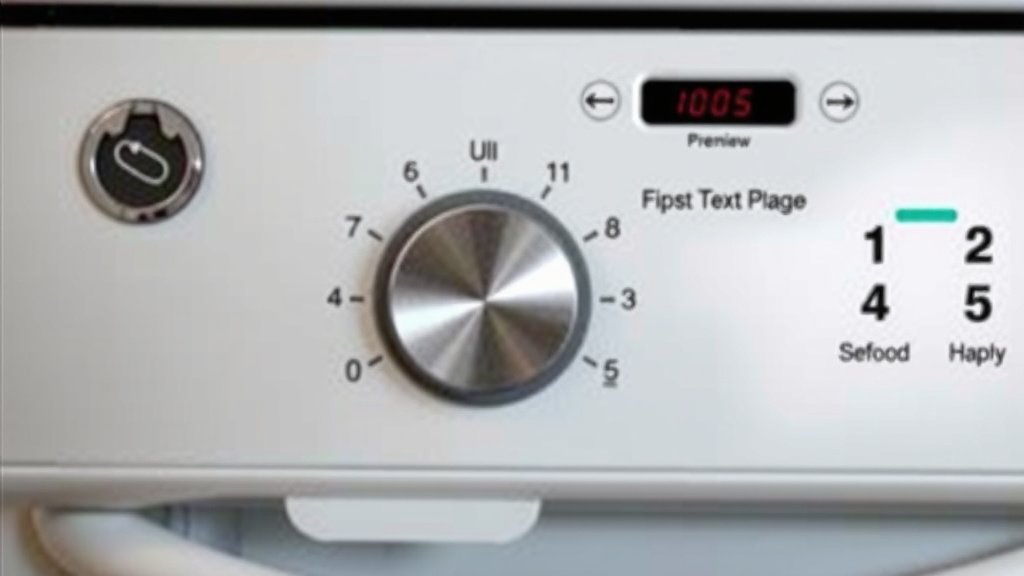
A dishwasher control board is the electronic brain of your dishwasher. It receives input from the buttons and sensors you use, then sends power to the parts that do the work, like the wash motor, water valves, and heater.
Think of it like a traffic cop for your machine. When you press “start,” the board decides which part turns on, when water fills the tub, and how long each cycle lasts. If it fails, your dishwasher may not start, drain, or clean at all, which is why so many owners we researched call it the most common electronic failure point in a dishwasher.
- The control board reads your cycle selections and sensor data.
- It sends power to the motor, heating element, and water valves.
- Symptoms of a bad board include no power, stuck cycles, or dead buttons.
- Many board problems can be fixed with a reset or a simple part swap.
- Knowing how it works helps you diagnose issues before calling a repair tech.
Wondering how all this happens inside that little panel? Below, we walk you through exactly how a dishwasher control board works, step by step, in plain English.
Inside Your Dishwasher’s Electronic Brain: The Control Board Explained
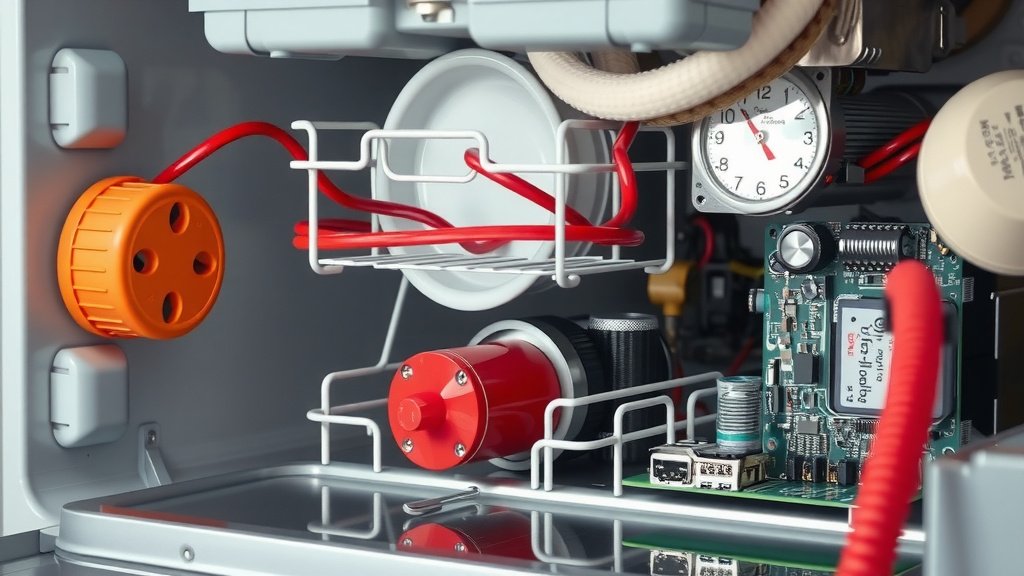
At its core, a dishwasher control board is a small circuit board packed with relays, chips, and connectors. It takes low-voltage signals from your touchpad and turns them into full-power commands. That’s the whole job in a nutshell.
Most boards sit behind the door or under the tub. You never see it, but it’s working every second your machine runs. Think of it as the composer while every pump and valve plays its instrument.
The Main Parts of a Control Board
When we researched common board designs, we found the same building blocks in nearly every model. Knowing these names makes troubleshooting way less scary.
- Relays: Switches that route 120-volt power to the motor and heater.
- Microprocessor: The tiny chip that stores and runs your cycle programs.
- Transformer: Drops 120 volts down to a safe 5–12 volts for the brains.
- Connectors: Plastic plugs where wires from sensors and parts attach.
- Thermal fuses: Safety devices that cut power if things overheat.
Input vs. Output: How the Board Listens and Responds
Everything the board does falls into two buckets. It listens (input) and it acts (output). That’s it. Once you understand this, the whole machine makes sense.
Inputs: What the Board Hears
Inputs are signals coming in. When you press “Heavy Wash,” the touchpad sends a low-voltage signal to the board. Sensors also chime in — water temperature, turbidity (how dirty the water is), and door latch status all get reported back.
Here’s a fun one: some modern dishwashers use optical turbidity sensors that basically check how cloudy the wash water looks. The board reads that and decides whether another rinse is needed. Kind of like a chef tasting the soup before serving it.
Outputs: What the Board Does About It
Outputs are the board’s actions. It energizes the inlet valve to fill the tub, fires the wash motor, flips on the heating element, and kicks the drain pump into gear — all in the right order, every time.
The board doesn’t send full wall power through your buttons, either. Your touchpad only carries a few volts. The board does the heavy lifting. That’s why a dead touchpad often means a cheap keypad fix, not a new board.
A Wash Cycle, Step by Step
So what does this look like in real time? Here’s the typical sequence we found across major brands like Whirlpool, GE, and Bosch.
- You press Start. The board confirms the door is latched.
- The inlet valve opens. Water fills to the right level or flow time.
- The heating element (or an internal heater) warms the water if needed. If the water never warms up, our guide to a dishwasher not heating covers the heating element and board checks.
- The detergent dispenser latch releases at the correct moment.
- The wash motor runs through wash and pause periods.
- Between washes, the drain pump empties dirty water.
- Fresh water enters for rinses, and a final heated dry finishes the job.
Miss one step and the cycle stalls. That’s why a failed board can leave you with a tub full of soapy water and a very long evening.
Why Timing Matters So Much
Each cycle is basically a script stored on the microprocessor. Fill for 90 seconds, wash for 12 minutes, drain for 2 — you get the idea. The board follows that script to the letter.
Some boards also adjust on the fly. If the sensor says the water is still dirty, the board extends the wash. Many manufacturers call this “soil sensing,” and it’s one reason modern cycles can run longer than older machines.
Sensors the Board Relies On
Without sensors, the board would be running blind. These little parts give it the eyes and ears it needs to make decisions.
| Sensor | What It Tells the Board | What Happens Next |
|---|---|---|
| Thermistor | Water temperature | Turns heater on or off |
| Turbidity sensor | How dirty the water is | Extends or shortens the wash |
| Float switch | Water level too high | Stops filling to prevent floods |
| Door switch | Door open or closed | Pauses or blocks the cycle |
| Position/motor sensor | Pump status | Times wash and drain phases |
Notice anything? The board can’t do its job if even one sensor lies to it. A stuck float switch can trick the board into thinking there’s a flood — no matter how dry your kitchen floor is.
What Goes Wrong With Control Boards
Boards fail for a handful of predictable reasons. We found that moisture and heat are the top culprits, which tracks — they live inside a wet, steamy appliance.
- Water intrusion: Leaks drip onto the board and corrode traces.
- Heat stress: Years near the heater slowly cook the electronics.
- Power surges: Lightning or grid spikes fry the microprocessor.
- Failed relays: Contacts stick open or closed, leaving parts stuck on or off.
- Burnt connectors: Loose wires arc and melt the plug housings.
Warning Signs Your Board May Be Failing
Here’s a quick checklist to run through before you panic-buy a new dishwasher:
- The display is blank, but the outlet has power.
- Buttons don’t respond, or one button works and the rest don’t.
- The cycle starts, then freezes mid-wash.
- The motor or drain pump runs nonstop and won’t quit.
- You smell something burnt near the door panel.
- Error codes keep returning even after a reset.
One or two of these can point to simpler parts, too. A dead outlet or a blown thermal fuse mimic board failure perfectly. Always check the cheap stuff first — we found that trick saves a lot of wallets.
Can You Reset or Fix a Control Board Yourself?
Sometimes, yes. Many appliance makers, including GE and Whirlpool, suggest a hard reset as the first move. Cut power at the breaker for five minutes, then restore it. This clears the board’s memory like rebooting a glitchy laptop.
If a reset doesn’t work, look for burn marks, bulging capacitors, or corrosion on the board itself. Many repair guides note that swapping a board is a moderate DIY job — usually a few connectors and some screws. Just unplug the machine first. Always.
Safety note: appliances hold capacitors and connect to 120 volts. If you’re not comfortable with electrical work, calling a licensed technician is the smarter play (U.S. Consumer Product Safety Commission warns against DIY electrical repairs without proper training).
Why Understanding the Board Helps You
Here’s the payoff. When you know how the board thinks, you can describe symptoms like a pro. “The fill valve never opens, but the display works” tells a tech far more than “it’s broken.”
That kind of clarity shortens service calls and helps you decide whether a repair is worth it. Boards often cost less than the labor to install, so a confident DIYer can save real money. And honestly? Knowing your machine’s brain isn’t magic — it’s just a very patient traffic cop — makes the whole appliance feel a lot less mysterious.
Conclusion
At the end of the day, your dishwasher’s control board is a simple idea done well: listen to the buttons and sensors, then switch power to the right part at the right time. We found that once you understand the input-output flow, symptoms like a stuck cycle or a dead keypad stop feeling random and start feeling diagnosable. Start with the cheap and easy stuff — a hard reset at the breaker, a checked outlet, and the door latch — before assuming the board is toast. If those don’t pan out, snap a photo of your board and its part number, then decide whether a DIY swap or a service call fits your budget and comfort level.
Frequently Asked Questions
How long does a dishwasher control board usually last?
Most boards last 10 to 15 years, though moisture, heat, and power surges can shorten that. We found plenty of owners who got 20 years from a board and others who replaced one at year three. It really depends on your machine’s environment and your area’s power quality.
How much does it cost to replace a dishwasher control board?
In our research, replacement boards typically run between $80 and $300 depending on the brand. A professional repair usually adds $100 to $250 in labor. Doing it yourself can bring the total down to just the part cost.
Can a power surge damage a dishwasher control board?
Yes, and it’s one of the most common board killers we came across. A surge can fry the microprocessor or relays instantly. A whole-house surge protector is a cheap way to protect every appliance in your kitchen at once.
Is it worth repairing a dishwasher control board, or should I buy a new dishwasher?
Do the math first. If your dishwasher is under 8 years old and the repair costs less than half of a comparable new machine, repair usually wins. For older units with other worn parts, replacement often makes more sense.
Will a new control board need any programming or calibration?
Sometimes. Some modern boards ship configured for your exact model, while others need a model-specific setup procedure after installation. Check the paperwork that comes with the new board — brands like Bosch and Whirlpool often include a short setup sequence in the instructions.