Dishwasher Spots: Why They Appear & How to Stop Them
Your dishwasher leaving spots is usually caused by hard water, improper loading, or using the wrong detergent. Don’t worry, it’s a common problem that most people deal with. We’ve found that addressing these simple issues can dramatically improve your dishwashing results.
Spots on your dishes often mean your rinse aid dispenser might be empty, or your dishwasher’s filter is dirty. It could also be that the water temperature isn’t hot enough for proper cleaning. Many experts agree that a few small adjustments can make a big difference in shine.
- Hard water is a common culprit.
- Check your rinse aid levels.
- Proper loading is key.
- Clean your dishwasher filter regularly.
- Ensure water is hot enough.
Let’s walk through exactly how to fix those pesky spots so you can enjoy sparkling clean dishes again.
Troubleshooting Those Pesky Dishwasher Spots
So, you’ve pulled a load of dishes from your dishwasher, only to find them covered in spots. It’s frustrating when you expect sparkling results, but instead, you’re greeted with a cloudy, splotchy mess. You’re not alone; this is a common problem many homeowners face. Fortunately, most dishwasher spot issues are fixable with a few simple adjustments.
We found that understanding the root cause is half the battle. Let’s break down the most likely culprits and how you can tackle them to get those dishes looking their best again.
Understanding What Causes Dishwasher Spots
Dishwasher spots, often appearing as white or cloudy marks, are typically caused by mineral deposits from hard water or residue left behind after the drying cycle. They can also be a sign that your dishwasher isn’t performing at its optimal level.
The good news is that identifying the source usually leads to a straightforward solution. We’ve seen countless times how addressing one or two key areas can dramatically improve your dishwashing outcomes.
The Hard Water Hurdle
Hard water is probably the most frequent offender when it comes to spotting. It contains high levels of dissolved minerals, mainly calcium and magnesium. When water evaporates, these minerals are left behind, clinging to your dishes and glassware.
You might notice these spots more on glassware, particularly when you hold them up to the light. If you live in an area known for hard water, this is a strong indicator. Many water quality reports show that mineral content varies greatly by region (U.S. Geological Survey).
Testing Your Water Hardness
You can often determine if you have hard water by looking at mineral buildup in your faucets or showerheads. Alternatively, you can purchase an inexpensive water hardness test kit from most hardware or home improvement stores. These kits use simple color-changing strips to give you a reading.
If your test confirms hard water, you’ll want to take specific steps to combat its effects within your dishwasher. Don’t worry, we have solutions for this!
The Rinse Aid Revelation
Your dishwasher has a secret weapon against spotting: rinse aid. This is a liquid detergent that helps water sheet off your dishes instead of forming droplets. Those droplets, when they dry, are what leave the mineral spots behind.
Think of it like drying your car; if you don’t use a chamois, you’ll get water spots. Rinse aid works similarly for your dishes. It reduces the surface tension of the water, allowing it to flow off more smoothly.
Checking and Refilling Your Rinse Aid Dispenser
Most dishwashers have a dedicated compartment for rinse aid, usually located next to the detergent dispenser. You’ll typically see a small window or indicator that shows the level. When it’s low or empty, it’s time to refill.
We found that keeping this dispenser full makes a noticeable difference, especially with hard water. Always use a rinse aid specifically designed for automatic dishwashers. Follow your dishwasher manufacturer’s recommendations for the type and amount to use.
Dishwasher Loading: It’s More Than Just Stacking
How you load your dishwasher plays a surprisingly big role in how clean your dishes come out. Overcrowding or blocking the spray arms can prevent water and detergent from reaching all surfaces, leading to spots and residue.
It’s easy to just shove everything in, but a little attention to detail here can save you from rewashing. We’ve learned that proper loading is key to maximizing your dishwasher’s efficiency.
The Art of the Upper Rack
The upper rack is ideal for lighter, more delicate items like glasses, mugs, and small bowls. Ensure that glasses are placed upside down and angled slightly so water can drain out easily. Avoid nesting bowls too tightly.
When loading glasses, try not to let them touch each other. This prevents them from chipping and ensures water can circulate freely around each one. We found that spacing is important for spot-free results.
Mastering the Lower Rack
Plates, larger bowls, and pots and pans belong on the lower rack. Position plates so they face inward and are spaced apart. Make sure nothing is blocking the spray arm that rotates beneath the rack.
Heavy items should generally go on the bottom. If you have large utensils or baking sheets, place them so they don’t impede the water flow to the rest of the dishes. Think about how the water jets will hit each item.
Don’t Forget the Cutlery Basket
Mix up your cutlery in the basket to prevent spoons from nesting together. Place sharp knives pointing downwards for safety. Some people prefer to place all cutlery handles-up to avoid touching them directly.
A common mistake is filling the basket too densely. We’ve found that even a little bit of space between utensils can help them get cleaner and reduce spotting.
Detergent Dilemmas and Water Temperature Woes
The type of detergent you use and the temperature of your wash water are also critical factors in achieving spot-free dishes.
Choosing the Right Detergent
Dishwasher detergents come in powders, gels, and pods. For areas with hard water, you might need a detergent specifically formulated to combat mineral buildup. Some detergents also contain built-in rinse aid properties.
We recommend trying a different brand or type of detergent if you’re consistently seeing spots. Read reviews and look for options that mention hard water performance. Always use a detergent designed for automatic dishwashers; regular dish soap can cause excessive suds and damage your machine.
Ensuring Sufficient Water Temperature
Your dishwasher needs hot water to effectively dissolve grease and activate the detergent. Most manufacturers recommend a water temperature of at least 120°F (49°C) for optimal cleaning (Energy Star).
If your water heater is set too low, or if the dishwasher is too far from the heater, the water might not be hot enough. You can check your water heater’s thermostat, but be cautious when adjusting it. Ensure it’s set to a safe temperature to prevent scalding.
Some dishwashers have a “heated dry” option. Using this can help evaporate remaining water droplets, further reducing the chance of spotting. Make sure this option is selected if you have it.
Regular Maintenance for a Spotless Shine
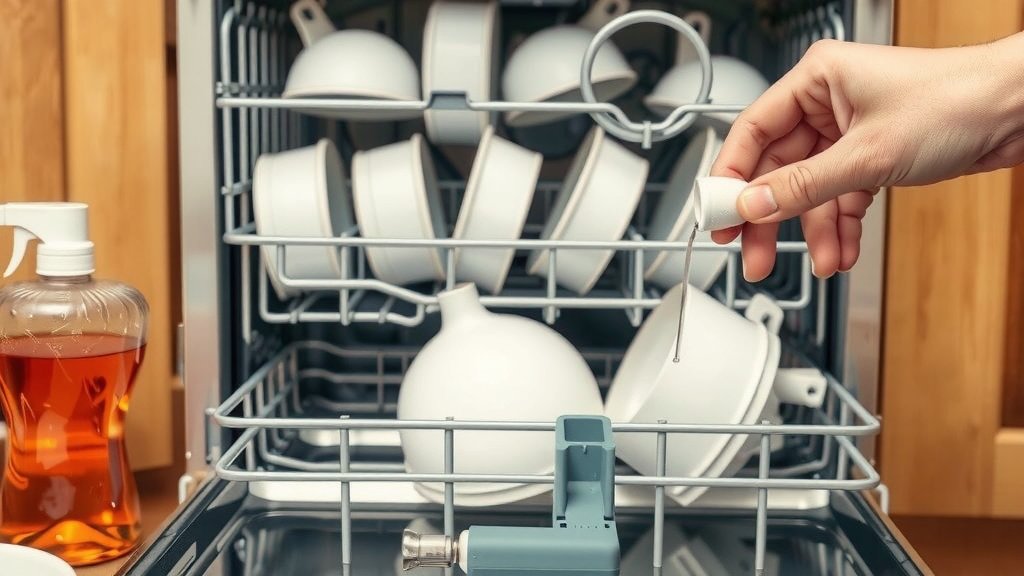
Just like any appliance, your dishwasher needs a little TLC to keep it running efficiently and your dishes looking great. Neglecting basic maintenance can lead to a host of problems, including those annoying spots.
Cleaning the Filter is Non-Negotiable
Your dishwasher has a filter that traps food particles and debris. If this filter becomes clogged, it can recirculate dirty water, leading to poor cleaning and spotting.
Most filters are located at the bottom of the dishwasher. Consult your owner’s manual for specific instructions on how to remove and clean it. A simple rinse under warm water, perhaps with a soft brush, is usually all it takes. We found that cleaning the filter monthly can prevent many issues.
When to Clean Other Parts
Periodically, you might also want to check the spray arms for clogs. Small food particles can get stuck in the tiny holes, affecting water pressure and distribution. You can often clear these with a toothpick or small needle.
Running a dishwasher cleaning cycle with a specialized cleaner or a cup of vinegar can also help remove any lingering buildup inside the machine. This can improve overall performance and reduce residue.
Quick Checklist for Spotless Dishes
If you’re still battling spots, run through this quick checklist:
- Is your rinse aid dispenser full?
- Are you using the correct type of dishwasher detergent?
- Is your dishwasher loaded properly, without overcrowding?
- Have you cleaned your dishwasher’s filter recently?
- Is your home’s water temperature set high enough (around 120°F)?
Conclusion
Tackling those stubborn dishwasher spots doesn’t have to be a mystery. By addressing the common culprits we’ve discussed – hard water, insufficient rinse aid, improper loading, the wrong detergent, or not-hot-enough water – you’re well on your way to consistently sparkling dishes. We found that making even small adjustments, like regularly cleaning your filter or ensuring your rinse aid dispenser is full, can make a world of difference.
Don’t let spots dim your shine any longer. Start by checking your rinse aid level and cleaning your dishwasher filter this week. You’ll likely see a significant improvement in your dishwashing results.
Frequently Asked Questions
What’s the best way to test if my water is too hard for my dishwasher?
You can purchase an inexpensive water hardness test kit from most hardware or home improvement stores. These kits typically use simple color-changing strips. If the strips indicate high mineral content, you have hard water. You might also notice mineral buildup on your faucets or showerheads.
Can I use regular dish soap in my dishwasher if I run out of dishwasher detergent?
No, you absolutely should not use regular dish soap in your dishwasher. It will create excessive suds that can overflow your machine and potentially cause damage. Always use a detergent specifically designed for automatic dishwashers.
My dishwasher doesn’t seem to be getting the dishes dry. Could this be related to spotting?
Yes, inadequate drying can contribute to spotting. If dishes aren’t drying properly, water droplets can remain and evaporate, leaving behind mineral deposits. Ensure your rinse aid dispenser is full and consider using the heated dry option if your dishwasher has one.
How often should I really be cleaning my dishwasher filter?
We found that cleaning your dishwasher filter at least once a month is ideal for most households. If you frequently run your dishwasher or notice a decrease in cleaning performance, you might need to clean it even more often. A clogged filter is a major cause of poor washing and spotting.
Is there a way to combat water spots without using rinse aid?
While rinse aid is the most effective way to prevent spots by helping water sheet off dishes, you can try a few other methods. Ensuring your detergent is high-quality and designed for hard water can help. Also, making sure your dishwasher is running at the correct hot temperature and that you’re loading correctly can minimize water droplets.