How to Make a Natural Dishwasher Cleaner That Works
You can clean your dishwasher naturally using white vinegar, baking soda, and lemon—no harsh chemicals needed. These simple pantry staples break down grease, soap scum, and odors in one easy cycle. Most people already have everything sitting in their kitchen right now.
Why bother? Because your dishwasher cleans your dishes, but nobody cleans the dishwasher itself. Gross, right? Over time, food debris, hard water deposits, and mold build up inside, which can leave your “clean” dishes smelling funky. We researched the best natural methods and found that regular cleaning also helps your machine run better and last longer.
- White vinegar dissolves grease and hard water buildup.
- Baking soda scrubbs away stains and freshens the interior.
- Lemon juice cuts through grime and leaves a fresh scent.
- Many experts say a monthly clean keeps your dishwasher in top shape.
- It costs just a few dollars—way cheaper than a repair call.
Below, we walk you through everything you need to know about natural dishwasher cleaning, step by step. Let’s get your machine smelling fresh again.
Cleaning Your Dishwasher the Natural Way
The best natural method is a two-step cycle: run a hot cycle with a cup of white vinegar, then sprinkle baking soda on the bottom and run a short cycle. That’s it. No special products, no fumes, no rocket science.
Why does this work so well? Vinegar is mildly acidic, so it breaks down mineral deposits and grease. Baking soda is mildly abrasive and absorbs odors. Together, they’re like a tag team—one tackles the grime, the other handles the smell.
Many experts say a monthly clean is enough for most homes. If you have hard water or run the dishwasher daily, you might want to do it twice a month.
What You’ll Need Before You Start
Grab these items from your kitchen. You probably own all of them already, which is the whole point of going natural.
- White distilled vinegar – 1 to 2 cups
- Baking soda – about 1 cup
- A lemon or half a cup of lemon juice
- An old toothbrush for scrubbing tight spots
- A soft cloth or sponge
- Hot water for wiping down the door
That’s it. Total cost? A few dollars, tops. Compare that to a service call, and you’ll feel like you just won the lottery.
Step-by-Step: How to Clean Your Dishwasher Naturally
Here’s the full process. It takes about 10 minutes of actual work, plus two dishwasher cycles.
Step 1: Empty and Inspect the Machine
Start with an empty dishwasher. Take a quick look at the bottom, the door, and the spray arms. You’re hunting for anything that shouldn’t be there.
Clear the Filter First
The filter is usually at the bottom of the tub, under the spray arm. Twist it out and rinse it under hot water. Use that old toothbrush to scrub away gunk. We found that a clogged filter is the number one cause of smelly dishwashers, so don’t skip this part.
Check the Spray Arms
Look at the tiny holes on the spray arms. Food bits and mineral crust can block them. Poke them gently with a toothpick or straight pin. If water can’t spray out, your dishes can’t get clean. If blocked spray arms are already leaving residue, our guide to a dishwasher not cleaning covers the other common causes and fixes.
Step 2: Wipe the Door and Seals
Mix a little dish soap with warm water. Dip a cloth and wipe the door edges, the rubber gasket, and the corners. Gunk loves to hide in the folds of the seal. It’s the part of your dishwasher nobody ever sees, which is exactly why it gets gross.
For stubborn spots, make a paste of baking soda and water. Rub it on, let it sit for five minutes, then wipe it away.
Step 3: Run the Vinegar Cycle
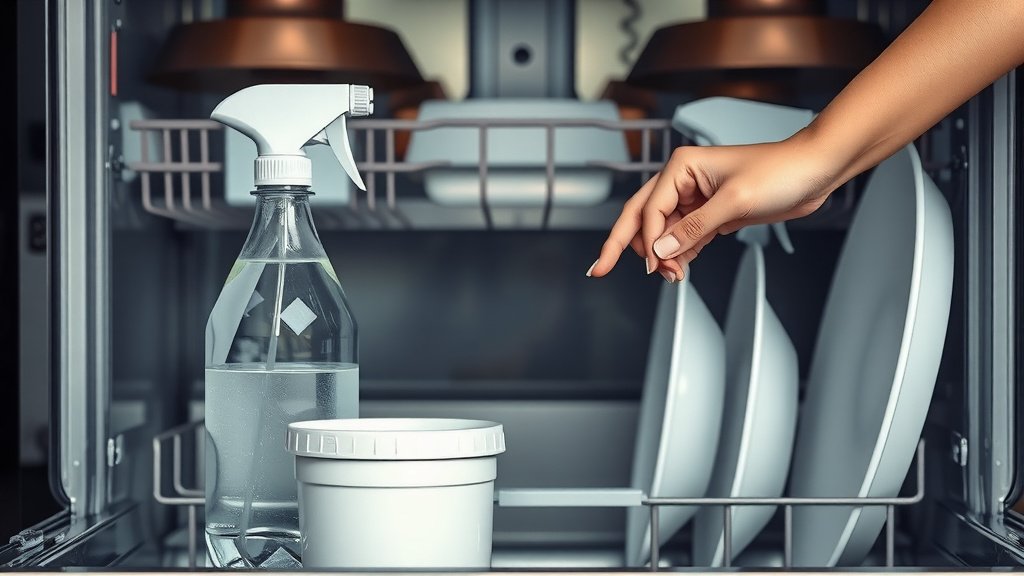
Place a dishwasher-safe bowl filled with one to two cups of white vinegar on the top rack. Run a full hot cycle—no dishes, no detergent. The vinegar will mix with the water and rinse through the whole machine.
Hot water matters here. The CDC notes that heat helps break down grime and kill germs, so pick the hottest setting your machine has.
Step 4: Follow Up with Baking Soda
Sprinkle a cup of baking soda across the bottom of the tub. Run a short cycle with hot water. When it’s done, your dishwasher should smell fresh and look noticeably brighter.
Want a citrus boost? Toss in a lemon half or a few drops of lemon juice. It leaves a clean, bright scent that vinegar alone can’t match.
Quick Checklist Before You Run Each Cycle
Here’s a simple checklist to keep on hand. Print it or save it to your phone.
- Empty the dishwasher completely.
- Remove and rinse the filter.
- Check the spray arm holes for blockage.
- Wipe the door seals and gasket.
- Place the vinegar bowl on the top rack.
- Run the hottest cycle your machine offers.
Natural Cleaning Methods Compared
Not sure which method fits your situation? Here’s a quick comparison of the most common natural cleaners.
| Cleaner | Best For | How to Use |
|---|---|---|
| White vinegar | Hard water spots, grease, odors | 1 cup in a bowl on the top rack, hot cycle |
| Baking soda | Stains and lingering smells | 1 cup sprinkled on the tub floor, short cycle |
| Lemon juice | Fresh scent and mild grime | Half a cup in a bowl, or a lemon half in the silverware basket |
| Baking soda paste | Spot scrubbing the door and seals | Mix with water, apply, wait 5 minutes, wipe |
Each one has its job. Vinegar handles the deep clean, baking soda handles the polish, and lemon handles the finish.
What Not to Use in Your Dishwasher
Before you start mixing things up, a few warnings. Some natural cleaners don’t belong in your machine.
Keep Bleach Out of Stainless Steel
Chlorine bleach can damage stainless steel interiors and leave discoloration. If your machine has a stainless tub, stick with vinegar and baking soda. It’s safer and works just as well for routine cleaning.
Never Mix Vinegar and Bleach
This is a big one. Combining vinegar and bleach creates chlorine gas, which is dangerous to breathe (CDC). If you ever use bleach in your dishwasher, run it separately and rinse the machine well afterward.
Don’t Overdo the Vinegar
Some folks worry that vinegar can wear down rubber seals over time. We found that occasional use—once a month or so—is safe for most machines. But if your manual warns against acids, check with the manufacturer first. A quick peek at your owner’s manual can save you a headache.
Why Your Dishwasher Gets Dirty in the First Place
Ever wonder why a machine that cleans things gets dirty? It’s a little ironic, like a dentist with cavities. Here’s what’s happening inside.
Food Debris Builds Up
Every cycle rinses tiny food particles into the filter and drain. They sit there, break down, and start to smell. Rinsing dishes lightly before loading helps, but the filter still needs attention.
Hard Water Leaves Mineral Deposits
If you have hard water, you’ve probably seen white crusty spots. Those are calcium and magnesium deposits. The NIH notes that hard water is common in many US regions, so this is a widespread issue. Vinegar’s acidity dissolves it easily.
Mold Loves Damp, Dark Spaces
Your dishwasher is dark, warm, and wet. That’s basically a five-star hotel for mold. The Mayo Clinic notes that mold can trigger allergies and breathing issues in some people. Leaving the door cracked open after a cycle lets the interior dry out and slows mold growth.
How Often Should You Clean Your Dishwasher?
Here’s a simple schedule based on what we found works for most households.
| Your Situation | How Often |
|---|---|
| Normal use, soft water | Once a month |
| Hard water or heavy use | Every 2 weeks |
| Filter rinse | Every 1–2 weeks |
| Door seal wipe-down | Weekly, quick 1-minute job |
Many experts say a few minutes of regular maintenance goes a long way. It keeps your dishes cleaner and your machine humming along.
Easy Habits to Keep Your Dishwasher Fresh Longer
Prevention beats a deep clean every time. These small habits make a big difference.
- Scrape plates before loading—no need to rinse fully.
- Crack the door after each cycle to let moisture escape.
- Run the dishwasher at least every few days so water doesn’t sit and stagnate.
- Check the filter weekly and rinse it under hot water.
- Use a rinse aid if you have hard water—it helps cut down on mineral spots.
Think of it like brushing your teeth. A little daily effort beats a big dental bill later. Your dishwasher will thank you, and your dishes will come out smelling like they should—like nothing at all.
Conclusion
If you are tired of harsh chemicals and complicated products, you can now achieve a truly sparkling dishwasher with just a few items from your pantry. Our research and we found that mixing the power of white vinegar, baking soda, and lemon creates an effective cleaning trio. This simple method is affordable, safe for your home, and keeps your machine running smoothly. Remember, routine care is key to preventing nasty odors and buildup. Commit to a quick monthly cleaning today, and you will soon notice the difference.
Frequently Asked Questions
Can I use lemon juice and baking soda together in one cycle?
It is best to keep the vinegar and baking soda cycles separate for maximum effectiveness. First, use vinegar to dissolve hard water stains and mineral deposits in a hot cycle. Then, use the baking soda to scrub and absorb any remaining odors in a follow-up short cycle. This two-step approach ensures you tackle every type of buildup.
Is it safe to use natural cleaners on modern stainless steel dishwashers?
Yes, these methods are very safe for modern appliances. Because they are natural, they avoid the harsh corrosion associated with chemical cleaners. We advise that you always check your specific dishwasher manual before doing anything, but the combination of vinegar and baking soda is generally well-regarded for stainless steel finishes.
How do I prevent odors between deep cleaning sessions?
Prevention is the best way to keep odors away. The most important habits are scraping food debris from dishes before loading and ensuring the door stays slightly ajar after use. Letting moisture evaporate in the dark interior prevents smells from forming in the first place.
I have very hard water. Do I need to do more than just a monthly clean?
If you live in a hard water area, our research suggests you should increase your frequency. Aim for a deep clean every two weeks instead of once a month. Using a rinse aid, if your machine supports it, can also help prevent calcium and magnesium spots from forming.
Can I use vinegar to tackle mold that has started growing in the seals?
Vinegar is an effective natural antifungal agent, so you can absolutely use it for mold. Create a paste using baking soda and vinegar and apply it directly to the door seals. Let it sit for ten minutes before scrubbing it clean with an old toothbrush. Ensure the area is completely dry afterward.