How to Clean Your Dishwasher Drain for Better Performance
The easiest way to clean your dishwasher drain is by removing debris by hand and then using a baking soda and vinegar solution. A clogged dishwasher drain can lead to dirty dishes and unpleasant odors, but thankfully, it’s a problem you can fix yourself without calling a repair person. You’ll want to tackle this fairly quickly to get your dishwasher back in top working order.
When your dishwasher drain gets gunked up, it’s often due to food particles, grease, and other gunk building up over time. This buildup not only hinders your dishwasher’s performance but can also create a breeding ground for bacteria, leading to smelly dishes and a less hygienic kitchen. We found that regular cleaning makes a big difference.
- Remove large debris from the drain filter.
- Use a baking soda and vinegar mixture.
- Run a hot water cycle.
- Check for any remaining clogs.
- Clean your dishwasher filter regularly.
Ready to get your dishwasher draining smoothly again? Let’s walk through exactly how to tackle that gunked-up drain step by step.
Unclogging Your Dishwasher Drain: A Step-by-Step Guide
A clogged dishwasher drain can be a real kitchen headache. You’re left with dirty dishes piling up and a not-so-pleasant odor. Fortunately, you can likely fix this yourself without needing a repair person. We found that addressing this issue promptly will get your appliance working efficiently again. Let’s get started on clearing out that gunk!
Understanding Why Your Dishwasher Drain Clogs
Dishwasher drains get clogged for a few common reasons. Food particles, grease, and even small pieces of broken dishes can get washed down. Over time, these bits accumulate in the drain and filter. This buildup acts like a dam. It stops water from draining properly. We found that most clogs stem from food debris.
The Role of the Dishwasher Filter
Your dishwasher has a filter designed to catch larger food scraps. This filter is usually located at the bottom of the dishwasher tub. If this filter isn’t cleaned regularly, it gets overloaded. Then, smaller particles can pass through. These smaller bits can then make their way into the drain hose and cause blockages. Many experts recommend cleaning your filter after every few uses (Cleveland Clinic).
Grease and Soap Scum Buildup
Grease from your dishes can solidify. It can coat the inside of your drain hose. Soap scum also contributes to this sticky layer. Over time, this buildup narrows the drain opening. It makes it easier for food particles to get stuck. We found that grease is a common culprit, especially if you don’t scrape dishes well.
Step-by-Step: Clearing the Dishwasher Drain Filter
Before tackling the drain itself, let’s make sure the filter isn’t the main problem. This is usually the easiest part of the process. You’ll want to have some paper towels or a rag handy.
Locating and Removing the Filter
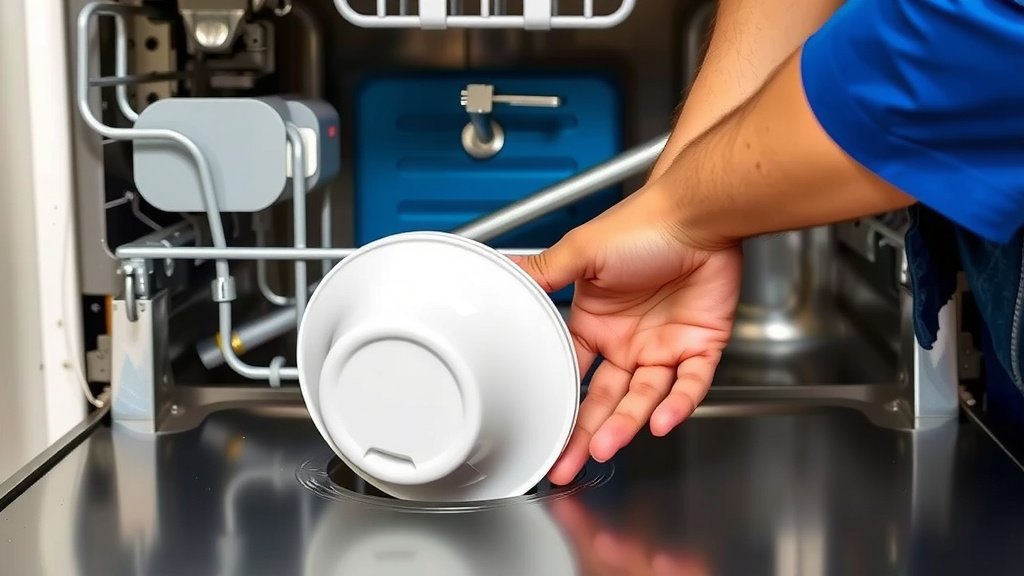
Most dishwasher filters are found at the bottom of the dishwasher. Open your dishwasher door completely. Look at the very bottom of the tub. You should see a circular piece that might twist out. Some models have a two-part filter system. Consult your dishwasher’s manual if you’re unsure. Once you locate it, twist and lift it out.
Cleaning the Filter Thoroughly
Once the filter is out, take it to your sink. Rinse it under warm running water. Use a soft brush, like an old toothbrush, to scrub away any stuck-on food or grime. For stubborn buildup, you can use a little dish soap. Make sure you get all the nooks and crannies. Rinse it thoroughly and set it aside to dry slightly.
Checking for Visible Debris in the Drain Opening
With the filter removed, you should see the drain opening clearly. Use your fingers or a small utensil to check for any large pieces of food or debris lodged right there. Carefully remove anything you find. Be gentle to avoid pushing debris further down. We found that sometimes, the clog is very visible at this stage.
The Baking Soda and Vinegar Method for Deeper Cleaning
Now that the filter is clean and any obvious blockages are removed, it’s time for a more thorough drain cleaning. The baking soda and vinegar combination is a natural and effective way to break down grease and grime. Plus, it helps neutralize odors.
Pouring in the Baking Soda
Start by pouring about one cup of baking soda directly into the drain opening. Try to get as much of it down the drain as possible. You can use a funnel if needed. Let it sit for about 10-15 minutes. This gives the baking soda time to start working on loosening any gunk.
Adding the Vinegar
After the baking soda has sat, it’s time for the fizzy reaction. Slowly pour about one cup of white vinegar into the drain. You’ll hear and see it fizz. This bubbling action is what helps to break down stubborn clogs. You can cover the drain opening loosely with a cloth or stopper while it fizzes. Let this mixture work for another 15-20 minutes. We found this natural reaction is quite effective.
Running a Hot Water Cycle
Once the fizzing has subsided, it’s time to flush everything out. You’ll want to run your dishwasher through a short, hot water rinse cycle. If your dishwasher has a “rinse only” option, that’s perfect. If not, just run a regular short wash cycle without any detergent. This hot water will wash away the loosened debris and the vinegar and baking soda residue. Many sources suggest using the hottest water setting available (Consumer Reports).
Checking for Remaining Clogs and Maintenance
After the hot water cycle, it’s wise to check if the drain is completely clear. You might be able to tell by the sound of the water draining. If it still sounds sluggish, you might have a more stubborn clog. You can repeat the baking soda and vinegar process.
What If the Clog Persists?
If the problem continues, the clog might be further down the drain hose. In some cases, you might need to physically remove the drain hose to clear it. This is a bit more involved and may require consulting your dishwasher’s manual or a professional. Another option is to use a plumbing snake designed for small pipes. Gently insert it into the drain opening to try and dislodge the blockage. Be careful not to force it.
Preventative Maintenance Tips
To avoid future clogs, a few simple habits can make a big difference. Regularly scrape food scraps off your plates before loading them. Don’t put things like large bones, pits, or excessive grease into the dishwasher. Clean your dishwasher filter at least once a month. Running a hot water cycle occasionally can also help flush out any accumulating buildup. We found that consistent filter cleaning is key.
Here’s a quick checklist to help you keep your dishwasher drain clear:- Scrape large food particles off dishes.
- Clean the dishwasher filter regularly.
- Run a hot water cycle monthly.
- Inspect the drain area for debris.
- Address minor clogs promptly.
Conclusion
You’ve now learned how to tackle a clogged dishwasher drain and get your appliance working smoothly again. We found that by cleaning the filter and using the simple baking soda and vinegar method, you can effectively remove common blockages. This not only solves immediate draining issues but also helps prevent future problems. Don’t let a clogged drain disrupt your kitchen routine. Your next step is to gather your supplies and tackle that filter and drain today!
Frequently Asked Questions
How often should I clean my dishwasher filter?
We recommend cleaning your dishwasher filter at least once a month. If you find your dishwasher isn’t draining well, you might need to clean it more frequently, perhaps even after every few uses. Checking it regularly is key to preventing clogs.
Can I use a chemical drain cleaner in my dishwasher?
It’s generally best to avoid harsh chemical drain cleaners in your dishwasher. They can sometimes damage the seals or plastic components. The baking soda and vinegar method we discussed is a safer, natural alternative that proves very effective.
What if the baking soda and vinegar doesn’t work?
If the baking soda and vinegar method doesn’t fully clear the clog, the blockage might be deeper in the drain hose. You may need to consult your dishwasher’s manual to see if you can access and clean the hose directly, or consider using a small plumbing snake.
Why do my dishes still smell after running the dishwasher?
A lingering smell often indicates a clog or buildup in the drain system. Food particles trapped in the filter or drain hose can decompose and cause odors. Cleaning the filter and running a hot water cycle can often resolve this issue.
Is it normal for some food debris to be in the dishwasher filter?
Yes, it’s completely normal to find food debris in your dishwasher filter. That’s exactly what it’s designed to catch! The important part is to remove that debris regularly so it doesn’t cause bigger problems down the line.