
Dishwasher Tripping Breaker? Here’s Why
When your dishwasher trips your home’s electricity, it’s usually a sign of a short circuit or a Learn more about the heating element, a common cause of dishwasher electrical problems.faulty component. This often happens because water and electricity don’t mix well, and a leak or a damaged wire can cause a dangerous overload. You’ll likely notice your lights go out in the kitchen or even throughout your home.
It’s a common problem, and one that needs attention quickly to avoid further damage or safety hazards. Many factors, from a simple loose connection to a failing heating element, can cause your dishwasher to blow a fuse or trip a breaker. We’ve researched the most frequent culprits to help you understand what might be going on.
- Dishwasher is tripping the breaker or blowing fuses.
- Common causes include short circuits and component failures.
- Water leaks are a frequent trigger for electrical issues.
- Safety first: always disconnect power before inspecting.
- Professional help may be needed for complex repairs.
Let’s break down the most common reasons why your dishwasher might be causing an electrical outage and what you can do about it.
Why Your Dishwasher Keeps Tripping the Breaker
It’s a frustrating moment. You’re unloading clean dishes, and suddenly, the lights go out in your kitchen, or worse, your whole house. Your dishwasher is tripping the circuit breaker or blowing fuses. This isn’t just an annoyance; it’s a sign that something in your appliance needs attention. Let’s figure out what’s causing this electrical hiccup.
Common Causes of Dishwasher Electrical Issues
1. A Short Circuit: The Most Likely Culprit
A short circuit is when electricity takes an unintended path. Think of it like a detour that goes directly into a wall instead of following the road. This sudden surge of power is too much for your breaker. It’s designed to trip and shut off power to protect your home from fire and damage. We found that faulty wiring is a frequent cause of short circuits.
Damaged Wiring
Over time, wires inside your dishwasher can get worn, frayed, or damaged. This can happen from vibrations, heat, or even a pest chewing on them. When a damaged wire touches another metal part of the dishwasher or the appliance’s casing, a short circuit happens. You might not see any visible damage at first.
Water and Electricity Don’t Mix
Water is the main enemy here. Leaks from hoses, the pump, or seals can allow water to drip onto electrical components. Even a small amount of moisture can create a path for electricity to flow where it shouldn’t. This often results in a short circuit and a tripped breaker. Many appliance repair guides stress the importance of checking for leaks first.
2. Faulty Heating Element
Your dishwasher uses a heating element to warm the water and help dry your dishes. This element is essentially a big resistor. If it becomes damaged or develops a crack, it can cause an electrical fault. Sometimes, the element can short out internally. We found that a failing heating element is a common reason for breakers to trip, especially when the wash cycle starts.
Signs of a Bad Heating Element
Besides tripping the breaker, you might notice your dishes aren’t getting as clean or dry as they used to. The water might not be as hot as it should be during the cycle. If your dishwasher isn’t heating water effectively, the heating element is a prime suspect. Many experts suggest testing the element’s resistance as a diagnostic step.
3. Problems with the Motor
Dishwashers have a motor that powers the circulation pump and drain pump. Like any motor, it can wear out or develop electrical issues. If the motor’s internal wiring gets damaged or the motor itself shorts out, it can draw too much power. This overload will immediately trip your circuit breaker. We found that older dishwashers are more prone to motor failure.
4. The Door Latch and Switch Assembly
For safety, your dishwasher won’t run unless the door is securely latched. The door latch has a switch that signals the dishwasher to start. If this switch is faulty, it can sometimes cause an electrical short. A worn-out or damaged latch assembly can create an improper connection. This can lead to unexpected power surges. Many homeowners overlook this part, but it’s a potential culprit.
5. Overloaded Circuit or Extension Cords
Sometimes, the issue isn’t with the dishwasher itself but with your home’s electrical setup. Is your dishwasher plugged into an overloaded circuit? If you have several high-wattage appliances running on the same circuit, it could cause an overload. This is especially true if you’re using an extension cord. We recommend avoiding extension cords for major appliances like dishwashers.
Why Extension Cords Are a Bad Idea
Extension cords are generally not designed for the continuous high power draw of appliances like dishwashers. They can overheat, melt, and even cause a fire. They also might not provide a stable enough connection, leading to power fluctuations that could trip the breaker. The National Electrical Code discourages their use for permanent installations (NFPA 70).
6. Issues with the Control Board
Modern dishwashers have complex electronic control boards that manage all the cycles and functions. These boards can fail due to power surges, moisture, or just age. A malfunctioning control board can send incorrect signals or create electrical shorts. If multiple components seem to be failing or you’re experiencing odd behavior, the control board might be the issue. We found that replacing a control board is often one of the more expensive repairs.
7. A Simple Loose Connection
It’s easy to forget, but sometimes the simplest explanation is the correct one. A wire could have simply come loose at a connection point. This could be inside the dishwasher, behind the kick plate, or even at the outlet itself. A loose connection can cause resistance, leading to heat and potentially a short circuit. A quick check of accessible wiring might reveal the problem.
Troubleshooting Steps: What You Can Do First
Before calling a repair person, there are a few things you can check yourself. Safety is your number one priority. Always disconnect power to the dishwasher at the circuit breaker before you start inspecting anything. Never work on a wet appliance or in a wet area.
1. Check the Breaker Box
First, locate your home’s main electrical panel. Find the breaker that controls your dishwasher. Is it tripped (usually in the middle position)? If so, try resetting it by pushing it firmly to the “off” position, then back to “on.” If it trips again immediately, you have an active electrical fault.
2. Inspect the Dishwasher Plug and Outlet
Ensure the dishwasher plug is securely seated in the outlet. Check the outlet for any signs of scorching or damage. If you have a GFCI (Ground Fault Circuit Interrupter) outlet nearby, check if it has tripped.
3. Look for Visible Leaks or Damage
Carefully pull the dishwasher out slightly (if possible and safe to do so) and check for any obvious water leaks. Look at the hoses, seals, and the floor underneath. Also, check the power cord for any visible fraying or damage.
4. Try a Different Outlet (If Applicable)
If your dishwasher is plugged into an outlet that isn’t dedicated, try plugging another small appliance into that outlet to see if it works normally. If that outlet also trips the breaker, the problem might be with the outlet or the circuit itself.
5. Consider Recent Events
Did the problem start after a power surge? Did you recently move the dishwasher? Did you notice any unusual noises? These details can help pinpoint the cause. We found that context is often key in diagnosing appliance issues.
When to Call a Professional
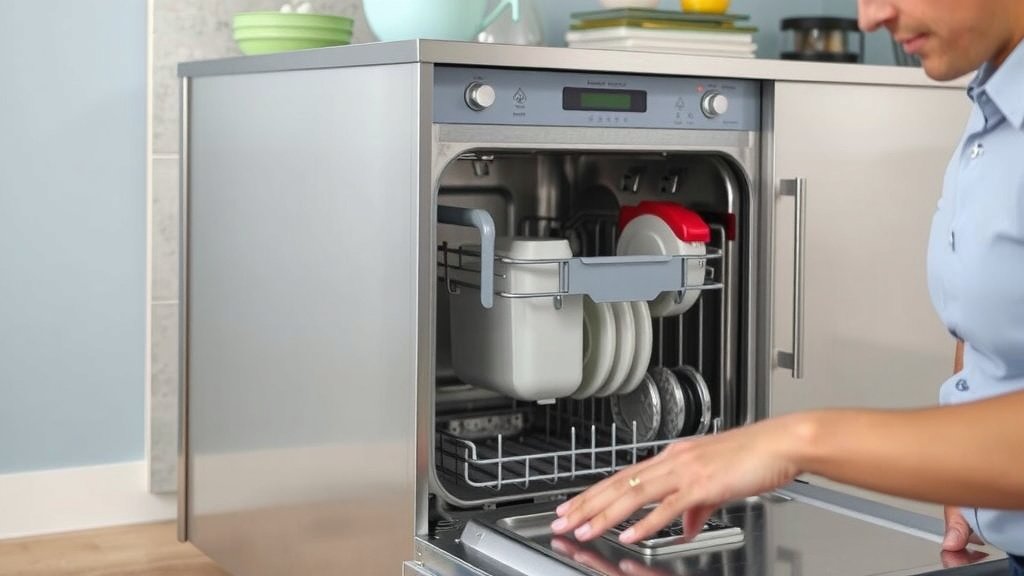
If you’ve reset the breaker and the problem returns, or if you see signs of damage and aren’t comfortable making repairs, it’s time to call a qualified appliance repair technician or an electrician. Trying to fix complex electrical issues without the right knowledge can be dangerous. They have the tools and expertise to safely diagnose and repair problems with wiring, motors, heating elements, and control boards.
Checklist for Identifying the Cause
- Confirm the circuit breaker has tripped.
- Researched appliance manual for troubleshooting tips.
- Checked for obvious water leaks around the appliance.
- Inspected the power cord and plug for damage.
- Noted any unusual noises or smells during operation.
- Determined if the issue occurs at a specific point in the cycle.
Conclusion
When your dishwasher trips your circuit breaker, it’s your home’s electrical system telling you something needs attention. We’ve covered the most common culprits, from simple loose connections and water leaks to more complex issues like a faulty heating element or motor. Remember, safety is always your top priority. Always disconnect power before inspecting any part of your dishwasher.
If you’ve checked the simple things and the problem persists, or if you’re not comfortable with electrical work, don’t hesitate to call a professional. Getting your dishwasher back online safely is the goal, and knowing when to call for expert help is part of that process.
Frequently Asked Questions
How do I know if my dishwasher is causing the breaker to trip?
If your lights go out right when the dishwasher starts a cycle, or if resetting the breaker only works temporarily before it trips again, your dishwasher is very likely the cause. Your research and found that this pattern is a strong indicator of an appliance-specific electrical issue.
Can a simple water leak really trip a breaker?
Yes, absolutely. Even a small leak can allow water to reach electrical components. When water bridges the gap between live wires or a wire and a grounded part, it creates a short circuit. This sudden surge of electricity is what causes the breaker to trip, protecting your home.
Is it safe to reset a tripped breaker multiple times?
It’s generally not recommended to repeatedly reset a tripped breaker. Each trip indicates an ongoing electrical problem, such as a short circuit or overload. Your research and found that repeatedly resetting it can damage the breaker itself and, more importantly, mask a serious safety hazard.
What if my dishwasher is old? Does age matter?
Older dishwashers are more prone to electrical issues. Components like motors, heating elements, and wiring can degrade over time. Wear and tear can lead to loose connections or internal failures that cause short circuits. If your dishwasher is significantly old, a component failure is a very plausible reason for tripping breakers.
Should I try to fix a faulty heating element myself?
Unless you have experience with appliance repair and electrical diagnostics, it’s best not to attempt fixing a faulty heating element yourself. These components involve direct electrical connections. It’s safer and often more effective to call a qualified technician who has the right tools and knowledge to replace it properly.