How to Run Your Dishwasher Efficiently
Running your dishwasher is simpler than you might think. The main steps involve rinsing dishes, loading them correctly, adding detergent, and selecting the right cycle. Many people worry about doing it wrong, but it’s pretty straightforward. You just need to follow a few key steps to get sparkling clean results every time. It’s designed to be an easy appliance to use.
Proper dishwasher use not only ensures your dishes get spotlessly clean but also helps your appliance last longer. We found that pre-rinsing excessively dirty dishes isn’t always necessary, saving you time. Understanding your dishwasher’s settings can also optimize performance and save water and energy. It’s all about a little bit of know-how.
- Rinse excess food off dishes.
- Load the dishwasher properly.
- Add dishwasher detergent.
- Choose the correct wash cycle.
- Start the dishwasher and let it run.
Ready to get those dishes clean without all the hassle? Let’s walk through exactly how to run your dishwasher, step by step.
Getting Your Dishes Spotless: A Dishwasher How-To Guide
So, you’ve got a pile of dirty dishes and a dishwasher ready to tackle them. But how do you make sure it does the best job possible? It’s more than just shoving them in and hitting start. Let’s walk through how to get your dishwasher working efficiently.
We found that a little preparation goes a long way. By following a few simple steps, you can ensure your dishes come out sparkling clean and extend the life of your appliance.
Step 1: Prepping Your Dishes (Less Than You Think!)
Many people wonder if they need to scrub every bit of food off before loading. Good news! Most modern dishwashers and detergents are powerful enough to handle the job. You don’t need to pre-rinse like your grandma did.
Scraping vs. Rinsing
The key is to scrape off large food particles. Think chunks of food, bones, or large bits of leftover meals. You can use a spatula or your hand to get these off.
However, extensively rinsing dishes under running water is usually unnecessary. We found that a light scrape is sufficient for most situations. In fact, leaving a little bit of food residue can actually help the detergent stick better and clean more effectively (Good Housekeeping).
What to Definitely Remove
Some things are just too much for your dishwasher. You should always remove things like:
- Large bones
- Fruit pits
- Large amounts of grease or oil (it can clog filters)
- Anything that could potentially damage the spray arms
Step 2: Loading Your Dishwasher Like a Pro
This is where the magic really happens. Proper loading ensures water and detergent can reach every surface. If you’re cramming things in, you’re likely to end up with dirty spots.
Bottom Rack Essentials
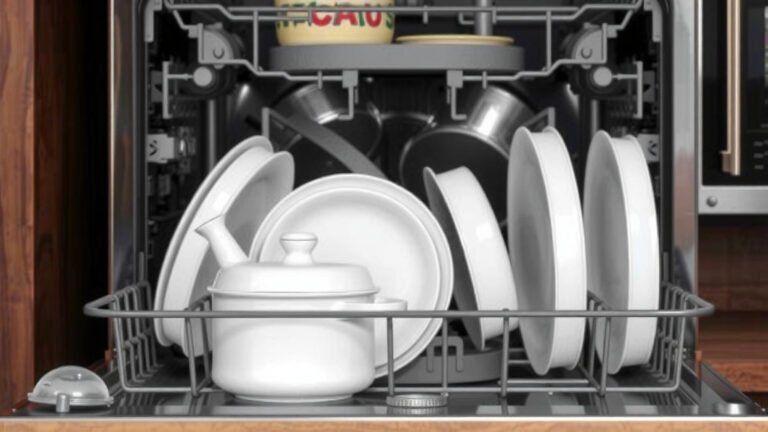
The bottom rack is usually for your larger items. This includes dinner plates, pots, pans, and serving bowls.
- Place plates facing the center spray arm. This allows water to hit them directly.
- Position bowls and pots at an angle. This helps water drain out completely.
- Make sure nothing is blocking the spray arms. Give them a gentle spin to check.
Top Rack Strategies
The top rack is typically for smaller, more delicate items. Think glasses, mugs, plastic containers, and smaller bowls.
- Arrange glasses and mugs upside down. This prevents water from pooling.
- Secure plastic items so they don’t flip over. Lighter items can float.
- Dishwasher-safe lids and small bowls can go here too.
The Cutlery Conundrum
Most dishwashers have a basket for cutlery. It’s best to mix up the items in this basket.
- Don’t nest spoons or forks together. This prevents proper cleaning.
- Place sharp knives point-down for safety.
- Mix forks, spoons, and knives.
We found that a common mistake is overcrowding. Leave some space between items. This allows water to circulate freely.
Step 3: Adding the Detergent
Dishwasher detergent is specially formulated. Don’t use regular dish soap – it will create way too many suds and can damage your machine.
Types of Detergent
You have a few options:
- Powder: Easy to measure, but can sometimes clump.
- Gel: Dissolves well, but might not be as effective on tough stains.
- Pods/Tablets: These are very convenient. They often contain a rinse aid and other cleaning agents.
Where to Put It
Your dishwasher has a designated detergent dispenser. It’s usually located on the inside of the door. There’s typically a main compartment for the wash cycle and sometimes a smaller one for a pre-wash.
- Fill the main compartment. Refer to your dishwasher’s manual for the exact amount. Most pods fill it completely.
- Make sure the dispenser door closes properly.
Many experts suggest using the correct amount of detergent. Too little won’t clean well, and too much can leave residue (Consumer Reports). Most pods are designed for a full load.

Step 4: Choosing the Right Wash Cycle
Dishwashers come with various cycles. Understanding them helps you save water and energy while getting the best clean.
Common Cycles Explained
Here’s a quick rundown of what you’ll likely find:
- Normal/Everyday: Good for most loads of dishes with average soil. This is your go-to cycle.
- Heavy Duty/Pots & Pans: For heavily soiled dishes, pots, and pans. It uses hotter water and a longer wash time.
- Light/Quick Wash: For lightly soiled items or when you need dishes fast. It’s shorter and uses less water.
- China/Delicate: For fragile items. It uses lower temperatures and gentler water pressure.
Extra Options to Consider
Some dishwashers offer extra features like:
- Sanitize: Uses very hot water to kill bacteria. Great for baby bottles or if someone in the house has been sick (CDC).
- High-Temp Wash: Boosts the water temperature for better cleaning and sanitizing.
- Heated Dry: Uses a heating element to dry dishes. Some models have an energy-saving air dry option.
We found that using the Normal cycle for most loads is a good balance of cleaning power and efficiency. Don’t feel pressured to use the Heavy Duty cycle unless your dishes are truly caked on.
Step 5: Starting the Dishwasher
You’ve prepped, loaded, and added detergent. Now it’s time to press the button!
The Final Check
Before you hit start, do one last quick check:
- Ensure the door is securely latched.
- Confirm you selected the desired cycle.
- Check that the rinse aid dispenser is full if your model uses it.
Starting the Cycle
Once everything looks good, press the start button. Many machines have a delay start option if you want to run it during off-peak hours. Otherwise, it’ll begin immediately.
The whole process can take anywhere from an hour to three hours, depending on the cycle you choose. Just let it do its thing!
Quick Checklist for Dishwasher Success
Here’s a quick recap to keep handy:
- Scrape, don’t scrub excess food off plates.
- Load racks correctly, ensuring spray arms can move.
- Use dishwasher-specific detergent, filling the dispenser.
- Choose the right cycle for your load’s soil level.
- Close the door firmly and press start.
Conclusion
You’ve learned how simple it is to get your dishwasher running efficiently. By following these steps, you can achieve sparkling clean dishes with ease. Remember to scrape off large food bits, load your racks thoughtfully, use the right detergent, and select the appropriate wash cycle.
Taking these small actions not only ensures great cleaning results but also helps your appliance last longer. Now, go ahead and give your dishwasher a load – you’ve got this!
Frequently Asked Questions
Do I really need to rinse dishes before putting them in the dishwasher?
Generally, no. Modern dishwashers and detergents are powerful. You only need to scrape off large food chunks; extensive rinsing is usually unnecessary. Leaving a little residue can actually help the detergent work better.
How should I load my plates to get them cleanest?
For best results, place your dinner plates facing the center spray arm on the bottom rack. This allows the water jets to hit them directly. Make sure nothing is blocking the spray arms from spinning freely.
Can I use regular dish soap in my dishwasher?
Absolutely not. Regular dish soap will create excessive suds that can overflow your dishwasher and potentially damage the machine. Always use detergent specifically designed for dishwashers.
What’s the difference between the “Normal” and “Heavy Duty” cycles?
The “Normal” cycle is perfect for most everyday loads with average soil. The “Heavy Duty” cycle uses hotter water and a longer wash time, making it suitable for heavily soiled pots, pans, and dishes that are caked on.
How often should I refill the rinse aid dispenser?
You should refill your rinse aid dispenser when the indicator light comes on or when you notice water spots on your dishes. This is usually every few weeks, depending on how often you run your dishwasher and the type of rinse aid used.