Why Your Dishwasher Leaves Food Particles and How to Fix It
Your dishwasher leaves food particles because of clogged filters, improper loading, or water that isn’t hot enough to break down grease. When the spray arms get blocked or dishes overlap, water can’t reach every surface. The good news? Every one of these problems has a simple fix.
We researched the most common culprits and found that a dirty filter is the number one reason dishes come out with bits stuck to them. Many experts also point to overloading the racks and skipping the rinse cycle as frequent offenders. Even using too much or too little detergent can leave residue behind.
Here’s the short version:
- Clean your dishwasher filter at least once a month.
- Load dishes with space between them, dirty sides facing the spray.
- Scrape off big food chunks, but don’t fully pre-rinse.
- Run hot water at the sink before starting a cycle.
- Check spray arms for clogs and clean them if needed.
So why does this keep happening even when you run a full cycle? Below, we break down every cause and show you exactly how to fix it, step by step. Let’s get those dishes actually clean.
Main Reasons Your Dishwasher Doesn’t Clean Food Off Dishes
The biggest reasons are a dirty filter, blocked spray arms, and crowded racks. Water simply can’t reach the mess. Think of your dishwasher like a sprinkler — if something blocks the spray, some spots stay dry.
We found that most food particle complaints trace back to just a handful of causes. The fixes are easy, and most take less than ten minutes. Let’s walk through each one. Our full troubleshooting guide to a dishwasher not cleaning covers each of these causes in more depth.
Your Filter Is Probably the Culprit
The filter sits at the bottom of your tub and catches everything that falls off your plates. When it clogs, dirty water just keeps circulating back onto your dishes. Gross, right?
Many experts recommend pulling the filter out once a month and rinsing it under hot water (Mayo Clinic). Use an old toothbrush and a little dish soap for stuck-on gunk.
How to Clean the Filter Step by Step
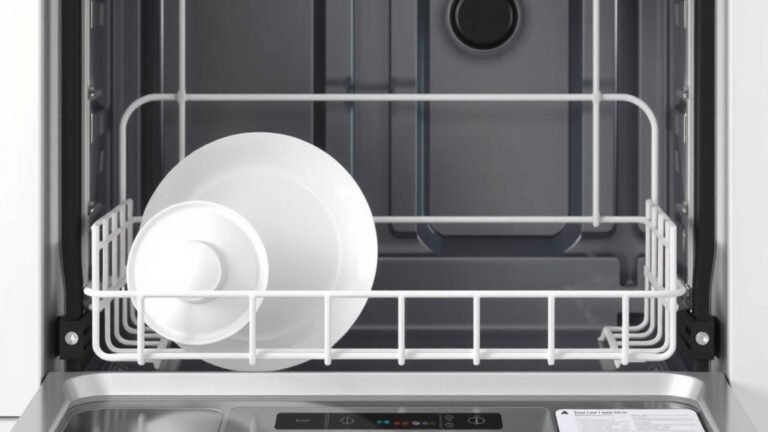
- Remove the bottom rack so you can see the floor of the tub.
- Twist the filter assembly counterclockwise and lift it out.
- Rinse it under hot tap water until it looks clean.
- Scrub gently with a soft brush if you see buildup.
- Drop it back in and twist until it locks snugly.
Never run the dishwasher without the filter. It protects the pump from hard objects like seeds and glass shards.
Loading Mistakes That Leave Food Behind
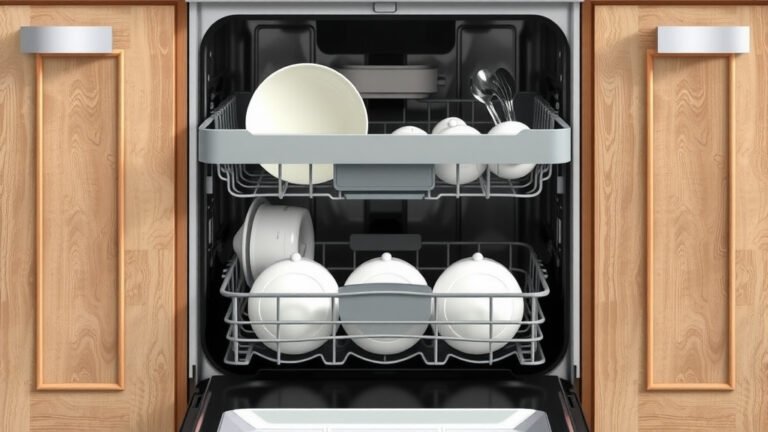
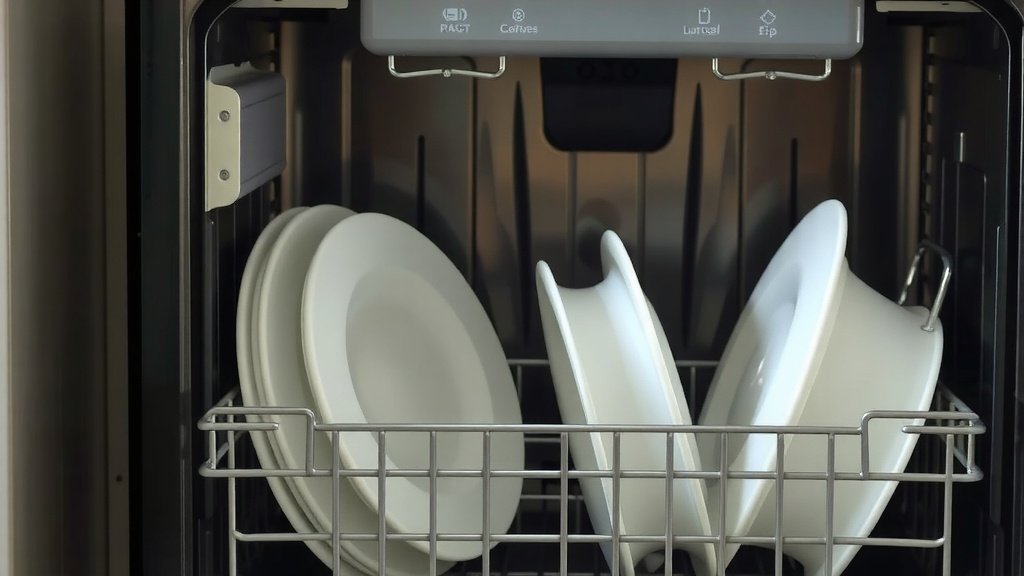
If bowls nest together or plates touch, water can’t reach the surfaces between them. We found that overloading is one of the most common user errors. Give every dish its own little parking spot.
The dirty sides should face the center and the spray arms. Cups and bowls go upside down, obviously — nobody wants a soup bowl full of dirty water.
Items That Should Never Go in the Dishwasher
Some items just don’t wash well and can even block water flow. Large pots, cutting boards, and big mixing bowls can trap smaller dishes underneath them. Hand wash anything oversized.
Clogged Spray Arms and How to Fix Them
Spray arms have tiny holes, and those holes get plugged with seeds, labels, and mineral bits. When they clog, the arms spin weakly or not at all. That’s when you find rice stuck to everything.
Pop the arms off (most just twist or snap out), then poke the holes clean with a toothpick or straightened paperclip. Rinse them and snap them back on. Easy win.
Water Temperature: Why Hotter Is Better
Detergent needs water around 120°F to dissolve grease and food properly. If your water starts cold, the first part of the cycle is basically a lukewarm spa treatment for your leftovers.
Run the kitchen faucet on hot for 30 seconds before you start the cycle. The U.S. Department of Energy notes that water heaters are often set near 120°F, which is the sweet spot for dishwashers.
Check Your Home’s Water Heater Setting
If dishes stay greasy no matter what, peek at your water heater dial. Don’t crank it way up, though. Water above 140°F can scald skin and waste energy (CDC recommends 120°F for home safety).
Are You Using Too Much or Too Little Detergent?
Too much detergent creates clouds of suds that cushion the spray, and leftover suds can redeposit food on your dishes. Too little detergent just doesn’t break down the mess. It’s a Goldilocks situation.
Follow the dosage lines on the pod package or detergent cup. Hard water areas usually need a bit more, plus a rinse aid to help water sheet off cleanly.
Detergent Comparison at a Glance
| Type | Best For | Watch Out For |
|---|---|---|
| Pods | Convenience and consistent dosing | Cost more per load; can drop through cutlery baskets |
| Gel | Soft water and lighter soil | Less effective on baked-on grease |
| Powder | Hard water and heavy grease | Clumps if stored in humid spots |
To Scrape or Not to Scrape Before Loading?
You’ve probably heard both sides of this debate. Here’s the honest answer: scrape, don’t rinse. Big chunks clog the filter, but enzymes in modern detergent actually need a little food residue to latch onto.
Consumer Reports-style testing and many manufacturer manuals agree — a full pre-rinse can make detergent work worse. So spend five seconds scraping, then load and walk away.
Hard Water and Mineral Buildup
If you live in a hard water area, minerals coat your dishes and the tub itself. That film can trap food particles and make everything look dull. The U.S. Geological Survey estimates that most American homes deal with at least moderately hard water.
Run an empty cycle with a dishwasher cleaner tablet or a cup of white vinegar on the top rack once a month. Your glassware will thank you with sparkle.
Quick Maintenance Checklist for Cleaner Dishes
Here’s your simple routine. Print it, tape it to the fridge, whatever works.
- Clean the filter monthly with hot water and a soft brush.
- Inspect and clear spray arm holes every couple of months.
- Run hot tap water for 30 seconds before each cycle.
- Use rinse aid and check the salt level if your model has one.
- Run a vinegar cleaning cycle monthly to fight mineral film.
- Leave enough space between dishes so water flows freely.
Stick with this routine for a few weeks and we’re confident you’ll notice the difference. Clean dishes, zero mystery bits, and one less thing to complain about at dinner.
Conclusion
Food particles on your dishes almost always come down to a handful of fixable problems: a dirty filter, blocked spray arms, crowded racks, or water that isn’t hot enough. We found that most people solve the issue with a monthly filter cleaning and smarter loading alone. Add in a quick spray arm check and a scoop of rinse aid, and you’re covering all the bases. None of this takes more than ten minutes at a time, and none of it requires a repair call. So here’s your next step: pull out that filter tonight, give it a good rinse, and run your next load knowing the fix is already done.
Frequently Asked Questions
Why is my brand new dishwasher leaving food on dishes?
New dishwashers are built to be water-efficient, so they use far less water than older models. If you’re fully pre-rinsing dishes, the sensors may think the load is cleaner than it is and shorten the wash. Scrape instead of rinse, and give the machine a few cycles to adjust.
Can a bad drain pump cause food particles to redeposit?
Yes. If the drain pump is weak or failing, dirty water drains slowly and can slosh back over your dishes mid-cycle. If your tub has standing water after a cycle ends, that’s a sign worth investigating before it worsens.
Do dishwasher cleaning tablets actually work?
They do a decent job on grease and mineral film when used regularly. We found they work best as a monthly maintenance step, not a substitute for manually cleaning the filter. Think of them as a backup, not a cure-all.
Why is there always food on my dishes in the same spot?
A repeat offender in the same location usually points to a loading issue or a blocked spray arm hole in that spray path. Rotate the position of the affected dishes first. If the spot moves with the dish, look at your rack placement; if it stays put, check the arms.
Should I call a repair technician or try fixing it myself?
Try the simple fixes first, since most food particle problems are maintenance issues, not mechanical failures. If you’ve cleaned the filter, cleared the arms, and tested water temperature with no improvement, then a technician can check the pump, circulation motor, or water inlet valve. That diagnosis usually takes one visit.