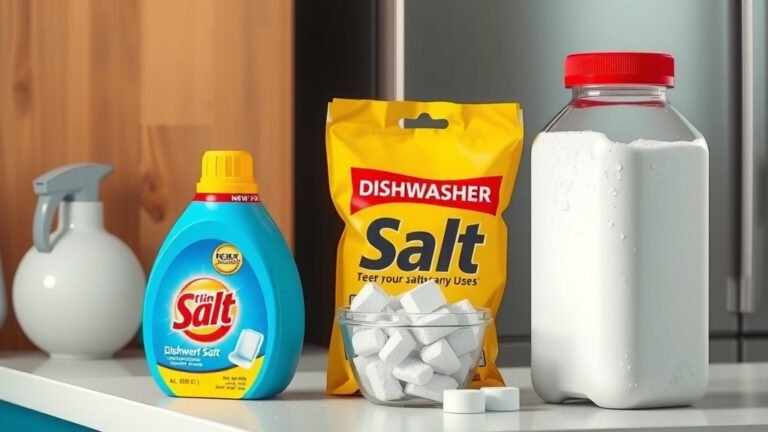

Dishwasher Salt: What It Does For Your Machine
Dishwasher salt is a special type of salt used to soften your dishwasher’s water supply. It helps prevent limescale buildup. This buildup can damage your machine and leave spots on your dishes. Using it is key for great cleaning results, especially in hard water areas.
Hard water contains high levels of minerals like calcium. These minerals can cause white, chalky deposits. Dishwasher salt works with your dishwasher’s internal water softener. It regenerates the ion-exchange resin, removing these minerals. This ensures your detergent works better and your glasses come out sparkling.
- Dishwasher salt softens hard water.
- It prevents limescale buildup inside your machine.
- This helps your detergent work more effectively.
- It stops spots and film on your dishes and glassware.
Ready to learn more about how this little box of crystals keeps your dishwasher running smoothly? Let’s dive in!
How Dishwasher Salt Keeps Your Dishes Sparkling
You might be wondering why your dishwasher needs something that looks just like table salt. It’s a fair question! Dishwasher salt isn’t for eating. It’s a special additive designed to work with your machine’s water softening system. Think of it as a spa treatment for your dishwasher’s water supply.
Its primary job is to combat hard water. Hard water has a lot of dissolved minerals, mainly calcium and magnesium. These minerals are the culprits behind limescale. This scale can coat the inside of your dishwasher. It can also leave unsightly spots and a cloudy film on your clean dishes and glassware.
The Science Behind Soft Water
Your dishwasher has a built-in water softener. This softener contains tiny resin beads. These beads are designed to attract and capture the mineral ions (calcium and magnesium) from the incoming water. This process is called ion exchange. The result is softened water reaching your wash and rinse cycles.
However, these resin beads can only hold so many mineral ions. Once they are full, they need to be cleaned or “regenerated.” This is where dishwasher salt comes into play. The salt is stored in a separate compartment. When needed, it dissolves and creates a brine solution.
Regeneration: The Magic Step
This salt solution flows through the resin beads. It effectively washes away the captured calcium and magnesium ions. These minerals are then flushed out of the dishwasher with the wastewater. This process restores the resin beads. They are now ready to soften more water.
Without enough dishwasher salt, the resin beads become saturated. They can no longer soften the water effectively. This means hard water minerals continue to flow through your dishwasher. They start to cause problems for both your machine and your dishes. It’s a continuous cycle, and the salt is the key player.
Why You Need Dishwasher Salt, Especially in Hard Water Areas
If you live in an area known for hard water, using dishwasher salt is almost essential. We found that in regions with hard water, limescale buildup can occur rapidly. This buildup can significantly reduce your dishwasher’s efficiency.
Limescale is not just unsightly. It’s also a heat insulator. This means your dishwasher has to work harder and use more energy to heat the water to the correct temperature. Over time, this can lead to increased energy bills. It also puts extra strain on your dishwasher’s heating element.
The Impact on Your Dishes
Beyond appliance efficiency, the most visible sign of not using dishwasher salt is on your dishes. You’ll notice white spots, streaks, and a cloudy film. This is especially noticeable on glassware and dark-colored dishes.
Many people mistakenly blame their detergent or rinse aid for these spots. While those products are important, they can’t fully compensate for the effects of hard water. Dishwasher salt directly addresses the root cause by softening the water itself. This allows your detergent to work as it’s intended.
A Closer Look at Limescale Effects
We found that limescale deposits can also clog the spray arms of your dishwasher. This reduces water pressure and prevents water from reaching all areas of the wash tub. Food particles may not be rinsed away properly. This leads to less-than-clean dishes.
Furthermore, limescale can accumulate on heating elements. This can cause them to fail prematurely. Replacing a heating element can be a costly repair. Using dishwasher salt is a simple, affordable way to help prevent these issues.
How Dishwasher Salt Differs from Table Salt
It’s tempting to think you can just grab a box of regular table salt. However, this is a big mistake. Dishwasher salt is specifically designed for your appliance. It has some key differences from the salt you use in your kitchen.
Firstly, dishwasher salt is much coarser and purer than table salt. It typically contains 99.9% sodium chloride. It’s also free from additives like anti-caking agents and iodine. These additives are common in table salt. They can cause cloudiness and damage your dishwasher’s delicate softening unit.
The Purity Factor
We found that the purity of dishwasher salt is critical. The additives found in table salt can clog the ion-exchange resin. This reduces its effectiveness. It can also lead to a buildup of gunk in your dishwasher’s internal components. Over time, this can lead to expensive repairs.
Imagine trying to use a fine powder to scrub something. It might not work as well as a coarser grain. In this case, the fine particles and additives in table salt can create a mess rather than a solution. Always use salt specifically labeled for dishwashers.
Particle Size Matters
The coarse, granulated texture of dishwasher salt is also important. It’s designed to dissolve slowly. This ensures a consistent supply of brine solution for the regeneration process. Fine-grained table salt might dissolve too quickly. It could also clump together and not effectively regenerate the resin beads.
Many dishwasher manufacturers strongly advise against using table salt. They emphasize using only dedicated dishwasher salt. This is to protect your appliance and ensure optimal cleaning performance.
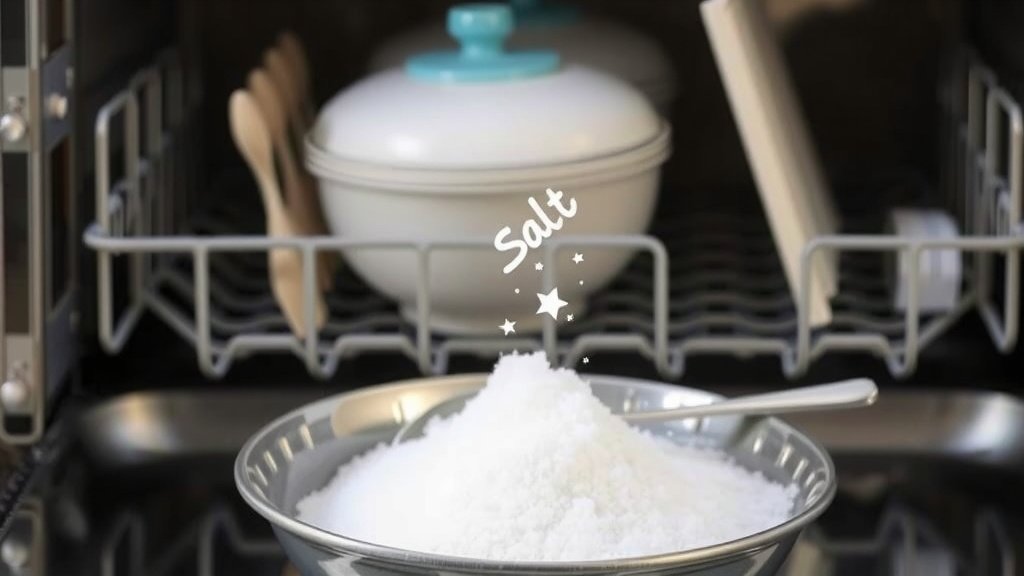
When and How to Use Dishwasher Salt
Your dishwasher will tell you when it’s time to add salt. Most modern dishwashers have an indicator light on the control panel. This light illuminates when the salt reservoir is low.
If your dishwasher doesn’t have an indicator, you’ll need to check the salt compartment periodically. This is especially important if you live in a hard water area or use your dishwasher frequently. We found that checking monthly is a good habit.
Adding the Salt: A Simple Process
Adding dishwasher salt is straightforward. First, locate the salt compartment. It’s usually at the bottom of your dishwasher, often behind a screw-off cap. Consult your dishwasher’s manual if you’re unsure.
Once you’ve found it, unscrew the cap. You’ll then fill the compartment with dishwasher salt. You might need to use a funnel that often comes with the salt or your dishwasher. Fill it until the salt is no longer being absorbed. You might see some water come up as you fill it; this is normal.
The First Wash After Refilling
After filling, screw the cap back on tightly. Run a rinse cycle or a full wash cycle. This allows the salt to dissolve and begin working. It’s a good idea to run a cycle without dishes the first time you refill. This helps flush out any excess salt.
You don’t need to add salt after every wash. It’s only added when the indicator light comes on or when the compartment is depleted. This can be anywhere from once a month to every few months, depending on your water hardness and usage.
Here’s a quick checklist to ensure you’re using dishwasher salt correctly:
- Check your dishwasher’s manual for the salt compartment location.
- Always use salt specifically labeled for dishwasher use.
- Fill the salt reservoir when the indicator light appears.
- Ensure the salt compartment lid is screwed on tightly.
- Run a rinse or wash cycle after refilling the salt.
- Don’t worry if water comes up when filling; it’s normal.
Conclusion
You’ve learned that dishwasher salt is more than just a crystal; it’s your secret weapon against hard water. By softening your water supply, it prevents damaging limescale buildup inside your dishwasher. This action ensures your detergent works at its best. Plus, it keeps your dishes and glassware free from those annoying spots and cloudy films. Using the right salt is a simple step that protects your appliance and guarantees sparkling results. Make sure you’re always using dedicated dishwasher salt and refilling the reservoir when your machine tells you to. Your dishwasher will thank you for it!
Frequently Asked Questions
Can I use regular table salt in my dishwasher?
No, you absolutely should not use regular table salt. Table salt contains additives like anti-caking agents and iodine. These can clog your dishwasher’s water softener and damage its internal components. Always use salt specifically labeled for dishwasher use.
How often do I need to add dishwasher salt?
The frequency depends on your water hardness and how often you run your dishwasher. Many modern dishwashers have an indicator light that tells you when the salt is low. If yours doesn’t, check the salt compartment monthly. You might need to refill it anywhere from once a month to every few months.
What happens if I forget to add dishwasher salt?
If you forget to add dishwasher salt, your dishwasher’s water softener will eventually become saturated with minerals. This means hard water will start affecting your wash cycles. You’ll likely notice spots and film on your dishes, and limescale buildup will begin inside your machine.
Is dishwasher salt the same as kosher salt?
While kosher salt is also a coarser salt, it often contains anti-caking agents. These additives can be harmful to your dishwasher’s softening system. Dishwasher salt is specifically processed to be pure sodium chloride without these extra ingredients. Stick to salt labeled for dishwashers.
Why does water come up when I fill the salt compartment?
It’s completely normal for water to be in the salt compartment when you open it, and for some water to come up as you fill it. The salt compartment is designed to hold water, which dissolves the salt to create the brine needed for the regeneration process. Just fill it until the salt stops being absorbed.