How to Load Mugs in Your Dishwasher Perfectly
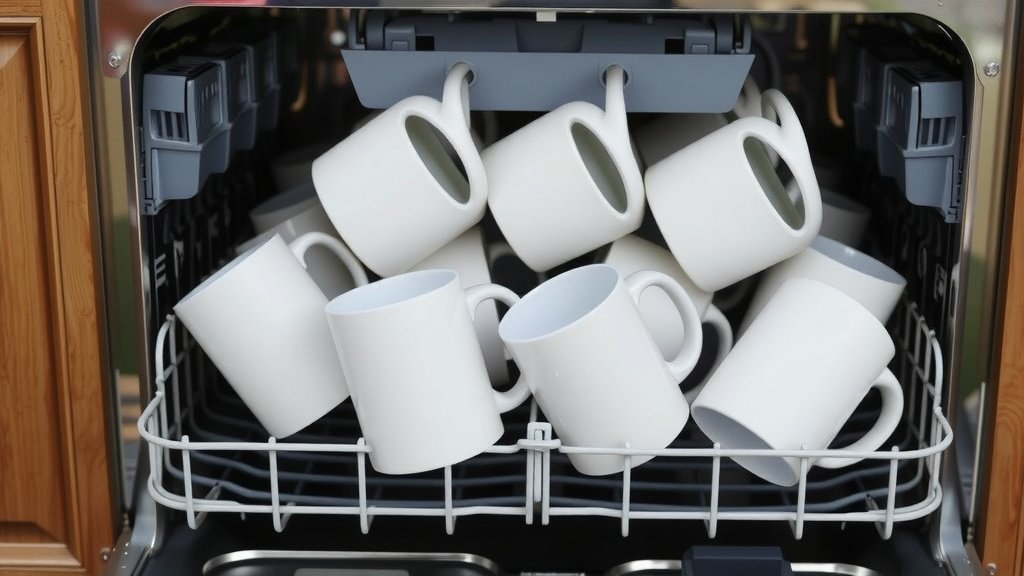
Loading your mugs into the dishwasher is easier than you think! For sparkling clean mugs, **place them upside down** on the top rack. Make sure they aren’t touching other dishes. This simple positioning prevents water from pooling and allows the spray arms to reach every nook.
Dishwashers are designed to handle a variety of dishware. When loading mugs, the goal is to ensure water can flow freely. We found that avoiding overcrowding is key for **optimal cleaning results**. This simple tip helps your dishwasher work its best for your favorite coffee cups. Dishwashers are designed to handle a variety of dishware, and knowing what’s safe helps.
- Place mugs upside down on the top rack.
- Ensure mugs are not touching other items.
- Avoid overcrowding the dishwasher.
- Check that the spray arms can rotate freely.
Let’s walk through exactly how to get your mugs perfectly clean in the dishwasher, step by step.
Loading Your Mugs for a Sparkling Clean
Getting your favorite mugs sparkling clean in the dishwasher is pretty straightforward. The main goal is to let water and detergent reach every surface. We found that simple placement makes a huge difference. Let’s get your mugs looking their best!
Where to Put Your Mugs in the Dishwasher
The top rack is generally the best place for your mugs. This area is usually a bit further away from the heating element, protecting more delicate items. It also offers more space for mugs to sit without being too close to other dishes. This prevents potential damage to both your mugs and other items.
Why the Top Rack is King for Mugs
Have you ever pulled a mug out of the dishwasher with a little puddle of water still inside? That’s often because it wasn’t positioned correctly. Placing mugs upside down allows any water to drain out freely. Many dishwasher manufacturers recommend this for optimal drying (Whirlpool).
The top rack also has specialized holders or tines. These are perfect for securely holding mugs in place. This stability is important. It stops them from wobbling around and potentially cracking during the wash cycle. We found this to be a key factor in preventing accidents.
The Upside-Down Principle
This is probably the most important rule for mug washing. Always place mugs upside down. Imagine a small pool forming in the bottom of your mug. If it’s facing up, that water just sits there. It can leave water spots or even a ring of detergent residue. Nobody wants that in their morning coffee!
When upside down, the water runs out. It also allows the cleaning spray to hit the inside of the mug more effectively. Think of it like setting up a tiny rain shower inside your dishwasher. You want that shower to hit everywhere, right?
Spacing is Your Friend: Avoiding Crowding
You might be tempted to pack your dishwasher full. We get it; you want to get everything clean at once! However, overcrowding is a common mistake. It’s a recipe for less-than-clean dishes, especially mugs.
Why Mugs Need Their Space
Dishwashers rely on the spray arms to blast water and detergent all around. If your mugs are crammed together, or touching other dishes, the water can’t get to all the surfaces. This creates hidden spots where dirt and grime can cling. It’s like trying to wash your hands in a bucket with too many other hands!
We found that leaving a little breathing room between each mug is essential. This ensures that water can circulate freely. It also helps with drying. Proper spacing means air can get in there too, helping to evaporate any remaining moisture.
Keeping Mugs Separate from Other Dishware
Mugs come in various shapes and sizes. Some are tall and narrow, while others are wide and squat. This means they can take up a lot of space. When loading, try to position them so they don’t lean against plates or bowls.
If a mug is leaning on a plate, the plate might get better cleaning than the inside of your mug. Or worse, a heavy plate could put pressure on a delicate mug handle. We’ve seen that this can sometimes lead to chips or cracks. Give your mugs their own little spot on the rack.

Checking the Spray Arms: The Unsung Heroes
The spray arms are what do the heavy lifting in your dishwasher. They spin around, spraying hot water and detergent. If anything is blocking them, your cleaning power is significantly reduced.
The Spin Test: Ensuring Free Movement
Before you start the cycle, give the spray arms a gentle spin with your hand. Do they move freely? Or do they bump into mugs, utensils, or anything else? If they hit something, you need to rearrange your load.
We found that even a small obstruction can stop a spray arm from rotating properly. This means a whole section of your dishwasher might not be getting cleaned. Make sure those mugs aren’t sticking up too high or leaning out into the path of the spray. Keeping them secure on the top rack usually solves this.
Dishwasher-Safe vs. Hand-Wash Only Mugs
Not all mugs are created equal when it comes to dishwasher durability. While most ceramic and porcelain mugs are fine, some materials require special care.
Hand-painted mugs, especially those with raised designs or metallic accents, can fade or chip in the dishwasher. Mugs made from certain plastics might warp. Very delicate antique china mugs are also best washed by hand. Always check the manufacturer’s care instructions if you’re unsure. Many experts agree that if a mug is particularly precious or has a delicate decoration, hand-washing is the safest bet (Good Housekeeping Institute). Mugs made from certain plastics might warp, and some materials require special care.
| Mug Material | Dishwasher Safe? | Notes |
|---|---|---|
| Ceramic | Yes | Most common type. Place upside down on top rack. |
| Porcelain | Yes | Similar to ceramic. Ensure good spacing. |
| Stoneware | Yes | Generally durable, but check for decorative elements. |
| Glass | Yes | Ensure it’s tempered glass. Avoid extreme temperature changes. |
| Hand-Painted/Metallic Accents | Often No | Designs can wear off. Hand-wash to preserve. |
| Travel Mugs (Stainless Steel) | Often Yes (check lid) | Plastic lids may warp. Wash lid separately if needed. |
Quick Checklist for Perfect Mug Loading
Here’s a quick rundown to make sure you’re loading your mugs like a pro:
- Always place mugs upside down.
- Load them on the top rack.
- Give each mug plenty of space.
- Keep mugs from touching other dishes.
- Ensure spray arms can spin freely.
- Double-check if your mug is dishwasher safe.
Conclusion
You’ve learned the simple secrets to perfectly clean mugs from your dishwasher. By placing them upside down on the top rack, ensuring they have ample space, and checking that the spray arms can move freely, you’ll avoid water spots and detergent residue. Remember to always check if your favorite mugs are dishwasher-safe before loading them. These easy steps will help your mugs shine, ready for your next favorite beverage. Go ahead and load up your dishwasher with confidence!
Frequently Asked Questions
Can I put mugs in the bottom rack of my dishwasher?
It’s generally best to avoid putting mugs on the bottom rack. The heat is more intense there, and the spray arms can be more forceful, potentially damaging delicate mugs. We found the top rack offers a gentler wash and better protection for your mugs.
What if my mugs have handles? How should I load those?
Mug handles typically don’t pose a problem if you follow the basic rules. Just ensure the handle doesn’t hook onto another dish or block a spray arm. We found that placing them upright or slightly angled on the top rack usually works well, as long as they aren’t touching anything else.
My mugs still have water in them after the cycle. What am I doing wrong?
This often happens if mugs aren’t placed completely upside down. Even a slight tilt can create a small pool. Make sure the opening is facing directly downwards so water can drain out completely during the cycle and drying phase.
Can I put travel mugs in the dishwasher?
Many travel mugs, especially those made of stainless steel, are dishwasher-safe. However, you’ll want to check the lid carefully, as plastic components can warp. We recommend washing the lid separately by hand if you’re unsure, or if it’s not designed for the dishwasher.
What about mugs with a lot of decoration or lettering?
Mugs with hand-painted designs, decals, or metallic lettering are often not dishwasher-safe. The harsh detergents and high heat can cause these decorations to fade, chip, or peel off over time. For these special mugs, hand-washing is always the safest bet to preserve their look.