Dishwasher Safe? What Items You Cannot Wash
Many items shouldn’t go in your dishwasher, even though it seems like a magical cleaning machine. You might ruin delicate items or damage your dishwasher itself. Certain materials like cast iron, wood, and non-stick pans should steer clear of the dishwasher.
Even some plastics and sharp knives can have a bad time. High heat and harsh detergents can warp plastic or dull knife edges. We found that putting the wrong things in can lead to costly replacements.
- Don’t wash wooden items.
- Avoid putting cast iron in the dishwasher.
- Sharp knives can get dull.
- Some plastics might melt.
- Check labels for “dishwasher safe.”
Let’s walk through exactly what to keep out of your dishwasher and why to keep your kitchenware looking its best.
Household Items Best Kept Away From Your Dishwasher
While your dishwasher is a fantastic time-saver, it’s not a one-size-fits-all cleaning solution. Some items can come out looking worse for wear, or worse, damage your appliance. We’ve compiled a list of common household items that should never enter the dishwasher.
Materials That Don’t Play Nicely With Dishwashers
The material of an item is often the biggest clue as to whether it belongs in the dishwasher. High heat, harsh water jets, and strong detergents can be tough on certain substances.
Wood and Bamboo Wonders
Those beautiful wooden spoons and bamboo cutting boards? They need a gentle hand wash. Dishwasher cycles strip away their natural oils. This can lead to drying, cracking, and warping over time. We found that prolonged exposure to water makes them porous and prone to bacteria growth. Keep them looking lovely with a quick scrub and dry.
Cast Iron’s Cautionary Tale
Your trusty cast iron skillet is a culinary workhorse. However, it’s extremely sensitive to dishwashers. The intense heat and detergents strip away the skillet’s seasoned non-stick surface. This can lead to rust and a ruined pan. Many cooking enthusiasts agree that a simple wipe-down and re-oiling after use is best for cast iron. It’s a small effort for a lifetime of delicious meals.
The Deal With Non-Stick Cookware
Many modern non-stick pans have special coatings. While some are advertised as dishwasher safe, it’s often a good idea to err on the side of caution. The abrasive detergent and high heat can degrade these delicate coatings faster. This reduces their non-stick capabilities and lifespan. Always check the manufacturer’s instructions. We found that handwashing extends the life of these pans considerably.
Aluminum and Copper Concerns
Items made from un-anodized aluminum or copper can also suffer in the dishwasher. The high heat and alkaline detergents can cause discoloration and dark spots. This is called oxidation. While it might not harm the function of the cookware, it certainly affects its appearance. We recommend a gentle hand wash for these metals to maintain their shine.
Sharp Objects Need Special Care
Your kitchen knives are precision tools. The dishwasher environment is not kind to their sharp edges.
The Blade Blunting Blues
Dishwashers toss sharp knives around with other items. They can bang against plates, bowls, and utensils. This is a sure way to dull the blade. The harsh detergents can also corrode the metal over time. Most chefs and knife experts suggest handwashing your sharpest knives immediately after use. This preserves their keen edge and prevents rust.
Beware of Fine China and Hand-Painted Items
Delicate dishes often have hand-painted designs or gold trim. The abrasive water jets and strong detergents can chip away at these decorative elements. High heat can also cause fine china to craze or crack over time. We found that these precious items are best washed by hand with a mild soap and a soft sponge. It’s worth the extra minute to preserve their beauty.
Plastics: Not All Are Created Equal
The world of plastics is vast and varied. Some can handle the dishwasher, while others will warp, melt, or leach chemicals.
Check for the “Dishwasher Safe” Symbol
This is your golden rule for plastics. If there’s no symbol, or if the plastic feels flimsy, it’s best to hand wash. Many experts advise against putting plastics that are not explicitly labeled “dishwasher safe” into the machine. High heat can cause certain plastics to deform or even melt. This can ruin the item and potentially contaminate your dishwasher.
Avoid Putting These Plastics in the Dishwasher:
- Take-out containers: These are usually thin and designed for single use.
- Styrofoam: This will absolutely melt and make a mess.
- Some reusable food storage bags: Check the specific product details.
- Items with glued-on labels or decorations: These can peel off.
We’ve found that reusable silicone food storage bags are often a good dishwasher-safe alternative.
Other Household Items to Skip
Beyond cookware and dishes, several other everyday items should avoid the dishwasher.
Wooden Cutting Boards and Utensils Again
Yes, we mentioned them under materials, but it bears repeating. Wood absorbs moisture and detergents. This can lead to the growth of harmful bacteria like Salmonella or E. coli (CDC). Regular hand washing and air drying are essential for hygiene and longevity.
Anything with a Sticker or Label That Could Come Off
Think about jam jars or other food containers. The heat and water can cause labels and adhesive to peel off. This gunk can then clog your dishwasher’s filter or spray arms. It’s a common annoyance that’s easily avoided. A quick soak and scrub is usually enough to remove them by hand.
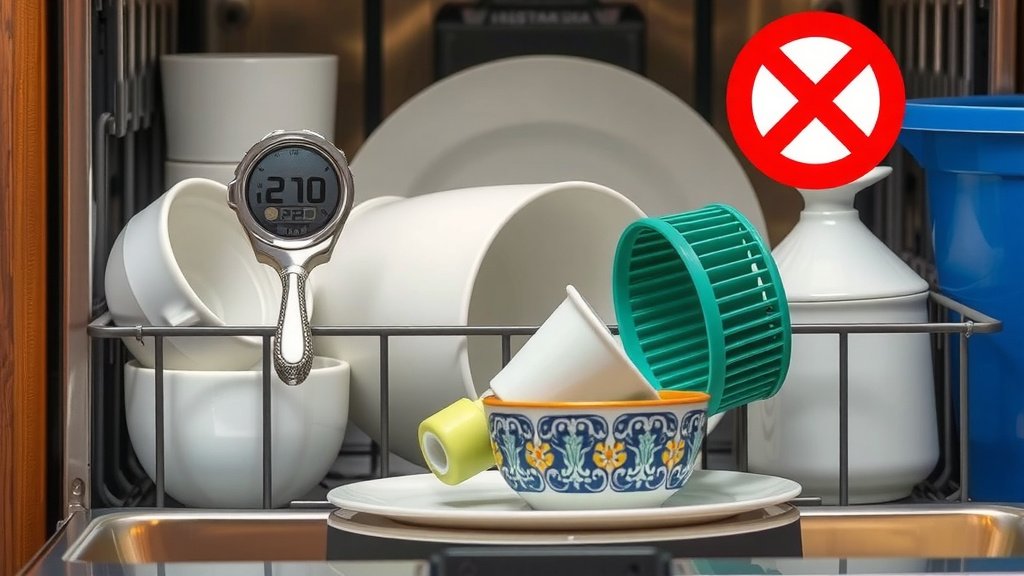
Electronics and Batteries
This might seem obvious, but you’d be surprised! Never put anything with electronic components or batteries in the dishwasher. Water and electricity do not mix. This can cause serious damage and potential hazards. Keep these items far away from your appliance.
Certain Sponges and Brushes
While some dishwashers can sanitize sponges, others can actually damage them. Check the sponge’s packaging. Some sponges are designed to break down with high heat and harsh detergents. We found that frequent replacement of sponges is often more effective than trying to sanitize them in the dishwasher.
A Quick Dishwasher Safety Checklist
Before you load up your next cycle, consider this quick checklist:
- Is it made of wood, cast iron, or un-anodized aluminum?
- Is it a sharp knife?
- Is the plastic NOT labeled “dishwasher safe”?
- Is it delicate like fine china or hand-painted?
- Does it have a sticker that might peel off?
When in doubt, it’s always safer to hand wash. Protecting your belongings and your dishwasher is a win-win!
Conclusion
You’ve learned a lot about what to keep out of your dishwasher. From your favorite cast iron skillet to delicate china and even certain plastics, knowing the rules protects your kitchenware. Handwashing these items not only preserves their quality but also saves you money on replacements. Trust your judgment and check labels carefully. When in doubt, a simple hand wash is always the safest bet for keeping your belongings looking their best for years to come.
Frequently Asked Questions
Can I wash my wooden cutting board in the dishwasher?
No, you should avoid putting wooden cutting boards in the dishwasher. The hot water and strong detergents strip away the wood’s natural oils, leading to drying, cracking, and warping. This also makes the board more porous and harder to keep hygienic.
Is it ever okay to put sharp knives in the dishwasher?
It’s best to never put sharp knives in the dishwasher. The rough cycle can cause them to bang against other items, dulling the blades. The harsh detergents can also corrode the metal over time, leading to rust and a ruined edge.
What should I do if a plastic item isn’t labeled “dishwasher safe”?
If a plastic item doesn’t have a “dishwasher safe” label, it’s safest to hand wash it. High heat in the dishwasher can cause unlabeled plastics to warp, melt, or even leach chemicals. Always err on the side of caution to protect both the item and your appliance.
Will my non-stick pans get ruined in the dishwasher?
While some non-stick pans are advertised as dishwasher safe, handwashing is generally recommended to extend their life. The abrasive detergents and high heat can degrade the non-stick coating over time, reducing its effectiveness. Always check the manufacturer’s care instructions for your specific pans.
What happens if I accidentally put something with a sticker in the dishwasher?
If a sticker or its adhesive comes off in the dishwasher, it can cause problems. The loose paper or sticky residue can clog your dishwasher’s filter or spray arms, hindering its performance. It’s best to remove labels by hand before loading items like glass jars.