How a Dishwasher Float Switch Works: Simple Guide
A dishwasher float switch is a small safety device that sits at the bottom of your dishwasher and tells the machine when to stop filling with water. As water rises, the float lifts, and once it reaches a set level, the switch cuts power to the fill valve. In short, it keeps your dishwasher from overfilling and flooding your kitchen floor.
Think of it like the life jacket of your dishwasher. If water levels get too high, the float rises and triggers the switch to shut things down. We researched how these little parts work, and we found that many common issues, like standing water at the bottom of your tub, often trace back to a stuck or dirty float. The good news? This is one of the easier dishwasher problems to check yourself.
- The float switch controls how much water enters your dishwasher.
- It works by rising with the water level and triggering a switch at a set point.
- If the float gets stuck, your dishwasher may not fill or may overfill.
- Food scraps and grease are the most common culprits.
- Most float problems can be spotted and fixed with basic cleaning.
Let’s walk through exactly how this small but mighty part works, step by step, so you can spot problems early and keep your dishwasher running like it should.
Understanding Your Dishwasher’s Water Level Control
At its heart, your dishwasher’s water level control is a simple on/off messenger. It watches the water as it fills and tells the machine “that’s enough” at just the right moment. No fancy computers doing the heavy lifting here — in many models, it’s a floating piece of plastic and a switch doing all the work.
We found that many homeowners assume their dishwasher measures water with a high-tech sensor. Sometimes it does. But in plenty of machines, especially older or budget-friendly models, the float assembly is the real boss of water levels.
The Parts That Make It Happen
Before we go further, let’s name the players. Knowing these parts makes everything else easier to understand.
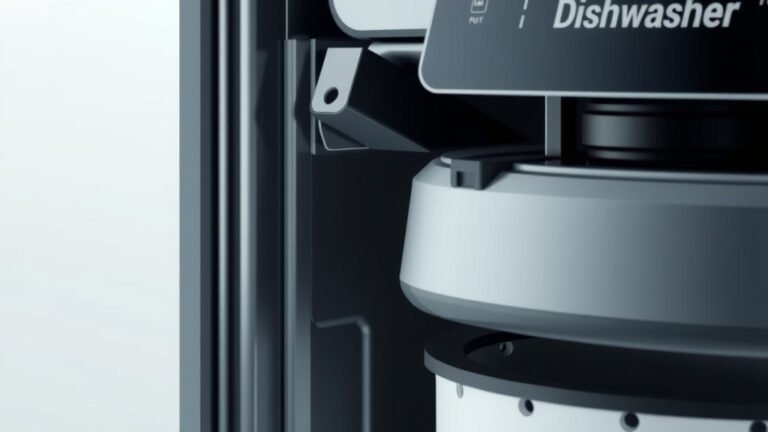
- The float: A dome or cylinder, usually plastic, that sits in the bottom of the tub. It rides up and down with the water.
- The float switch: A small electrical switch mounted underneath the tub. It turns on or off based on the float’s position.
- The fill valve: The gate that lets water in from your home’s supply line. The switch controls this valve.
- The float tube or cover: A guide that keeps the float moving straight up and down instead of wobbling around.
Think of it like a driveway alert. The car (water) rolls in, trips the sensor (switch), and the light comes on (valve shuts off). Simple, reliable, and hard to fool — unless something jams the works.
Step by Step: What Happens During a Fill Cycle
Here’s the play-by-play of a normal wash, from the moment you press start.
Step 1: The Cycle Starts and the Valve Opens
You press start. The control board sends power to the fill valve, and water begins flowing into the tub. At this point, the float is resting at its lowest position, sitting near the tub floor.
Step 2: The Water Rises and Lifts the Float
As water pours in, it lifts the float like a boat rising on a rising tide. The float has no opinion about anything — it just moves with the water. That’s its whole job.
Step 3: The Switch Trips at the Set Level
Once the water hits the designed level, the float has risen high enough to press a small plunger or lever on the switch below. This cuts power to the fill valve. Water stops. Many experts say this fail-safe design is why float systems have stuck around for decades.
Step 4: Washing Begins
With the right amount of water in the tub, the pump and spray arms take over. The float now just sits there, bobbing quietly, waiting in case something goes wrong.
What If the Switch Fails? Here’s the Backup Plan
Now for the part that makes this little device a hero. Some dishwashers use the float as a flood guard, not just a level setter. If the primary water level sensor fails and water keeps rising, the float keeps rising too. At a higher point, it trips a second time and kills the fill entirely.
We found that this design explains a common head-scratcher: a dishwasher that won’t fill at all. If the float is stuck in the “up” position — say, a piece of popcorn lodged under it — the machine thinks the tub is already full. It never opens the valve. No water, no wash, no fun.
Standing water tells the opposite story. A float stuck down can keep the drain or the fill logic confused, leaving a sad puddle at the bottom of your tub.
FLOAT VS. PRESSURE SWITCH: HOW MACHINES MEASURE WATER
Not every dishwasher uses a float as the main water-level judge. Many modern models rely on a pressure switch instead, and the float becomes the safety backup. Here’s how the two approaches compare.
| Feature | Float Switch | Pressure Switch |
|---|---|---|
| How it works | Floating part physically rises and trips a switch | Air pressure in a tube changes as water fills |
| Common location | Bottom of the tub | Behind or under the tub, hidden from view |
| Most common problem | Food scraps or grease jamming the float | Clogged or cracked air tube |
| Easy to check yourself? | Yes — lift the float by hand | Usually not without disassembly |
| Role in most machines | Safety backup or primary level control | Primary level control in many newer models |
Either way, the goal is the same: stop the water at the right level. The float just does it in the most old-school, mechanical way possible — and honestly, we respect that.
SIGNS YOUR FLOAT SWITCH MAY BE TROUBLE
Wondering if your float is the culprit behind your dishwasher drama? We found these symptoms show up again and again in repair guides and manufacturer troubleshooting charts.
- The dishwasher won’t fill with water at all.
- The machine overfills, and water creeps up near the door.
- You hear clicking sounds right at the start of a cycle.
- There’s standing water in the bottom after a cycle ends.
- The cycle starts, stops filling early, and the dishes come out dirty.
- You notice error codes related to water level on models with displays.
Any one of these could have other causes. But the float is easy to check, so it’s a smart first stop before you call in a pro.
Why Floats Get Stuck in the First Place
Food particles, grease film, and hard-water gunk love to collect around the float base. Over time, that buildup acts like glue, slowing the float down or pinning it in place. Broken glass, seeds, and Twist-Tie wire can wedge under there too.
Suds can also trick the system. Using regular dish soap in a dishwasher creates foam that lifts the float and fools the switch. Many manufacturer manuals list this as a known no-no — stick to dishwasher detergent only.

YOUR QUICK FLOAT CHECK CHECKLIST
Before you grab a screwdriver, try this simple inspection. Most people can do it in under ten minutes.
- Open the door and pull out the lower rack for a clear view of the tub floor.
- Find the float — a dome or basket, usually in a front corner.
- Lift it gently and let go. It should drop back down on its own.
- Listen for a click as it moves up and down. That’s the switch doing its job.
- Check underneath for food bits, glass, or slime, and clean around the base.
- Wipe the area with warm, soapy water and rinse well.
If the float moves freely and clicks both ways, the switch side of things is probably fine. If it feels sticky or silent, you’ve likely found your problem — and a good cleaning may fix it without any parts.
When Cleaning Isn’t Enough
Sometimes the switch itself wears out. If the float moves freely but the dishwasher still misbehaves, the switch contacts may be burned out. Many experts suggest testing the switch with a multimeter for continuity if you’re comfortable with that. If not, this is a fair moment to hand things to an appliance technician. No shame in it — that’s what they’re for.
Replacement switches are usually inexpensive, and we found that part numbers are easy to match using your dishwasher’s model number, typically printed on a sticker inside the door or on the tub edge.
Conclusion
Your dishwasher’s float switch may be small, but it does a big job. It rides the rising water, trips the fill valve at just the right moment, and acts as a flood guard when things go wrong. When it sticks, your dishwasher stops filling, overfills, or leaves standing water behind. The best part? Most float issues come down to grease and food gunk, and a quick lift-and-clean test tells you a lot. So open that door, pull out the lower rack, and give your float a gentle bounce tonight. Ten minutes of checking could save you a repair call.
Frequently Asked Questions
Can I run my dishwasher without a float switch?
We don’t recommend it. Without the float, your machine loses its main defense against overfilling, and a faulty fill valve could send water spilling onto your kitchen floor. If the switch is broken, replace it before running full cycles again.
How much does it cost to replace a dishwasher float switch?
Replacement switches are one of the cheaper dishwasher parts, often costing far less than a service call. We found that DIY replacement is usually straightforward on many models, since the part sits under the tub and connects with simple wiring. Check your model number to match the right part.
Why does my dishwasher float stay up after the cycle?
Some floats naturally sit higher for a short time, but if yours stays stuck up, something is likely wedged beneath it or the mechanism is gummed up. Pop the float free, clean around the base, and test that it drops smoothly. If it still hangs up, the float assembly may need replacing.
Does the float switch control the drain too?
Not directly. The float’s main job is monitoring the fill level, not draining. But a stuck float can confuse the machine’s fill logic and leave water sitting in the tub, which is why standing water often points you toward the float first.
How often should I clean my dishwasher float?
A quick check every month or two is plenty for most households. If you frequently wash greasy dishes or have hard water, bump it up to monthly. It takes just a minute to lift the float and confirm it moves freely.