Rinse Aid vs Jet Dry: Are They the Same for Your Dishwasher?
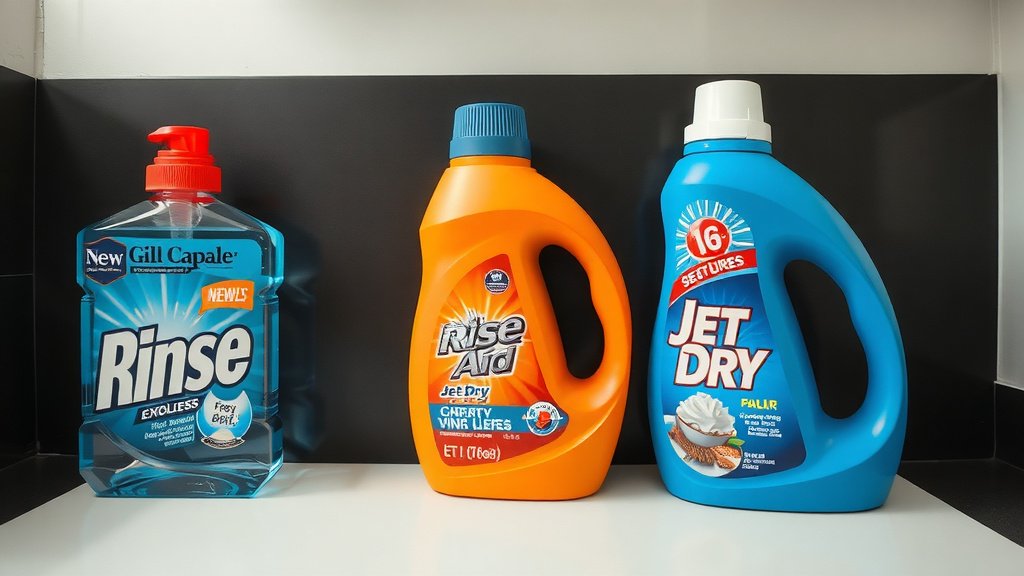
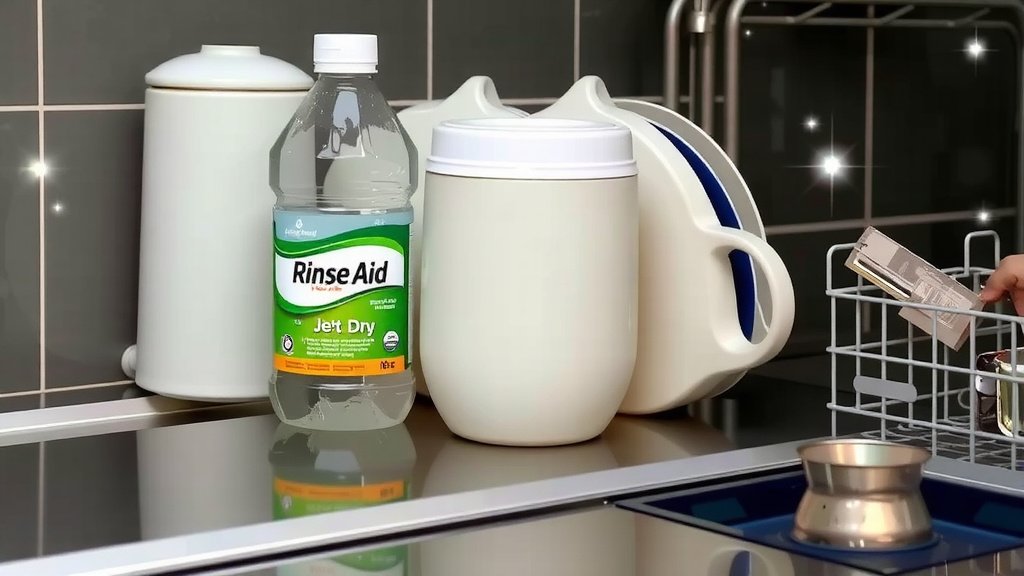
No, rinse aid and Jet-Dry are not exactly the same thing, but they do the same basic job. Rinse aid is the generic product category, while Jet-Dry is a brand name owned by Reckitt that makes rinse aid. So all Jet-Dry is rinse aid, but not all rinse aid is Jet-Dry.
Think of it like tissues and Kleenex. When you stand in the dishwasher aisle feeling confused, you are not alone. We researched popular dishwasher products and found that most generic rinse aids work very similarly to Jet-Dry, often at a lower price. The main differences come down to brand, added scents, and formula extras like shine boosters.
- Rinse aid is the general product that helps dishes dry spot-free.
- Jet-Dry is one brand of rinse aid made by Reckitt.
- Both help water slide off dishes instead of forming spots.
- Generic versions usually cost less and do a similar job.
- You can swap one for the other in almost any dishwasher.
Below, we break down everything you need to know about rinse aid vs. Jet-Dry, including how each one works and when it makes sense to pick one over the other. Our guide to whether dishwashers really need rinse aid covers the basics in more depth.
How Rinse Aid Works in Your Dishwasher
Rinse aid does one simple thing: it makes water slide off your dishes instead of clinging to them in stubborn droplets. During the final rinse, the product releases a small amount of surfactant, which lowers the surface tension of water. Flat, thin sheets of water dry faster than round beads.
Many experts compare it to how wax beads up on a car, only in reverse. You want the opposite effect here. When water spreads out and sheets away, you get fewer spots and streaks on glasses and plates.
Most dishwashers have a small dispenser with a dial, usually near the door. It releases a tiny dose of rinse aid at the end of every cycle. The CDC notes that proper dishwashing, including thorough drying, helps reduce germs left behind on dishware, and spot-free drying plays a role in that.
Why Your Glasses Come Out Spotted
Those white spots are just hard water minerals, mostly calcium and magnesium, left behind when droplets air-dry. The USGS reports that hard water is common across much of the United States. So if you see spots, your water supply is often the real culprit.
Rinse aid helps because it speeds up drying time. Less time sitting wet means less time for minerals to settle on the surface. It is like toweling off your car after a wash instead of letting it drip-dry in the sun.
What Happens If You Skip Rinse Aid
You can skip it, honestly. Your dishes will still get clean, and many newer dishwashers do a decent drying job with heated cycles alone. But we found that people with hard water or plastic items notice the biggest difference when they add it back in. Our guide to running a dishwasher without rinse aid explains exactly what to expect if you skip it.
- Glasses may come out cloudy or streaky.
- Plastic tubs stay wet far longer than they should.
- Loads take longer to fully dry.
- White mineral spots become more frequent.
- Energy use can creep up if you extend heated dry cycles.
What Exactly Is Jet-Dry?
Jet-Dry is a household brand name owned by Reckitt, the same company behind Finish. The product has been on store shelves for decades, which explains why so many people use “Jet-Dry” the way they say “Kleenex” or “Coke.” It became the default word for the whole category.
The brand sells several versions, including original rinse agent, platin versions with extra shine boosters, and scented formulas. The core job stays the same across the lineup: faster drying and fewer spots.
Inside the Jet-Dry Bottle
Most rinse aids, Jet-Dry included, rely on nonionic surfactants plus a small amount of alcohol to help the liquid spread and dry quickly. The exact recipes are proprietary, so brands keep their formulas quiet. Generic versions use very similar ingredient types.
The differences between brands tend to be small. Think fragrance, dye, concentration, and bonus additives. The base chemistry is broadly the same.
Comparing Jet-Dry to Store-Brand Rinse Aids
Here is where it gets practical. We compared the ingredient lists and price points of Jet-Dry against popular store brands. The active ingredients are nearly identical in most cases. What you mostly pay extra for is the name on the bottle.
Many store-brand rinse aids, including ones from Walmart, Costco, and Target, list the same surfactant and drying agent types. Consumer-style testing from outlets like Consumer Reports has generally found that generic rinse aids perform close to name brands. Some testers even rated store versions higher on spot prevention.
| Feature | Jet-Dry | Generic Rinse Aid |
|---|---|---|
| Core job | Faster, spot-free drying | Faster, spot-free drying |
| Main ingredients | Surfactants + drying agents | Same ingredient types |
| Price per ounce | Usually higher | Usually lower |
| Scent options | Yes, some versions | Limited or none |
| Fits all dispensers | Yes | Yes |
Is the Name Brand Worth the Extra Money?
Sometimes, sure. If you have very hard water or you notice spotting despite using a generic, the premium formula might earn its keep. A few versions include extra shine agents aimed at glassware.
But for most households, we found that starting with the cheaper generic makes sense. Try it for a few weeks. If your glasses still look foggy, then step up and see whether the name brand changes anything. You might be surprised how rarely it does.
Can You Swap One for the Other?
Yes, and it takes about thirty seconds. Almost every dishwasher dispenser accepts any liquid rinse aid, regardless of brand. There is no locking mechanism or proprietary design to worry about.
Just pour it into the dispenser until it reaches the fill line. If a little spills into the tub, wipe it up so it does not cause extra suds in the next cycle. Then close the dispenser and run your load as usual.
Quick Checklist for Using Any Rinse Aid
- Locate the rinse aid dispenser on your dishwasher door.
- Pop open the cap and pour until it hits the fill line.
- Set the dial to medium if you are unsure where to start.
- Wipe up any drips to prevent sudsing during the cycle.
- Refill every one to two months, or when the indicator light appears.
- Adjust lower if you notice filmy residue on dishes.
Signs Your Rinse Aid Setting Needs Adjusting
Too much rinse aid can leave a blue or cloudy film on glassware. Too little, and spots creep back. Many experts suggest starting at the middle setting and nudging it up or down based on results.
If you see streaks, dial it down one notch. If spots return, dial it up. It is a bit like seasoning a soup, honestly. Small adjustments beat big ones.
Is Rinse Aid Safe for Your Family?
This is a fair question, especially if little hands grab cups straight from the dishwasher. Used as directed, rinse aid is considered safe for dishware. The dispenser releases only a tiny measured amount per cycle, and the final rinse carries most of it away.
Even so, some people prefer to run a rinse-aid-free cycle for baby bottles and sippy cups, or to skip it entirely. The American Academy of Pediatrics generally recommends following manufacturer directions for any product that touches items children use. If you have concerns, keep the bottle stored up high and out of reach, like any cleaning product.
One more tip: never mix rinse aid with dish detergent in the same compartment. That is a recipe for a sudsy mess on your kitchen floor. Ask us how we know. Actually, do not ask.
Choosing the Right Rinse Aid for Your Home
Your best pick depends on three things: your water hardness, your dishwasher model, and your budget. Start simple. A basic generic rinse aid covers the needs of most households at a friendlier price.
Here is a quick way to decide:
- Hard water or spotted glassware? Choose a standard rinse aid first, then upgrade only if needed.
- New dishwasher with a built-in drying fan? You may need less rinse aid, or a lower dispenser setting.
- Lots of plastic containers? Rinse aid matters more, since plastic holds onto water droplets.
- Sensitive noses at home? Pick an unscented generic to skip added fragrance.
- Trying to trim the grocery bill? Store brands often cost noticeably less per ounce.
Many dishwasher manufacturers, including those behind Whirlpool and GE models, state that using rinse aid improves drying results and helps the machine perform at its best. So whichever bottle you choose, using some form of rinse aid at all is often the biggest win.
Conclusion
So, is rinse aid the same as Jet-Dry? Close, but not quite. Jet-Dry is simply one brand of rinse aid, and the generic bottles beside it do nearly the same job for less money. Both help water sheet off your dishes, which means faster drying and fewer spots. We found that most households can grab the store brand with total confidence. The real win is using rinse aid at all, not the label on the bottle. Pick whichever fits your budget, fill the dispenser to the line, and adjust the dial if streaks or spots show up. Your glasses will thank you after the very next load.
Frequently Asked Questions
Can you use Jet-Dry in any dishwasher brand?
Yes. Rinse aid dispensers are universal, so Jet-Dry works in Bosch, Whirlpool, GE, and pretty much every other model. Just pour it into the reservoir until it hits the fill line. No adapters or special steps required.
How long does a bottle of rinse aid last?
Most bottles last between one and three months with regular use, depending on your dispenser setting and how often you run loads. Your dishwasher likely has an indicator light or window that shows when it is time to refill. A little goes a long way.
Can I use white vinegar instead of rinse aid?
You can, but it is not as effective. Vinegar helps a little with hard water spots, yet it does not contain the surfactants that make water sheet off dishes properly. Many people use it as a temporary backup, then switch back to a real rinse aid.
Do new dishwashers still need rinse aid?
Often, yes. Even models with heated dry or fan-assisted drying tend to perform better with rinse aid, especially on plastics. Check your manual, since some manufacturers recommend it for best results. If your dishes come out dry and spot-free without it, you can skip it.
Why does my dishwasher run out of rinse aid so fast?
The dispenser dial is probably set too high, which releases more product with every cycle. Turn it down a notch or two and monitor your results. A leaky dispenser cap can also cause waste, so check for drips under the door.