How to Reset Your Dishwasher: A Quick Guide
If your dishwasher is acting up, you can often fix it with a simple reset. Many common dishwasher problems, like cycles not starting or error codes appearing, can be resolved by resetting the unit. This process essentially reboots the appliance’s control board, much like restarting your computer. It’s a quick fix that can save you time and a potential service call.
Resetting your dishwasher is usually straightforward and doesn’t require special tools. We found that the exact method can vary slightly depending on your dishwasher’s brand and model. Common steps involve interrupting the power supply for a short period. This electrical reset is often the first troubleshooting step recommended by manufacturers for minor glitches.
- Resetting your dishwasher can fix many common glitches.
- It’s like rebooting a computer for your appliance.
- The process usually involves turning off the power.
- Check your manual for specific instructions for your model.
Let’s walk through the most common ways to reset your dishwasher, step by step.
Troubleshooting Your Dishwasher: A Simple Reset Guide
If your dishwasher is playing up, a simple reset can often get it back on track. This process is like giving your appliance a quick reboot. It can resolve many common issues. We found that this is often the first step experts recommend for minor glitches.
Resetting your dishwasher is typically straightforward. It usually involves interrupting the power supply. This can clear temporary errors on the control board. Let’s explore how to do this for your specific model.
Understanding What a Dishwasher Reset Does
Think of a reset like restarting your computer when it freezes. Your dishwasher has a control panel that manages its functions. Sometimes, this electronic brain can get confused. A reset clears its short-term memory. This can fix problems like cycles not starting or stopping mid-wash. Many guidelines suggest this as a primary troubleshooting step (Whirlpool).
This process doesn’t involve complex repairs. It’s a way to clear minor software glitches. It’s a **safe and easy fix** that can save you a service call. We’ve found it solves issues like error codes or unresponsive buttons.
Common Issues a Reset Can Solve
- Dishwasher won’t start.
- Cycle is stuck or won’t complete.
- Error codes are displayed on the panel.
- The dishwasher is making unusual noises.
- Door lock issues.
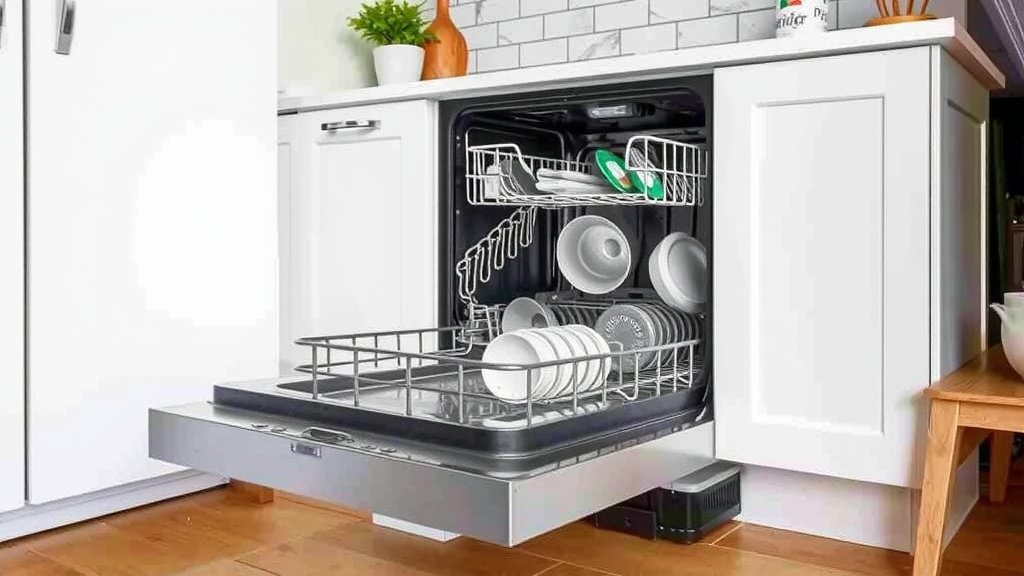
How to Reset Your Dishwasher: Step-by-Step
The exact method can vary slightly by brand. However, the core principle is the same: interrupt the power supply. We’ll cover the most common ways to achieve this.
Method 1: The Circuit Breaker Reset
This is the most common and often the most effective way to reset your dishwasher. It completely cuts off power to the unit. This ensures a full reboot of the control panel.
Locate Your Home’s Circuit Breaker Box
Your circuit breaker box is usually found in a basement, garage, or utility closet. It’s a metal box with a door that opens. Inside, you’ll see switches labeled for different parts of your home. Find the breaker that controls your dishwasher. It might be labeled “Dishwasher,” “Kitchen,” or “Appliances.” If you’re unsure, look for a breaker that seems out of place or is in the “off” position.
Turn Off the Dishwasher’s Circuit Breaker
Once you’ve found the correct breaker, flip it to the “off” position. You should hear a distinct click. It’s important to leave it off for a few minutes. We found that waiting 5-10 minutes is usually sufficient. This ensures the control board completely powers down and resets.
Turn the Circuit Breaker Back On
After the waiting period, flip the breaker back to the “on” position. This restores power to your dishwasher. You may hear some lights or sounds as the control panel powers up. Now, try starting a short wash cycle to test if the reset was successful.
Method 2: Unplugging the Dishwasher (If Accessible)
For some homes, the dishwasher plug might be easily accessible. This can be under the sink or behind the kick plate. If you can easily reach the plug, this is another simple way to interrupt power.
Safely Access the Power Cord
First, ensure the dishwasher is turned off at its control panel. Then, locate the power cord. You might need to open a small access panel. Be careful of any water connections or sharp edges. We always recommend unplugging any appliance before working near its electrical components.
Unplug the Dishwasher for Several Minutes
Once you have a grip on the plug, pull it firmly from the wall outlet. Just like with the circuit breaker, leave it unplugged for about 5-10 minutes. This allows the control board to fully discharge and reset. Many appliance manuals suggest this duration for a complete power cycle (GE Appliances).
Plug the Dishwasher Back In
After the recommended time, securely plug the power cord back into the outlet. Close any access panels you opened. Then, try running a diagnostic cycle or a short wash program. This confirms if the reset has resolved the problem.
Method 3: Using the Dishwasher’s Built-in Reset Function
Some modern dishwashers have a specific reset button or a sequence of button presses to initiate a reset. This is often detailed in your user manual. This method is less about cutting power and more about signaling the control board directly.
Consult Your Owner’s Manual
Your dishwasher’s manual is your best friend here. It will provide exact instructions for your specific model. Look for sections on troubleshooting or error codes. You might find a diagram showing a reset button. Or, it might describe a series of button presses. For example, some models require holding the “Start” and “Cancel” buttons simultaneously.
Follow Manufacturer Instructions Precisely
If your manual indicates a button sequence, follow it exactly. Press the buttons in the order and for the duration specified. Often, you’ll need to hold them down for several seconds. A beep or a change on the display usually confirms the reset command has been received. We found that patience is key here; don’t release the buttons too early.
Checking for Specific Brand Reset Procedures
Different brands often have unique ways to trigger a reset. Knowing your brand can help you find the most efficient method. We researched common procedures:
| Dishwasher Brand | Common Reset Method |
|---|---|
| Whirlpool | Circuit breaker for 5-10 minutes. |
| GE | Circuit breaker for 5-10 minutes, or unplugging if accessible. Some models have a specific button sequence. |
| Bosch | Circuit breaker for 5-10 minutes. Some models may require holding the start button. |
| KitchenAid | Circuit breaker for 5-10 minutes. |
| Maytag | Circuit breaker for 5-10 minutes. |
Remember, this table is a general guide. Always check your owner’s manual for the most accurate instructions for your model. Your manual is the definitive source for your specific appliance’s needs.
What to Do After the Reset
Once you’ve completed the reset procedure, it’s time to test your dishwasher. Don’t assume the problem is solved just yet. A quick test is essential. This step helps you confirm that your efforts were successful.
Run a Test Cycle
Select a short wash cycle, like a rinse or quick wash. Let the dishwasher run through its entire cycle. Observe if it starts properly, runs without interruption, and completes normally. Listen for any unusual noises. Check if any error codes reappear.
Troubleshooting Checklist After Resetting
- Did the dishwasher start the test cycle?
- Did the cycle complete without stopping?
- Are there any new error codes or strange noises?
- Is the water draining properly at the end of the cycle?
- Does the door lock and unlock as expected?
If the test cycle runs perfectly, congratulations! You’ve likely solved the problem. If issues persist, you might need to investigate further. Sometimes, a reset can reveal underlying problems that require more attention.
Conclusion
You’ve learned that resetting your dishwasher is often the quickest fix for common glitches. Whether you use the circuit breaker, unplug the unit, or employ a built-in function, the goal is the same: a full reboot of the control board. This simple process can save you time and money. If a reset doesn’t solve your issue, it might be time to consult your dishwasher’s manual or consider professional help. Your next step is to try the reset method that best suits your situation and see if your dishwasher gets back to its sparkling best!
Frequently Asked Questions
How long should I leave my dishwasher unplugged to reset it?
We found that unplugging your dishwasher for 5 to 10 minutes is usually sufficient. This duration ensures that the control board has enough time to fully discharge its power. After this period, plug it back in and test a short cycle.
What if I can’t find my dishwasher’s circuit breaker?
If you’re unsure which breaker controls your dishwasher, check for labels in your electrical panel. If it’s not clearly marked, you might need to turn off breakers one by one and test. Always ensure you’re comfortable and safe when working with your home’s electrical system.
My dishwasher is still not working after a reset, what should I do?
If the reset didn’t fix the problem, it’s possible there’s a more serious issue. We recommend double-checking your owner’s manual for other troubleshooting steps. If the problem persists, it might be time to schedule a service appointment with a qualified technician.
Can resetting my dishwasher erase my settings?
Generally, a standard power reset will not erase your saved wash cycles or custom settings. This type of reset is more like a quick reboot. However, if you perform a factory reset (which is different and less common), it may revert settings to their default.
Is it safe to reset my dishwasher if it’s making weird noises?
Yes, resetting your dishwasher is a safe first step even if it’s making unusual noises. Sometimes, electronic glitches can cause strange sounds. If the noises continue after a successful reset, it could indicate a mechanical problem requiring further investigation.