Dishwasher Safe Pots and Pans? Here’s What You Need to Know
Yes, you can often put pots and pans in the dishwasher, but it really depends on the material and coating. Many modern pots and pans are dishwasher-safe, offering a convenient way to clean them. However, certain types, like cast iron or those with non-stick coatings, might require special care or handwashing to prevent damage and maintain their performance. Always check the manufacturer’s instructions.
We know the dishwasher is a lifesaver for busy kitchens. Putting your pots and pans in there can save you a lot of scrubbing time after a meal. But, tossing them in without checking could lead to ruined cookware. Understanding what’s safe will help you protect your kitchen investment and keep your pans looking great for longer.
- Check your cookware’s material.
- Non-stick, aluminum, and stainless steel are often safe.
- Cast iron and copper usually need handwashing.
- Look for “dishwasher-safe” labels.
- When in doubt, handwash to be safe.
Let’s dive into which pots and pans are best friends with your dishwasher and which ones might prefer a gentle hand wash.
You’re probably wondering, “Can my favorite skillet handle the dishwasher’s jets?” It’s a fair question! We rely on our pots and pans daily. Knowing how to clean them properly saves you time and keeps them in great shape. Let’s get down to the nitty-gritty of what can and cannot go into your trusty dishwasher.
Dishwasher Compatibility for Your Cookware
So, can you actually throw your pots and pans into the dishwasher? The simple answer is: it depends on what they’re made of and what kind of finish they have. Many modern pots and pans are designed with your busy life in mind, making them dishwasher-safe. This means less elbow grease for you after a big meal. However, there are definitely some materials that will not fare well with that kind of treatment. We’ll guide you through what to look for so you don’t ruin your kitchen tools.
Understanding Dishwasher-Safe Cookware
When a manufacturer labels something as “dishwasher-safe,” it means it’s been tested. It should hold up to the heat, water pressure, and detergents used in a standard dishwasher cycle. This usually applies to cookware made from certain metals or with specific types of coatings. Always look for that little symbol or phrase on the packaging or the item itself. If you can’t find it, it’s best to err on the side of caution.
Materials That Usually Love the Dishwasher
Certain materials are generally robust enough to handle a dishwasher’s cycle. This makes cleanup a breeze. We’ve found that these types are often your best bet for dishwasher use:
Stainless Steel Cookware
Good news for stainless steel owners! Most stainless steel pots and pans are completely dishwasher-safe. They are designed to resist rust and corrosion, meaning they can handle the moisture and detergents. You can usually toss them in without a second thought. Just be aware that some very high-end or specialty stainless steel might have specific care instructions.
Hard-Anodized Aluminum
This is another material that often plays nicely with dishwashers. Hard-anodizing is a process that makes aluminum much stronger and more durable. Cookware made this way is usually non-reactive and can withstand dishwashing cycles. It’s a great option for everyday cooking and easy cleanup. Check the manufacturer’s label to be absolutely sure.
Enameled Cast Iron
What about that gorgeous enameled cast iron? For the most part, yes, it’s dishwasher-safe. The enamel coating protects the cast iron underneath from rust and is generally resistant to chips and stains. However, we’ve found that some experts suggest handwashing to keep the enamel looking its absolute best for longer. The harsh detergents and high heat *can* potentially dull the finish over many washes. So, while it’s *usually* okay, handwashing might be the choice for preserving that perfect shine.
Materials That Usually Need Handwashing
On the flip side, some cookware materials can be easily damaged by the dishwasher. These items require a bit more personal attention from you. We want to help you keep these pieces functional and beautiful.
Cast Iron (Uncoated)
This is the big one: traditional cast iron. Absolutely do NOT put your seasoned cast iron skillet in the dishwasher. The harsh detergents will strip away the protective seasoning you’ve worked so hard to build. This seasoning is what gives cast iron its non-stick qualities and prevents rust. A dishwasher cycle will likely lead to rust and a sticky mess. These pans need a gentle wipe down and a light re-oiling after use.
Copper Cookware
Beautiful copper pots and pans often have a protective lacquer. Dishwasher detergents can strip this lacquer, causing the copper to tarnish or discolor. This can lead to an uneven finish and a loss of that lovely copper sheen. For copper, handwashing with a soft cloth and mild soap is the recommended route to keep it looking its best.
Cookware with Non-Stick Coatings
This one is a bit tricky. Many modern non-stick pans are marketed as dishwasher-safe. However, we found that prolonged exposure to hot water and strong detergents can degrade the non-stick surface over time. This can reduce its effectiveness and potentially lead to peeling. If your non-stick pan says it’s dishwasher-safe, you can try it. But for the longest life and best performance, many manufacturers still recommend gentle handwashing. Think of it as giving your non-stick surface a spa treatment.
Cookware with Wooden or Bakelite Handles
Handles are often the weak link. Wooden handles can warp, crack, or discolor when subjected to prolonged moisture and heat. Bakelite handles, while durable, can sometimes become brittle or fade over time in a dishwasher. If your cookware has these types of handles, it’s safer to handwash the pan and clean the handle separately with a damp cloth.
Hand-Painted or Decorative Cookware
Any cookware that features decorative elements, hand-painted designs, or intricate finishes should probably stay out of the dishwasher. The aggressive washing action and detergents can easily damage these delicate details, leading to fading or chipping. A gentle hand wash will preserve the artwork.
A Quick Guide to Dishwasher-Safe vs. Hand-Wash Only
To make things even clearer, here’s a simple table that sums up what’s generally safe for the dishwasher and what’s not. Remember, always double-check your specific cookware’s instructions!
| Cookware Type | Dishwasher Safe? | Notes |
|---|---|---|
| Stainless Steel | Yes (Usually) | Durable and rust-resistant. |
| Hard-Anodized Aluminum | Yes (Usually) | Stronger finish, generally safe. |
| Enameled Cast Iron | Yes (Often) | Handwash recommended for longevity of enamel finish. |
| Uncoated Cast Iron | NO | Strips seasoning, causes rust. Must handwash. |
| Copper | No (Usually) | Can tarnish and discolor. Handwash recommended. |
| Non-Stick Coatings | Sometimes | Check manufacturer; handwashing extends life. |
| Wood/Bakelite Handles | No (Usually) | Handles can warp or degrade. |
| Decorative/Hand-Painted | No | Designs can be damaged. |
Tips for Dishwasher Washing Your Pots and Pans
If you’ve determined that your pots and pans are indeed dishwasher-safe, here are a few tips to ensure the best results and protect your cookware:
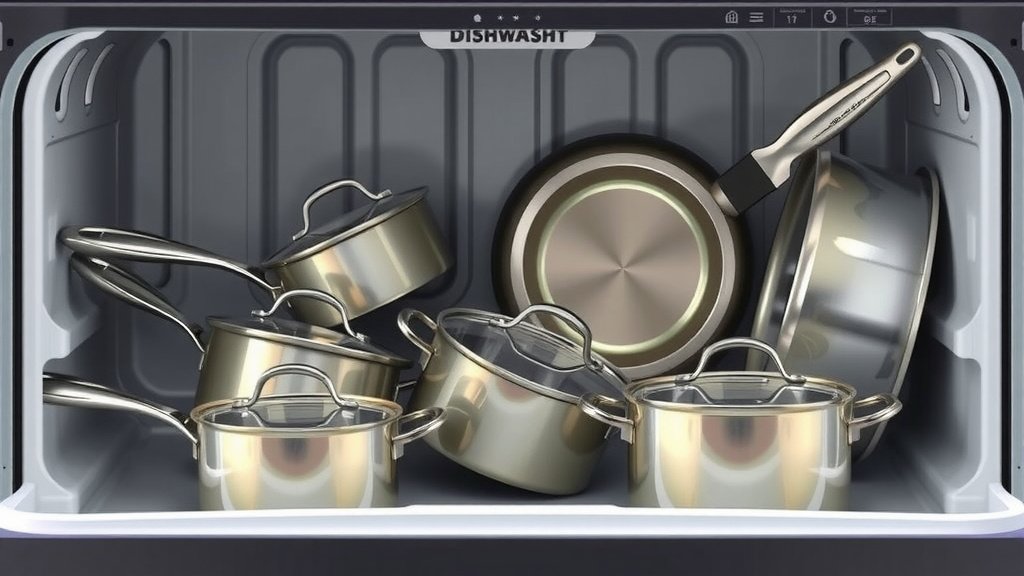
- Load strategically: Don’t overcrowd the dishwasher. Place pots and pans so water and detergent can reach all surfaces. Face heavily soiled areas towards the spray.
- Use the right detergent: Opt for a good quality dishwasher detergent. Avoid harsh scrubbing powders meant for sinks.
- Rinse off large debris: Scrape off any large food particles before loading. This prevents clogs and ensures a better clean.
- Consider the heat dry setting: Some materials can be sensitive to extreme heat. If your cookware is borderline, skip the heated dry cycle and let them air dry.
- Check the top rack: Lighter items, or those with delicate handles, might be safer on the top rack where the spray is less intense.
When in Doubt, Wash by Hand!
We understand that checking labels can be a pain. If you’re ever unsure about whether a pot or pan can go into the dishwasher, please, just wash it by hand. It only takes a few extra minutes. This simple step can save you from potentially replacing a beloved piece of cookware. Your pans will thank you for it, and so will your future self!
Conclusion
So, can you put pots and pans in the dishwasher? You’ve learned that it’s often yes, but with important conditions! Your trusty stainless steel and hard-anodized aluminum pans are usually good to go. However, traditional cast iron, copper, and delicate non-stick surfaces often need a gentler hand wash to keep them in top shape. Always remember to check for that “dishwasher-safe” label and consider the material and any special coatings before tossing them in. When in doubt, a quick hand wash is always the safest bet for protecting your cookware.
Your next step? Take a peek at your current collection of pots and pans. Identify their materials and check for any care labels. Make a mental note or even a quick list for future reference. This simple check will help you clean smarter and keep your favorite kitchen tools performing their best for years to come.
Frequently Asked Questions
Will putting my pots and pans in the dishwasher ruin them?
It depends on the material! Dishwashers can ruin uncoated cast iron by stripping its seasoning and causing rust. Delicate non-stick coatings and sensitive materials like copper can also degrade or discolor over time. Always check the manufacturer’s instructions first.
Is it okay to put my non-stick pans in the dishwasher?
Many modern non-stick pans are labeled “dishwasher-safe,” so you can try running them through. However, we’ve found that repeated dishwasher cycles can reduce the effectiveness of the non-stick surface over time. For maximum longevity and performance, handwashing is often recommended for non-stick cookware.
Can I wash enameled cast iron in the dishwasher?
Enameled cast iron is often dishwasher-safe, as the enamel coating protects the iron. However, harsh detergents and prolonged high heat can potentially dull the enamel’s finish over many washes. To keep your enameled cast iron looking its absolute best, many people opt for handwashing.
What about pots and pans with wooden handles?
Cookware with wooden handles should generally be hand-washed. Prolonged exposure to water and heat in a dishwasher can cause the wood to warp, crack, or discolor. Clean the pan and wipe the wooden handle separately with a damp cloth.
How can I make sure my dishwasher cleans pots and pans effectively?
If your cookware is dishwasher-safe, load it strategically so water can reach all surfaces, and scrape off large food debris first. Use a quality dishwasher detergent and consider skipping the heated dry cycle if your items are sensitive to high heat. Always ensure nothing is blocking the spray arms.