Choosing the Right Dishwasher: A 2026 Guide
Choosing the right dishwasher involves looking at cycle options, energy efficiency, and noise level. You’ll want a model that fits your budget and your kitchen space. Think about how many people are in your household and what you typically wash. We found that considering these factors upfront saves you time and money later.
Beyond the basics, consider features like adjustable racks for larger items and soil sensors that automatically adjust wash times. Some dishwashers offer sanitizing cycles, which are great for families. Many brands also focus on quiet operation, a big plus for open-plan living. We’ve researched the most popular options to help you make an informed decision.
- Consider your typical load size.
- Look for energy-saving features.
- Check the noise level (decibels).
- Think about special wash cycles.
- Budget for installation and maintenance.
Let’s walk through exactly how to pick the best dishwasher for your home. We’ll cover the essential features and what to watch out for.
Navigating Your Dishwasher Decision: What to Look For
Picking the right dishwasher can feel like a big task. You want something that cleans your dishes well. You also want it to be easy on your wallet and your ears. We’ve researched the key factors that make a dishwasher a great addition to your kitchen.
Understanding Dishwasher Capacity and Your Needs
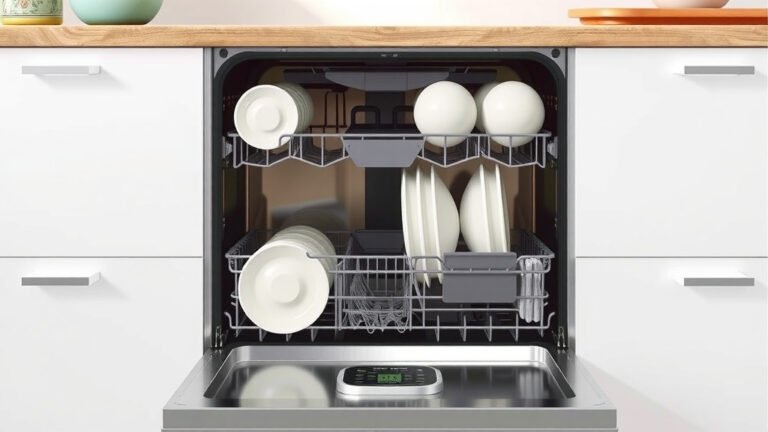
Think about how many people are in your household. This is a big clue for capacity. A standard dishwasher typically holds about 8-10 place settings. A larger household might need a model that can fit 12-14 place settings. This means more room for pots, pans, and all those dinner plates.
We found that larger families often benefit from models with flexible interior racks. These allow you to adjust shelves and tines. This helps you make the most of the available space. It’s like a Tetris game for your dirty dishes!
Wash Cycles: More Than Just “Normal”
Dishwashers come with a variety of wash cycles. Understanding these can help you get cleaner dishes. The normal cycle is good for everyday loads. It balances water usage and cleaning power. It’s the workhorse of most dishwashers.
Specialized Cleaning Options
Beyond the normal cycle, you’ll find specialized options. An heavy-duty cycle tackles tough, baked-on food. Think casserole dishes or greasy pans. A quick wash cycle is perfect for lightly soiled items you need fast. We found this to be a lifesaver when company is coming over.
Many dishwashers now offer a sanitize option. This cycle uses very hot water to kill bacteria. It’s a great feature for households with young children or those concerned about germs (CDC).
Some models have an eco-friendly or energy-saving cycle. This uses less water and energy. It might take a bit longer to run, but it’s good for the planet and your utility bills.
Energy Efficiency: Saving Money and the Planet
When choosing a dishwasher, look for the ENERGY STAR label. Appliances with this label meet strict energy efficiency guidelines set by the EPA. This means they use less energy and water than standard models. Over the life of the appliance, this can lead to significant savings.
We found that ENERGY STAR certified dishwashers are typically 10% more efficient than their non-certified counterparts. They often use less water per cycle too. This is a win-win for your budget and the environment.
Pay attention to the estimated annual energy consumption. This is usually listed on the yellow EnergyGuide label. It gives you a clearer picture of how much energy the appliance will use.
Noise Level: Keeping Your Kitchen Peaceful
Dishwasher noise is measured in decibels (dB). This number tells you how loud the machine will be while running. For an open-plan living space, a quieter dishwasher is a must. You don’t want to be interrupted during a conversation or a movie.
A typical dishwasher might operate around 50-55 dB. We found that models below 45 dB are considered very quiet. Some ultra-quiet models can even get down to 38-40 dB. That’s quieter than a typical library!
If noise is a major concern, look for descriptions like “whisper-quiet” or “silent.” Manufacturers often highlight this feature for their quieter models.
| Decibel (dB) Range | Noise Level Description | Best For |
|---|---|---|
| 38-45 dB | Very Quiet | Open-plan living, light sleepers |
| 46-50 dB | Moderately Quiet | Standard kitchens, no major noise concerns |
| 51+ dB | Noisy | Basement laundry rooms, or where noise isn’t a factor |
Dishwasher Features That Make Life Easier
Rack Adjustability and Loading Flexibility
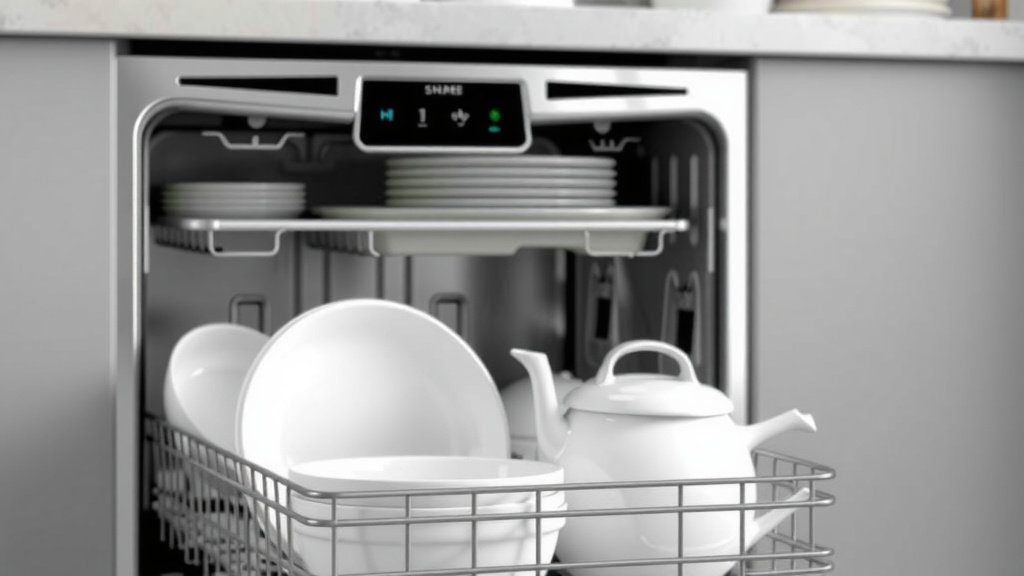
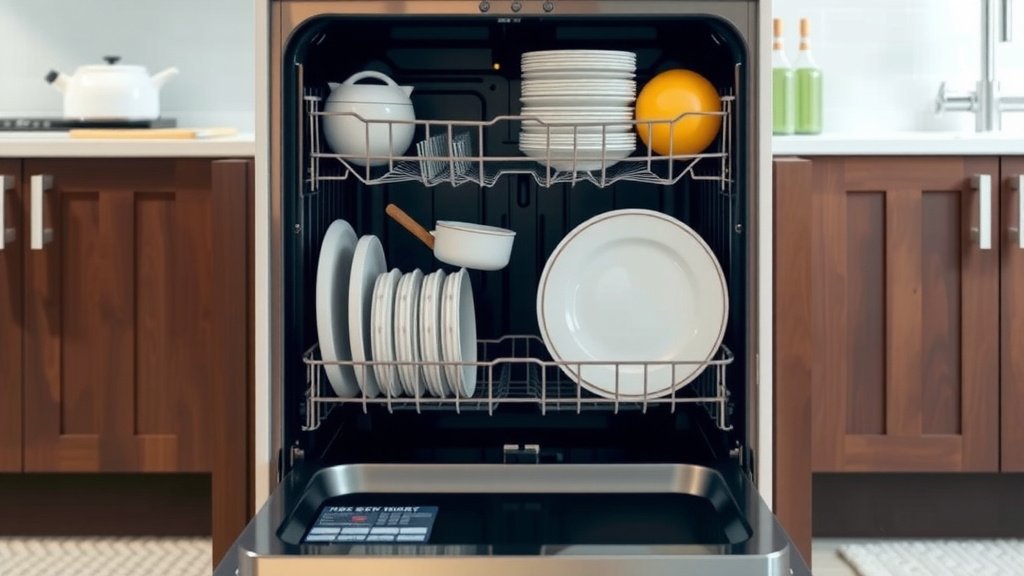
Have you ever struggled to fit tall items like wine glasses or platters? Adjustable racks are your solution. You can raise or lower upper racks to create more space below. Some racks even have fold-down tines.
We found that dishwashers with a third rack are becoming increasingly popular. This is a slim top rack designed for cutlery, small utensils, or even espresso cups. It frees up space in the lower baskets.
Smart Technology and Convenience
Many modern dishwashers offer smart features. This can include Wi-Fi connectivity. You can often start, stop, or monitor cycles from your smartphone. Some even send notifications when a cycle is complete.
Soil sensors are another smart feature. They detect how dirty your dishes are. The dishwasher then adjusts the water usage and cycle time automatically. This ensures optimal cleaning without wasting resources. It’s like having a dishwasher that thinks for itself!
Drying Performance: Beyond Air Drying
How well does the dishwasher dry your dishes? Some models use a traditional heated dry element. Others use condensation drying, which is more energy-efficient. This method uses the residual heat from the wash cycle to evaporate moisture.
We found that some higher-end models offer advanced drying options. These might include extra heat or a fan to speed up the process. Consider if you need bone-dry dishes or if a little residual moisture is okay.
Installation and Maintenance Considerations
Think about how the dishwasher will be installed. Most dishwashers are built-in under your counter. Ensure you have the correct space and connections for water and drainage. Professional installation is often recommended to ensure everything works correctly.
Maintenance is usually straightforward. You’ll want to clean the filter regularly to prevent clogs. This helps maintain cleaning performance. Check the manufacturer’s manual for specific cleaning recommendations.
Your Dishwasher Checklist
- Household Size: How many people will use it daily?
- Space: Measure your cabinet opening carefully.
- Noise Level: Is a quiet operation a priority for your home?
- Energy Star: Look for this label for efficiency.
- Wash Cycles: Do you need special cycles like sanitize or heavy-duty?
- Budget: Factor in purchase price, installation, and potential repairs.
Conclusion
You’re now equipped to select the ideal dishwasher for your kitchen. Remember to match its capacity to your household size and consider specialized wash cycles for your cleaning needs. Prioritizing ENERGY STAR certification will save you money and energy. Don’t forget to check the decibel rating for a quieter home environment. By focusing on these key areas, you can find a dishwasher that performs brilliantly. Your next step is to measure your space and start comparing models based on what matters most to you.
Frequently Asked Questions
How do I know what size dishwasher I need?
Consider your typical load size and how many people are in your household. A standard dishwasher generally holds 8-10 place settings, while larger families may need one that fits 12-14 place settings. This ensures you can wash pots, pans, and multiple dinner plates efficiently.
What does a soil sensor do?
A soil sensor detects how dirty your dishes are. The dishwasher then automatically adjusts the water usage and cycle time for optimal cleaning. This smart feature helps ensure your dishes get clean without wasting water or energy.
Are dishwashers really that quiet these days?
Yes, many modern dishwashers are very quiet. Noise levels are measured in decibels (dB), with models below 45 dB considered very quiet. If you have an open-plan living space, look for models specifically advertised as “whisper-quiet” for minimal disruption.
Is an ENERGY STAR label really worth it?
Absolutely. Appliances with the ENERGY STAR label meet strict efficiency guidelines set by the EPA. This means they use less energy and water than standard models, leading to significant savings on your utility bills over the appliance’s lifetime.
What is the difference between heated dry and condensation dry?
Heated dry uses a heating element to dry dishes, while condensation dry uses residual heat from the wash cycle to evaporate moisture. Condensation drying is generally more energy-efficient, though some high-end models offer enhanced drying options for faster results.