Dishwasher Energy Rating Explained: What You Need to Know
Understanding your dishwasher’s energy rating is key to saving money and helping the planet. Essentially, an energy rating tells you how efficiently your dishwasher uses electricity and water. Higher ratings mean your appliance is more eco-friendly and will cost you less over time.
The rating system is designed to make appliance shopping easier. It helps you compare different models at a glance. You’ll often see a label with stars or letters indicating efficiency. This label is your guide to finding an appliance that’s both powerful and kind to your wallet.
- Dishwasher energy ratings show efficiency.
- Higher ratings save you money on bills.
- They also mean less water and electricity used.
- Look for the energy label when buying.
- It helps compare models easily.
Let’s break down what those ratings actually mean for your home and your energy bills.
So, you’re looking at a new dishwasher and wondering what all those numbers and stars on the label mean. It’s like deciphering a secret code for your kitchen appliances, right? We get it. But understanding your dishwasher’s energy rating is simpler than you think. It’s your roadmap to a cleaner home and a lighter utility bill. Let’s break it down so you can shop with confidence.
Understanding Your Dishwasher’s Efficiency Label
This label is your best friend when comparing dishwashers. It’s designed by government agencies to give you a clear picture of how much energy and water a machine uses. Think of it like a nutritional label for your appliances. It helps you make an informed choice. This way, you’re not just buying a pretty box; you’re investing in an efficient helper.
The EnergyGuide Label: What It Tells You
You’ll usually see a yellow or white EnergyGuide label. This label uses a scale to show you how your dishwasher compares to others. It’s not a strict pass/fail, but a spectrum of efficiency. It aims to highlight appliances that are better for your budget and the environment.
The Star System Explained
Many countries use a star rating system. More stars mean a more efficient dishwasher. A 5-star dishwasher will likely use less electricity and water than a 3-star model. This is a quick way to spot the top performers. It’s like getting extra credit for choosing the eco-friendly option.
What About the Numbers?
Beyond stars, you might see specific numbers. These often represent estimated annual energy consumption or water usage. For example, a label might state an estimated 250 kilowatt-hours (kWh) per year. This number helps you calculate potential yearly costs. You can compare these figures directly between models. We found that looking at the kWh usage is a very direct way to compare costs.
How Dishwasher Energy Ratings Impact Your Bills
This is where the rubber meets the road, or rather, where the clean dishes meet your budget. An energy-efficient dishwasher means lower monthly bills. This is because it uses less power and less water to get your dishes sparkling. It might seem like a small difference per load, but it adds up. Over the years, the savings can be quite substantial.
Electricity Consumption: The Biggest Factor
Heating water is a major energy draw for dishwashers. More efficient models have better insulation and heating elements. They also use smarter cycles that require less energy. We found that models with advanced drying technologies often use less electricity for that step too. This is a key area where efficiency gains are made.
Water Usage: A Double Win
Efficient dishwashers use less water per cycle. This not only saves you money on your water bill but also on the energy needed to heat that water. It’s a win-win situation for your wallet and for water conservation. Many older models were real water guzzlers. Modern standards have improved this dramatically (Energy Star). Think about it: less water means a lighter load on your plumbing and the local water supply.
Comparing Real-World Costs
The EnergyGuide label provides an estimated annual cost. This is calculated based on average electricity prices and usage patterns. While your actual costs may vary, this estimate gives you a solid basis for comparison. You can plug in your local electricity rates for a more precise figure. Many experts suggest this is the best way to personalize the savings. Let’s look at a simple comparison:
| Dishwasher Model | Estimated Annual Energy Use (kWh) | Estimated Annual Operating Cost |
|---|---|---|
| Model A (High Efficiency) | 220 kWh | $26.40 (at $0.12/kWh) |
| Model B (Standard Efficiency) | 350 kWh | $42.00 (at $0.12/kWh) |
| Model C (Older Model) | 500 kWh | $60.00 (at $0.12/kWh) |
As you can see, the difference can be noticeable. Choosing the most efficient model might cost a little more upfront. But the long-term savings on your utility bills can easily offset that initial investment. It’s like buying a fuel-efficient car; you spend a bit more at the dealership but save a lot at the pump over time.
Decoding Energy Star and Other Certifications
You’ll often see the ENERGY STAR label. This is a program from the U.S. Environmental Protection Agency. Appliances with the ENERGY STAR label meet strict energy efficiency guidelines. These are set by the government and are designed to help consumers. They represent a significant step up in efficiency from standard models. Many studies show that ENERGY STAR certified products are, on average, 9-15% more efficient than their non-certified counterparts. You can trust this label to point you towards quality.
Beyond the Basics: What Makes a Dishwasher Efficient?
Several factors contribute to a dishwasher’s energy rating. These include the efficiency of the heating element, the quality of insulation, the pump motor, and the smarts of the control system. Advanced sensors can detect how dirty your dishes are. They then adjust the cycle accordingly, using only the necessary water and energy. Some models even use soil sensors to prevent unnecessary re-rinsing.
Water Heater Efficiency
While not part of the dishwasher’s direct rating, how hot your water heater heats water plays a role. If your water heater is set very high, the dishwasher has to cool it down to the optimal temperature. This wastes energy. Many appliance manufacturers suggest setting your water heater to around 120°F (49°C) for optimal dishwasher performance. This small adjustment can further boost your savings.
Smart Features and Eco-Cycles
Many modern dishwashers come with “eco-modes” or “smart cycles.” These are specifically designed to use less water and energy. They might run for a longer time, but they do so at lower temperatures or with less water. We found that using these cycles consistently can significantly lower your overall energy consumption. Don’t be afraid to experiment with them!
Tips for Maximizing Your Dishwasher’s Efficiency
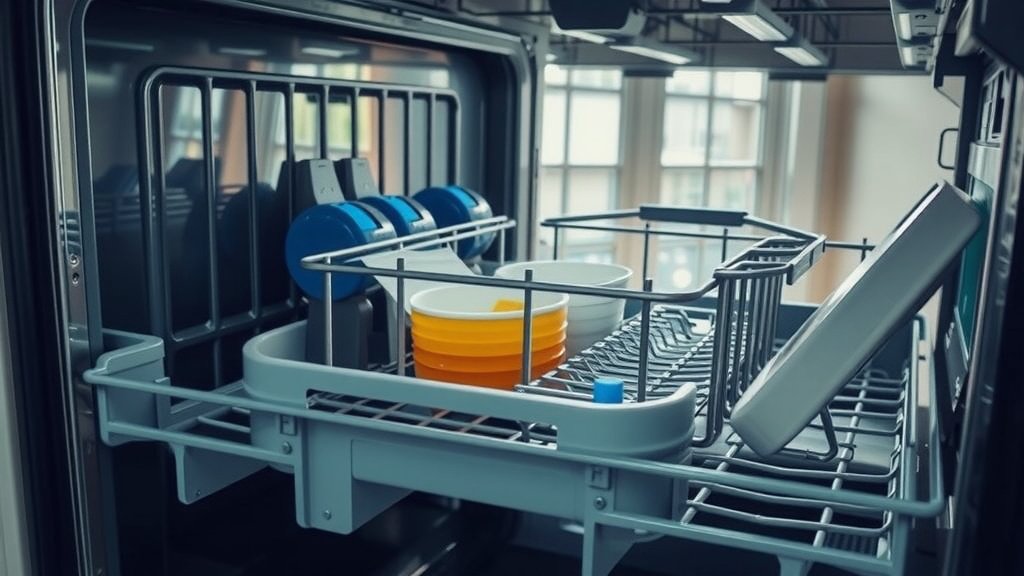
Once you have your energy-efficient dishwasher, there are still ways to get the most out of it. Proper loading is key. Don’t overload the machine; allow water and detergent to reach all surfaces. Scrape off large food particles instead of pre-rinsing. Modern dishwashers are designed to handle most food debris. This saves you water and effort. Here’s a quick checklist to keep in mind:
- Proper Loading: Don’t block spray arms.
- Scrape, Don’t Rinse: Remove large chunks only.
- Use Eco-Cycles: They are designed for savings.
- Full Loads Only: Wait until it’s full to run.
- Check Filter Regularly: A clean filter means better performance.
- Consider Air Dry: Skip heated dry when possible.
By understanding and utilizing your dishwasher’s energy rating, you’re making a smart choice for your home and the planet. It’s about getting sparkling clean dishes without the guilt or the high utility bills.
Conclusion
You’ve now seen how understanding your dishwasher’s energy rating is a smart move for both your budget and the environment. It’s about making informed choices that lead to real savings on your utility bills. Remember, a higher rating means less electricity and water usage, directly impacting your costs. By looking at labels like EnergyGuide and ENERGY STAR, you can confidently pick a model that fits your needs. Your next step? When you’re ready for a new dishwasher, make that energy label your primary shopping guide.
Frequently Asked Questions
How much money can an energy-efficient dishwasher actually save me?
Research suggests that switching to a high-efficiency dishwasher can save you between $30 to $100 annually on energy and water bills. This saving adds up over the appliance’s lifespan, often covering the initial cost difference.
Does the water heater’s temperature affect my dishwasher’s energy rating?
Yes, it does. If your water heater is set too high, your dishwasher must cool the water down, wasting energy. Setting your water heater to around 120°F (49°C) helps your dishwasher run more efficiently.
Are “eco-modes” on dishwashers really worth using?
Absolutely. Eco-cycles are specifically designed to use less water and energy, often by running longer at lower temperatures. Consistently using these modes can lead to noticeable savings on your utility bills.
Should I always use the heated dry option on my dishwasher?
For maximum efficiency, consider skipping the heated dry option. Most modern dishwashers can dry dishes adequately using air circulation. Letting them air dry can save a good amount of electricity.
What’s the difference between an EnergyGuide label and an ENERGY STAR certification?
The EnergyGuide label shows you estimated annual energy use and cost for comparison. ENERGY STAR certification is a government-backed program indicating a product meets strict energy efficiency guidelines, often being significantly more efficient than standard models.