Can You Use Baking Soda in Your Dishwasher? Here’s How
Yes, you can use baking soda in your dishwasher! It’s a natural cleaner and deodorizer that can help tackle tough grime and lingering smells. Many homeowners have found it to be a cost-effective way to boost their dishwasher’s performance between full cleaning cycles.
Baking soda, or sodium bicarbonate, is a mild abrasive and an alkali. This means it can help scrub away stuck-on food particles without scratching your dishes or the dishwasher interior. It’s also known for its ability to neutralize acidic odors, leaving your machine smelling fresher.
- Baking soda can be a great natural booster for your dishwasher.
- It helps scrub away stuck-on food and neutralizes odors.
- It’s an affordable addition to your cleaning routine.
- Use it for a general refresh or to combat specific smells.
Let’s look at how you can safely and effectively add baking soda to your dishwasher routine to get those sparkling clean results you’re hoping for.
Adding Baking Soda to Your Dishwasher: A Practical Guide
So, you’re wondering if you can toss some baking soda into your dishwasher? The answer is a resounding yes! Many folks have discovered it’s a fantastic, budget-friendly way to give their dishwasher a little extra cleaning power. It’s not just about making things smell nice; it actively helps with the cleaning process.
Think of baking soda as your dishwasher’s helpful sidekick. Its gentle abrasive nature helps scrub away stubborn food bits without being harsh. Plus, its odor-neutralizing talents can make a real difference. We’ll walk you through how to use it effectively for a cleaner, fresher machine.
How Baking Soda Works Its Magic in Your Dishwasher
Baking soda, chemically known as sodium bicarbonate, is a natural wonder. It’s a mild alkali, which means it can effectively cut through grease and grime. It also acts as a gentle scouring agent. This dual action is what makes it so useful in a dishwasher.
When mixed with water during a wash cycle, baking soda becomes a potent cleaning solution. It helps to lift away dried-on food particles that might otherwise stick around. And when it comes to those less-than-pleasant odors that can sometimes develop in a dishwasher, baking soda is a champion at neutralizing them.
Understanding Baking Soda’s Properties for Cleaning
One of the key reasons baking soda works so well is its pH level. As an alkali, it can combat the acidic nature of many food residues. This helps break them down more easily. It’s like a tiny cleaning crew working inside your machine.
We found that its mild abrasiveness is crucial. Unlike harsher chemicals, baking soda won’t scratch your dishes or damage the interior of your dishwasher. This is supported by numerous household cleaning guides that recommend it for its gentleness. It’s a safe bet for most dishwasher-safe items.
Ways to Incorporate Baking Soda into Your Dishwasher Routine
There are a couple of simple ways you can use baking soda to boost your dishwasher’s performance. You can use it for a general refresh or target specific issues like odors or tough stains.
The Sprinkle Method for a Quick Refresh
For a regular boost, try the sprinkle method. This is perfect for keeping your dishwasher smelling fresh and helping with general cleaning between deeper cleans. It’s incredibly easy to do.
Simply sprinkle about a half cup of baking soda directly into the bottom of your empty dishwasher. Then, run a normal wash cycle. You can do this once a week or as needed. We found this simple step really helps maintain a cleaner machine.
Using Baking Soda Paste for Tough Stains
Got some particularly stubborn spots or a lingering smell? A baking soda paste can be your best friend. This method involves creating a thicker cleaning agent that can adhere to problem areas.
To make the paste, mix baking soda with a small amount of water. You want a consistency similar to toothpaste. You can then apply this paste directly to any stained areas inside your dishwasher, such as the door seals or the filter. Let it sit for about 15-30 minutes before running a wash cycle. This gives the paste time to work on tougher grime.
Direct Application for Odor Control
Sometimes, the main issue is just an unpleasant smell. Baking soda is a fantastic natural deodorizer. It absorbs and neutralizes odors rather than just masking them. This makes a noticeable difference in the overall freshness of your kitchen.
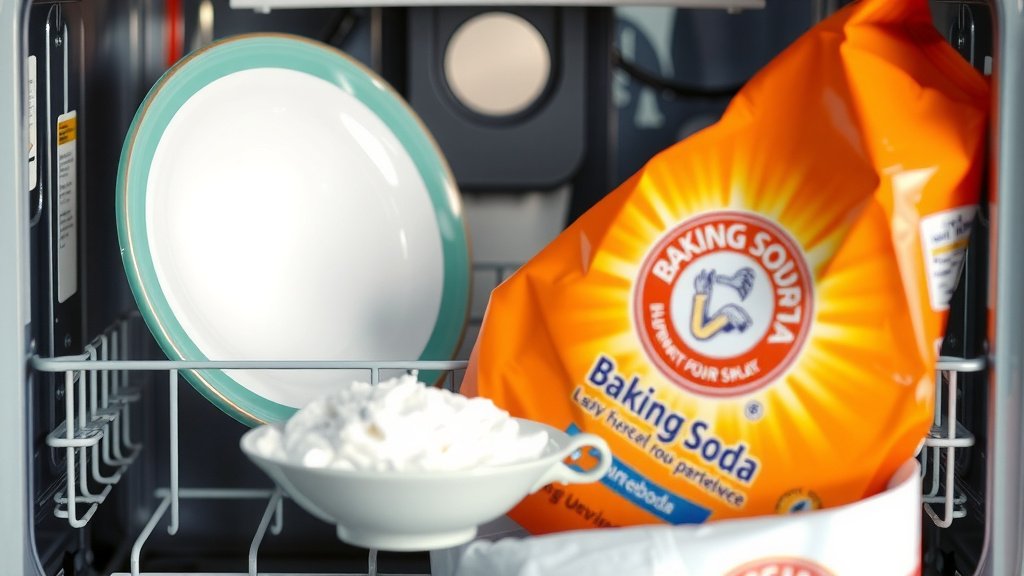
For persistent odors, you can place a small, open bowl filled with baking soda on the top rack of your dishwasher. Make sure it’s stable and won’t tip over during the cycle. Leave it overnight or run a short, hot water cycle with the bowl inside. We found that this can effectively tackle musty or sour smells.
What to Expect from Using Baking Soda
When you start using baking soda in your dishwasher, you might notice a few positive changes. Your dishes may come out looking a bit shinier and cleaner, especially if you often struggle with residue. The overall smell of your dishwasher should improve, too.
It’s important to manage expectations. Baking soda is a fantastic supplement and a great natural cleaner, but it’s not a miracle cure for severely neglected appliances. For very heavy-duty cleaning or limescale buildup, you might still need specialized dishwasher cleaners or descalers. However, for everyday maintenance and odor control, it’s highly effective.
| Situation | Baking Soda Method | Expected Result |
|---|---|---|
| General Refresh/Maintenance | Sprinkle 1/2 cup in the bottom | Fresher smell, aids general cleaning |
| Tough Stains (e.g., on door) | Apply a baking soda paste | Helps lift stubborn spots |
| Lingering Odors | Open bowl inside, or paste on seals | Neutralizes unpleasant smells |
| Boosting Regular Wash | Sprinkle 1/4 cup with detergent | Enhanced grease-cutting and shine |
Important Considerations and Best Practices
While baking soda is generally safe, there are a few things to keep in mind. Always use pure baking soda, not baking powder, which contains other ingredients. Baking powder won’t provide the same cleaning benefits and could potentially leave residue.
Another point is not to go overboard. Using too much baking soda could potentially lead to a cloudy film on your dishes, especially if your water is very hard. We found that sticking to the recommended amounts is key for optimal results.
Avoiding Potential Pitfalls
One common mistake is using baking soda in conjunction with vinegar in the same wash cycle. While both are great cleaners, mixing them can neutralize their effectiveness. They work best when used separately. For instance, you could use vinegar for a deep clean one month and baking soda for a refresh the next.
Also, ensure your dishwasher’s filter is clean. A clogged filter can prevent water from circulating properly, reducing the effectiveness of any cleaning agent, including baking soda. Regular filter cleaning is a must for efficient dishwasher operation.
Frequency of Use
How often can you use baking soda? For general freshening and maintenance, using it once a week is a good starting point. If you notice odors or specific stains appearing more frequently, you might increase it to twice a week.
For targeted stain removal or odor elimination, you can use the paste or bowl method as needed. We found that most people achieve excellent results by incorporating baking soda on a weekly basis. It’s an easy habit to get into!
Is Baking Soda Safe for All Dishwashers?
Generally, yes, baking soda is safe for most dishwashers. Its mild nature means it’s unlikely to cause damage to stainless steel interiors, plastic tubs, or rubber seals. The **American Cleaning Institute** often highlights the gentle abrasive qualities of sodium bicarbonate in various cleaning applications. It’s a staple in many natural cleaning recipes.
However, it’s always wise to check your dishwasher’s manual if you have any specific concerns about materials or warranty. Most manufacturers approve of natural cleaning agents like baking soda when used as directed. It’s a safer alternative to some harsher chemical cleaners you might find on the market.
When to Call in the Professionals (or a Stronger Cleaner)
While baking soda is fantastic, it has its limits. If you’re dealing with significant issues like hard water stains that have built up over a long time, or a machine that hasn’t been cleaned in years, baking soda might not be enough on its own. Experts often recommend a specialized dishwasher cleaner or a vinegar run for more intense cleaning tasks (Mayo Clinic).
If you notice your dishwasher is not draining properly, making strange noises, or has significant rust spots, these could be signs of larger problems that baking soda won’t fix. In these cases, it’s best to consult your dishwasher manual or a repair technician.
Your Dishwasher Cleaning Checklist with Baking Soda
Here’s a quick checklist to help you get started with baking soda in your dishwasher:
- Check your dishwasher manual for any specific cleaning recommendations.
- Use 100% pure baking soda, not baking powder.
- For a general refresh: Sprinkle 1/2 cup into the bottom of an empty dishwasher.
- For tough spots: Make a paste and apply to stained areas.
- For odors: Place an open bowl of baking soda inside overnight or during a cycle.
- Run a normal wash cycle after applying baking soda.
- Clean your dishwasher filter regularly for optimal performance.
Conclusion
You’ve learned that baking soda is a fantastic, natural helper for your dishwasher. Its mild abrasive and alkaline properties make it great for tackling stuck-on food and neutralizing those stubborn odors that can creep in. We’ve seen how simple methods like sprinkling it in the bottom or making a paste can boost your machine’s cleaning power.
Remember, while baking soda is effective for everyday maintenance and a fresh scent, it’s not a replacement for deep cleaning or professional repair. Start incorporating this budget-friendly tip weekly, and you’ll likely notice a difference in your dishwasher’s performance and your dishes’ shine. Give your dishwasher a little baking soda love!
Frequently Asked Questions
Can I use baking soda every day in my dishwasher?
While baking soda is gentle, using it every single day might be excessive for most households. We found that once a week is typically sufficient for general maintenance and freshening. Overuse could potentially lead to residue on dishes, especially with hard water.
Will baking soda damage my dishwasher?
Pure baking soda is generally safe for most dishwashers. Its mild abrasiveness won’t scratch dishes or interior components like stainless steel or plastic. We recommend checking your dishwasher’s manual for specific guidance, but it’s considered a safe natural cleaner.
What’s the difference between baking soda and baking powder for dishwashers?
You should only use 100% pure baking soda. Baking powder contains other leavening agents and acids that aren’t designed for dishwasher cleaning. These extra ingredients could leave residue or counteract the cleaning benefits you’re looking for.
How much baking soda should I use for tough stains?
For tougher stains, creating a paste is best. Mix baking soda with a small amount of water to form a toothpaste-like consistency. You can then apply this paste directly to the stained area and let it sit for 15-30 minutes before running your wash cycle.
Can I combine baking soda with my regular dishwasher detergent?
Yes, you can! Many people find success by sprinkling about a quarter cup of baking soda into the bottom of the dishwasher along with their regular detergent. We’ve seen this combination helps boost grease-cutting power and can lead to shinier dishes.