
Understanding Turbidity Sensors: What They Are & How They Work
A turbidity sensor is a device that measures how cloudy or clear your water is. It does this by shining a light beam into the water. The sensor then detects how much light gets scattered. This scattering effect is what tells us about the amount of suspended particles, like dirt or algae, in the water. So, if your water looks murky, this little gadget can tell you exactly how murky it is.
Understanding turbidity is super important for many reasons. It’s a key indicator of water quality. High turbidity can hide harmful bacteria and other contaminants. Many industries rely on these sensors to keep their processes running smoothly. Think of drinking water treatment plants or even aquariums needing precise readings. It helps ensure safety and efficiency across the board.
- A turbidity sensor measures water cloudiness.
- It works by detecting scattered light.
- Turbidity indicates overall water quality.
- It’s used in water treatment and industries.
Let’s walk through exactly how these sensors work and why they matter so much to your water.
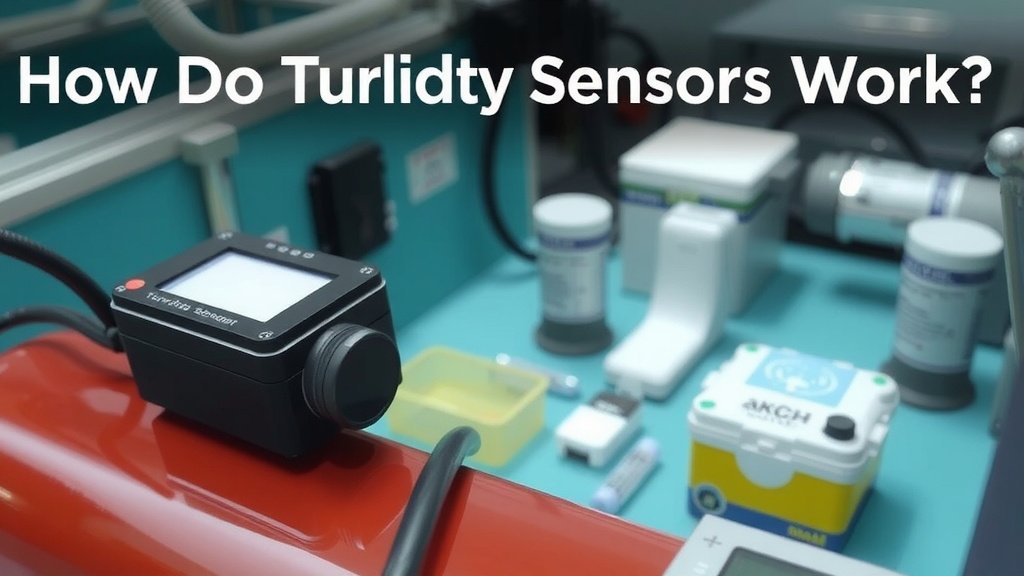
How Do Turbidity Sensors Work?
A turbidity sensor is your water’s personal eye exam. It tells you how clear or cloudy your water is. Think of it like looking through a foggy window versus a perfectly clean one. This measurement is important for understanding water quality. The sensor uses light to get its readings. It’s a clever bit of tech that helps us keep our water safe and clean.
The Science Behind the Scatter
The core principle is simple: light scattering. The sensor shines a beam of light into the water sample. When the light hits particles suspended in the water, it scatters in different directions. The sensor then measures how much light is scattered. More scattering means more particles and thus, higher turbidity. Less scattering indicates clearer water.
Light Sources and Detection
Most sensors use an LED light source. This is often infrared or visible light. The detector, usually a photodiode, is positioned at an angle to the light source. This setup is designed to capture the scattered light. The amount of light hitting the detector directly correlates to the turbidity level. It’s a direct way to quantify cloudiness.
Units of Measurement: NTUs
Turbidity is typically measured in Nephelometric Turbidity Units (NTUs). This unit is based on a specific method of light scattering. NTU values give us a standardized way to compare water clarity. For example, drinking water should ideally have very low NTU readings, often below 1 NTU. River water might have much higher values, especially after rain.
Why NTUs Matter for You
Knowing your water’s NTU count helps you understand potential issues. High NTUs can signal a problem with filtration or source water quality. For instance, if your home’s water filter isn’t working, you might see an increase in NTUs. This then prompts you to check or replace the filter. It’s a simple metric with big implications for your water.
Why is Turbidity So Important?
Turbidity is more than just a measure of murkiness. It’s a key indicator of overall water quality. What you see as cloudy water could be hiding more serious problems. That’s why monitoring turbidity is essential in many settings. It helps protect public health and ensure industrial processes run smoothly.
Impact on Water Quality and Safety
Particles in the water can shield harmful microorganisms. Bacteria, viruses, and parasites can hide behind sediment or algae. This makes them harder to kill with disinfection treatments like chlorine. High turbidity can reduce the effectiveness of these treatments. The US Environmental Protection Agency (EPA) has strict guidelines for turbidity in drinking water to prevent such issues.
Research has shown a direct link between turbidity and the presence of pathogens. When turbidity levels are high, the risk of waterborne illness increases. Therefore, keeping turbidity low is a fundamental step in ensuring safe drinking water. It’s a visual cue that often points to invisible dangers.
Applications in Various Industries
Turbidity sensors are used across many fields. In wastewater treatment, they monitor effluent quality before discharge. This ensures compliance with environmental regulations. In the aquaculture industry, fish and other aquatic life thrive in clear water. Too much turbidity can stress them and affect growth. Aquariums also rely on these sensors to maintain healthy environments.
The food and beverage industry uses turbidity for quality control. For example, it helps ensure beverages like juices and wines are clear and appealing. In manufacturing, processes might require very pure water. Turbidity sensors help verify water purity at various stages. They are also used in scientific research to study water conditions.
Types of Turbidity Sensors You Might Encounter
There isn’t just one kind of turbidity sensor. Different designs cater to various needs and environments. Understanding these types can help you choose the right one or appreciate how they work.
Nephelometric Sensors
These are the most common type. They work on the principle of light scattering at a 90-degree angle from the incident beam. This is the method most often used for measuring low turbidity levels, like those found in drinking water. They are very sensitive and provide accurate readings.
Ratiometric (Ratio) Sensors
Ratio turbidimeters use multiple detectors. Some detectors measure forward scattered light, while others measure 90-degree scattered light. This design makes them more resistant to interference from colored water. They can provide more reliable readings in challenging water samples.
Infrared (IR) Turbidity Sensors
Some sensors use infrared light. This wavelength of light is less affected by the color of the water sample. They are often used in industrial applications where water color might vary. This helps maintain accurate turbidity measurements.
Choosing the Right Turbidity Sensor
Selecting a turbidity sensor depends on your specific needs. Consider the environment where it will be used. Think about the expected range of turbidity values. Also, consider the accuracy required for your application.
Factors to Consider
Accuracy and Precision: How exact do your readings need to be? Some applications demand high precision.
Range: What are the lowest and highest turbidity levels you expect to measure?
Environmental Conditions: Will the sensor be submerged? Does it need to withstand pressure or extreme temperatures?
Maintenance: How easy is it to clean and calibrate the sensor?
Cost: Sensors vary greatly in price. Set a budget based on your needs.
Simple Checklist for Sensor Selection
Here’s a quick checklist to help you decide:
- Confirm required NTU range.
- Check measurement accuracy needs.
- Assess environmental conditions.
- Consider ease of calibration.
- Factor in maintenance requirements.
- Determine your budget.
Conclusion
You’ve learned that a turbidity sensor is your go-to tool for understanding water clarity. It uses light scattering to measure suspended particles, giving you a quantifiable reading in NTUs. This simple measurement is vital for water quality, protecting your health, and ensuring industrial processes run smoothly. Whether for drinking water safety or maintaining aquatic ecosystems, turbidity monitoring is key. Now that you understand how they work and why they matter, you can better assess your water needs and choose the right sensor if required.
Frequently Asked Questions
What’s the difference between turbidity and cloudiness?
Turbidity is the scientific measurement of how cloudy or murky water appears. It quantifies the amount of suspended particles causing the cloudiness using units like NTUs. So, cloudiness is the visual effect, and turbidity is the measured property.
Can I use a turbidity sensor to detect bacteria?
A turbidity sensor doesn’t directly detect bacteria. However, high turbidity often indicates that harmful microorganisms might be present because they can hide behind suspended particles. It serves as an important warning sign for potential contamination.
How often do turbidity sensors need to be calibrated?
Calibration frequency depends on the sensor type and its operating environment. For critical applications like drinking water monitoring, daily or weekly calibration might be necessary. Less sensitive applications might only require monthly checks.
Are all turbidity sensors waterproof?
Not all sensors are designed for continuous submersion. Some sensors are meant for in-line water stream measurements, while others are fully submersible for direct deployment in lakes or tanks. Always check the product specifications for its intended use.
What is considered “good” turbidity for drinking water?
For safe drinking water, the US EPA generally recommends that turbidity be less than 1 NTU. Many systems aim for levels below 0.3 NTU to ensure high water quality and effective disinfection.