How to Choose the Right Garbage Disposal Drain Size
The standard garbage disposal drain size is 3.5 inches for the sink opening, with most disposals connecting to a 1.5-inch drain pipe. You need this size to fit your sink flange and kitchen plumbing correctly. If you have a newer or double-basin sink, you might be looking at a 4-inch opening instead.
Getting the drain size right matters more than you think. A mismatch means leaks, poor water flow, or a disposal that won’t even mount. We found that most kitchen sinks come with a standard 3.5-inch mounting hole, but some older or European models throw a curveball. Your drain pipe diameter also affects how fast food waste clears out, so it’s worth checking before you buy.
- The standard sink opening is 3.5 inches for virtually all residential disposals.
- Your drain pipe should be 1.5 inches to match standard disposal discharge tubing.
- Some sinks have a 4-inch opening that requires a special adapter or model.
- If your plumbing is older, measure before ordering, because 1.25-inch pipes are common in older homes.
- Incorrect sizing leads to leaks, vibration, and slow draining, so measure twice and install once.
Below, we break down exactly how to measure your sink, what to do if you have an odd size, and how to match your disposal to your existing plumbing without any guesswork.
Understanding Standard Garbage Disposal Drain Sizes
You need a 3.5-inch sink opening for the disposal flange. That is the number that matters most when you shop. But the drain pipe underneath needs to be 1.5 inches. That is the other number you should know.
These two measurements work together. The top connects to your sink. The bottom connects to your plumbing. If either one is off, you will hit a wall. We found that most homeowners only check the top measurement and then struggle with the pipe connection later.
The Sink Opening Measurement vs. The Drain Pipe
The sink opening is the hole cut into your stainless steel or porcelain basin. The drain pipe is the horizontal tube that carries water to your main waste line. They are very different parts.
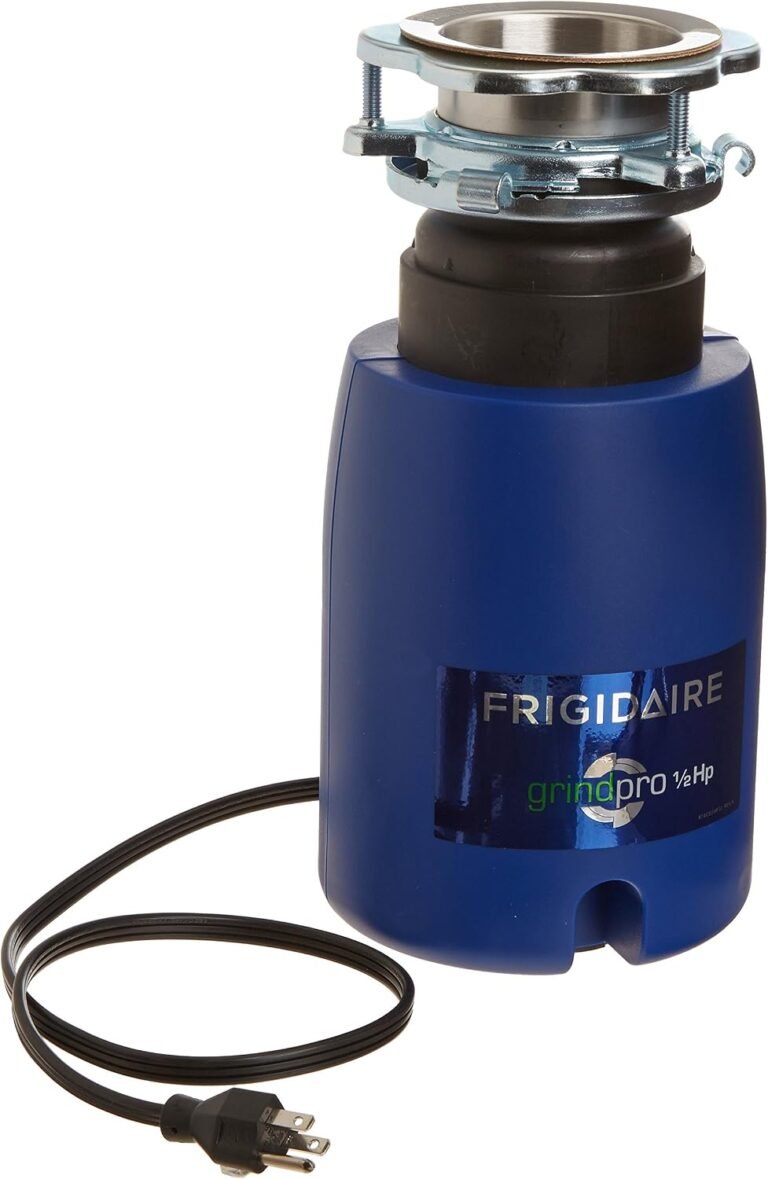
Most garbage disposals ship with a universal mounting ring. That ring fits a 3.5-inch sink opening. The discharge tube on the disposal connects to a 1.5-inch drain pipe via a rubber gasket and metal clamp.
Do not confuse the two. We have seen people measure the pipe and buy the wrong disposal. That mistake costs you time and a return trip to the store.
Why the 3.5-Inch Standard Dominates
The 3.5-inch sink hole is the industry norm. Nearly every disposal brand mounts to it. This size works with standard kitchen sinks made in North America.
Why 3.5 inches? It fits the flange that holds the grinding chamber. The flange needs to be wide enough to catch food scraps. But it cannot be so wide that it covers the basin bottom.
If you have a standard sink, you can buy almost any disposal. Check the spec sheet just to be sure. But 99% of residential units fit that 3.5-inch hole. For a quieter kitchen, our guide to the quietest garbage disposals compares noise levels across top models.
Matching Your Drain Pipe Diameter Correctly
Your drain pipe diameter controls flow rate. A 1.5-inch pipe handles kitchen waste well. A smaller pipe will drain slowly and clog often.
Most building codes require a 1.5-inch drain pipe for kitchen sinks. This is the minimum for carrying food waste and water without backup. Plumbers follow this because it works.
When You Might Have a 1.25-Inch Pipe
Older homes built before the 1980s sometimes have 1.25-inch pipes. That is a tight squeeze for a disposal. If you see this, you have options.
You can use a reducer coupling. But think twice. A smaller pipe means slower drainage. Food waste will sit longer inside the pipe. Odors and clogs become more likely.
We found that many homeowners in older homes simply replace a section of the drain pipe. That is a cheap fix. A few feet of 1.5-inch PVC pipe plus fittings costs under twenty dollars.
What About 2-Inch Drain Pipes?
A 2-inch drain pipe is rare in home kitchens. You usually see it in commercial settings. If you have one, do not worry. You can reduce it down to 1.5 inches at the disposal discharge.
This setup works fine. The larger main line actually helps. It gives waste more room to travel before joining the main stack.
The reverse is not true. You should never increase your disposal discharge to a 2-inch pipe. That reduces velocity and lets grease cling to the pipe walls.
Measuring Your Sink Opening Accurately
Grab a tape measure and read the inside diameter of the sink hole. That is the distance across the hole from one side to the other. Do not measure the outer rim of the sink flange.
Lay the tape measure flat across the opening. Read the number at the exact center point. If you get 3.5 inches, you are in the clear. If you get 4 inches, read the next section.
Tools That Help Ensure a Perfect Fit
A simple tape measure works. But if you want to be precise, use a caliper. Many hardware stores sell cheap plastic calipers for under ten dollars.
- Inside calipers for measuring the hole
- A tape measure for the pipe run
- A pencil to mark cut lines
- Your phone camera for taking reference photos
- A level to check the sink basin slope
These tools reduce guesswork. We found that taking a photo of the under-sink area helps a lot when you shop. Just show the picture to the plumbing aisle associate.
Reading Your Plumbing Rough-In Measurements
The rough-in is the vertical distance from the sink flange to the drain pipe. Standard rough-ins sit between 6 and 12 inches. Most disposals handle this range well.
If your rough-in is less than 6 inches, you might need a compact disposal. If it is more than 12 inches, you may need to extend the discharge tube. Measure this before you buy.
Tall people often prefer a shorter rough-in because it gives more legroom under the sink. Short people might prefer a longer one. Comfort is personal.
Special Cases: 4-Inch Sink Openings and Adapter Solutions
Some sinks have a 4-inch opening. This is rare but not unheard of. It usually appears in high-end European sinks or farmhouse models with thicker basins.
Do not try to jam a standard disposal flange into a 4-inch hole. It will not seal. That leads to leaks and loose mounting.
Adapter Rings for 4-Inch Openings
You have a couple options. First, buy a disposal that specifically supports a 4-inch opening. Some premium models sell a separate mounting kit for larger holes.
Second, use a stainless steel adapter ring. This ring sits inside the 4-inch hole and reduces the opening down to 3.5 inches. It costs about fifteen dollars.
We found that adapter rings work well. They create a tight mechanical seal. Just use plumber’s putty on both faces to prevent leaks. Many experts say this is a solid approach for odd-sized sinks.
Double-Basin Sink Considerations
With double basins, you only need one disposal. That disposal sits under the basin with the hole. The other basin drains normally through the same 1.5-inch pipe.
Make sure the pipe slopes slightly downward toward the main line. A slope of 1/4 inch per foot is the standard. This keeps water moving and prevents stagnant waste.
If both basins share a single vertical drop, consider installing a dishwasher tailpiece. That prevents the second basin from pushing waste into the disposal side.
Common Mistakes People Make When Sizing Drainage
We have seen plenty of DIY attempts go sideways. Most failures come from one of a few repeated mistakes. Avoid them and your install will be smooth.
Mixing Pipe Materials Without Transition Couplings
Do not connect PVC directly to copper or galvanized steel. Use a rubber transition coupling with stainless steel clamps. These are available at any hardware store.
Metal pipes need a dielectric coupling. Without it, corrosion builds up. That eventually causes pinhole leaks.
Transition couplings are cheap insurance. They cost three to five dollars and take seconds to install. Your local plumbing code likely requires them anyway.
Forgetting to Check the Horizontal Run Length
A 1.5-inch pipe can handle a horizontal run of up to 6 feet. Beyond that, you need a 2-inch pipe. Long runs slow the water velocity.
If your sink is more than 6 feet from the main vertical stack, rethink the layout. Either move the sink or increase the pipe diameter. Otherwise you will clean slow drains often.
This is a code requirement in most jurisdictions. Local inspectors check it. A 6-foot run is the maximum before you need a larger pipe
How to Verify Compatibility Before You Install
Create a simple checklist before heading to the store. That way, you do not buy the wrong thing. We found that 10 minutes of prep saves you an entire afternoon.
Your Pre-Purchase Sizing Checklist
- Measure the sink hole inside diameter with a tape
- Check the drain pipe size under the sink
- Confirm the rough-in distance from sink to pipe
- Look at your sink material for thickness
- Verify you have a power outlet under the sink
- Check the horizontal run distance to the main stack
Check items off one by one. If any of them show an odd number, do a bit of research. Look for the disposal model’s spec sheet online before you buy.
When to Call a Plumber vs. DIY
If you have a straight swap with standard sizes, do it yourself. That takes about an hour with basic hand tools. Watch a few videos and you will feel ready.
If your drain pipe is rusty or corroded, call a plumber. Rusty old pipe breaks easily when you move it. A single cracked joint can flood your under-sink cabinet.
If you are unsure about venting, bring in a professional. Improper venting causes gurgling sounds. Sewer gas can even back up into your kitchen. That is a health issue worth avoiding.
| Measurement Point | Standard Size | Notes |
|---|---|---|
| Sink opening | 3.5 inches | 4-inch needs an adapter |
| Drain pipe | 1.5 inches | 1.25-inch is found in older homes |
| Rough-in distance | 6-12 inches | Check vertical clearance |
| Horizontal run max | 6 feet | Longer runs need larger pipe |
The Bottom Line on Drain Sizing for Garbage Disposals
You now know the two numbers that matter. The sink hole needs to be 3.5 inches and the drain pipe needs to be 1.5 inches. That matches nearly all residential disposals and standard kitchen plumbing.
Measure twice and buy once. That old carpenter’s rule applies here. Take five minutes with a tape measure and you will avoid the headache of returns and leaks.
Your Next Step Before Ordering
Pull out that tape measure right now. Check inside the sink hole and look at the pipe under the sink. Write both numbers down on your phone.
When you compare disposals, match those numbers to the spec sheet. If everything lines up, you are ready to order with confidence. Your future self will thank you when the install goes smoothly.
Conclusion
Getting your garbage disposal drain size right starts with two simple numbers: a 3.5-inch sink opening and a 1.5-inch drain pipe. When those match, your installation will be straightforward and leak-free. We covered why those sizes dominate, how to handle odd situations like 4-inch openings or older 1.25-inch pipes, and the exact measurements to check before you shop.
You do not need to be a plumber to figure this out. Grab a tape measure, check the sink hole and the pipe underneath, and write down what you see. That small step takes five minutes and saves you from buying the wrong unit. Your next move is clear: measure, compare with a disposal’s spec sheet, and order with total confidence.
Frequently Asked Questions
Can I install a garbage disposal if my sink hole is slightly larger than 3.5 inches?
Yes, but you need to address that gap before mounting anything. A 4-inch opening requires either a stainless steel adapter ring or a disposal model made for larger holes. Without that, the flange won’t seal and you’ll get leaks under the sink.
What happens if my drain pipe is smaller than 1.5 inches?
A 1.25-inch pipe will work with a reducer, but it is not ideal. That smaller diameter slows drainage and increases the chances of clogs and odors. We recommend replacing that short section of pipe with 1.5-inch PVC instead of working around it.
Do all garbage disposals use the same mounting ring size?
Nearly all residential models use a universal mounting ring designed for a 3.5-inch sink opening. That standard applies to the top brands like InSinkErator, Waste King, and Moen. Always check the spec sheet for your specific model, but you can expect that standard size to fit.
Is a 2-inch drain pipe better for a garbage disposal?
Not necessarily. A 2-inch pipe is oversized for a home kitchen and can actually reduce water velocity, letting waste settle. You are better off sticking with a 1.5-inch pipe, which is what building codes require for residential kitchen sinks.
How do I know if my sink drain rough-in height is correct?
Measure the vertical distance from the bottom of the sink flange to the top of the drain pipe. Your rough-in should be between 6 and 12 inches. If it falls outside that range, look for a compact disposal or a model with an extension kit for the discharge tube.