
Garbage Disposals and Your Sewage System: Pros and Cons
No, kitchen sink garbage disposals are not automatically bad for sewage systems. In fact, we found that they can be perfectly safe when used correctly. The real issue isn’t the disposal itself; it’s what you send down the drain and how your local sewer system is set up.
Many experts say modern disposals grind food into tiny particles, which can actually be handled by most municipal wastewater treatment plants. We found that problems usually start with certain foods, like grease, pasta, or coffee grounds, which can cause clogs and costly damage. Your habits matter way more than the appliance sitting under your sink.
- Good news: Disposals are generally safe for city sewer systems that have modern treatment plants.
- The catch: Grease, oils, and starchy foods are the top causes of sewer clogs.
- Big problem: Homes on septic tanks need extra care; disposals can overload the system.
- Key rule: Always run plenty of cold water during and after grinding.
- Bottom line: A disposal is a tool — it’s only as “bad” as what you feed it.
Below, we break down exactly how disposals interact with sewer lines, which foods to avoid at all costs, and the situations where you might want to skip the disposal entirely. Let’s walk through it together so you can protect your pipes and your wallet.
How Garbage Disposals Really Affect Your Sewer System
The short answer? We found that a disposal is rarely the villain people make it out to be. It is a grinding device that turns food scraps into tiny particles. Those particles then travel through your home pipes and into the larger sewer network. Used with common sense, this process works fine for most modern municipal systems.
Problems tend to surface when people treat the unit like a magic black hole. You cannot just shove anything down there and expect no consequences. Your local water treatment plant is designed to handle organic waste, but it has limits. We found that understanding those limits is the key to living in harmony with both your disposal and your plumbing.
What Happens to Ground-Up Food After It Leaves Your Sink
Once the food is ground up, it mixes with water and flows out of your house. It joins the wastewater from your toilets, showers, and washing machines. That combined mixture heads to a treatment facility. At the plant, solids are allowed to settle out in large tanks. The water is then treated and cleaned before being released back into the environment.
Many treatment plants actually welcome the extra organic material from disposals. It adds carbon, which helps the bacteria break down other waste. Some facilities even use the captured solids to create fertilizer or generate energy. So, in a city with a strong treatment network, your disposal is just doing its part.
Older Sewer Systems and Combined Sewer Overflows
Not every city is built the same. We found that older towns might have combined sewer systems. This means stormwater and household sewage travel through the same pipes. During heavy rain, these systems can get overwhelmed, leading to overflow events. Adding extra food waste to that mix can make the problem worse in these specific areas.
If you live in an older city, it is worth checking how your local system handles waste. A quick call to your public works department can give you a clear picture. You might find that your area is perfectly fine, or you might discover that a disposal is not the best idea for your neighborhood right now.
The Real Culprits: Foods That Wreak Havoc on Pipes
So, if the disposal itself is okay, why do sewer lines clog? We found that it is almost always about the specific foods you feed it. Just because you can grind something does not mean you should. The wrong items can turn into a thick, sticky paste that coats your pipes and traps other debris.
Think of it like this: your sewer line is a straw. Some food particles act like little pebbles that slide through easily. Other foods act like glue, building up on the walls until the straw is completely blocked. That is when you end up with a backup in your basement, which is a situation nobody wants to deal with.
Never Put These Items Down the Disposal
- Cooking grease and oils: These solidify as they cool. They form a stubborn layer inside pipes and cause major blockages over time. Make sure to pour them into a can and throw them in the trash.
- Coffee grounds: They clump together rather than washing away. That clumping action creates a dense sludge that is hard to break up. Put them in your compost or trash instead.
- Pasta and rice: These absorb water and expand. They can quickly swell inside a pipe and create a paste-like clog. Even small amounts can be trouble.
- Fibrous vegetables: Celery, corn husks, and artichoke leaves are stringy. The strings can wrap around the disposal blades or get tangled in in the pipe. This can jam your unit or snag other passing debris.
- Egg shells: The thin membrane inside the shell is tough and fibrous. Large pieces can get stuck, and the small shell bits act like sand, adding grit to your plumbing system.
- Bones and pits: Very hard objects can dull or break the disposal’s blades. More importantly, they should be thrown away, not ground up.
When a Disposal and Your Sewer System Don’t Mix
There is one major scenario where a disposal can be genuinely problematic for your sewage setup. If your home uses a septic tank, you need to pay extra close attention. A septic tank is a self-contained system in your yard that treats your waste on-site. It relies on a delicate balance of bacteria to break things down.
Adding lots of food waste from a disposal forces the septic system to work much harder. The tank fills up faster, which means you will need to pump it more often. The extra solids can also escape into the drain field and clog the soil, leading to expensive repairs. Many experts say the additional stress simply isn’t worth it.
Assessing Your Risk if You’re on Septic
We found that this does not mean every septic owner must rip out their disposal immediately. If you rarely use the unit, you might be okay. The key is the volume of food waste you add on a regular basis. A small family that cooks minimally can sometimes manage fine with a septic-appropriate disposal.
If you do have a disposal and a septic tank, look for a unit that is specifically labeled as “septic safe.” These models are designed to break down waste into finer particles. You also want to use a septic treatment additive regularly. We found that this combination helps the tank handle the extra load more effectively.
Signs That Your Sewer Line Is Struggling Right Now
Your plumbing gives you warnings before a total failure. Watch for these early signs of trouble. A slow-draining sink is often the first clue that waste is building up. You might also notice gurgling sounds coming from the drain. That sound indicates air bubbles traveling through a partially blocked pipe.
Another common sign is water backing up somewhere unexpected. If you run the washing machine and the water rises in your kitchen sink, you have a shared drain blockage. Bad odors coming from drains are also a major red flag. That smell is the trapped food waste starting to rot inside your pipes.
What to Do If You Notice These Warning Signs
Do not ignore these signals. They will only get worse with time. Start by stopping all use of the disposal immediately. Then, try a simple home remedy like hot water and baking soda followed by vinegar. This mixture can sometimes break up minor sludge. If that doesn’t work, call a professional plumber to assess the situation before it turns into a flooded basement.
The Smart Habits That Keep Your Pipes Clear and Healthy
Your habits at the sink matter more than the disposal itself. We found that a few simple rules can prevent almost all sewer-related issues. The most important habit is to always use a strong flow of cold water. Cold water keeps fats and oils in a solid state, allowing them to be washed through the pipes more easily. Hot water can melt them, which then re-solidify further down the line.
Keep the water running for at least 15 to 20 seconds after the grinding noise stops. This flushes the particles all the way out of your home’s pipes and into the main sewer line. It is a simple step that people often skip, but it makes a huge difference in preventing clogs.
Simple Rules for Everyday Disposal Use
Make these rules part of your routine. First, start the cold water before you turn on the disposal. Second, feed the food scraps in slowly, giving the unit time to grind completely. Third, do not overstuff the disposal. It can only handle so much at once. Fourth, let the water run for an extra 15 seconds after grinding is done to clear the drain line.
Regular maintenance helps, too. Once a week, run some ice cubes and a little rock salt through the disposal. This combination helps clean the blades and remove any built-up grime. You can also toss in some lemon or lime peels to give your kitchen a fresh, clean scent. These small actions keep your unit and pipes running smoothly.
Your Go-To Checklist Before You Hit the Switch
- Is this food on the “never grind” list like grease, pasta, or coffee grounds?
- Did I turn on the cold water before starting the disposal?
- Am I feeding the scraps in slowly rather than dumping everything at once?
- Will I leave the water running for 15 to 20 seconds after the noise stops?
- Is my disposal running properly without strange noises or vibrations?
- Am I on a septic system that might require special care or disposal approval?
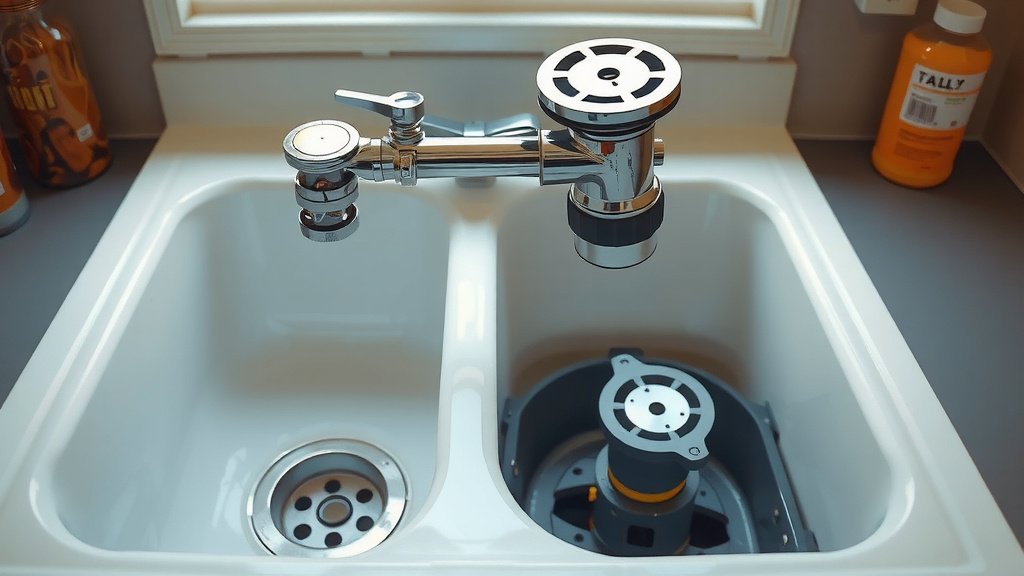
Comparing Different Disposal Types and Sewer Impacts
Not all garbage disposals are created equal. Everyday standard models are usually fine for city sewers. We found that continuous feed units, which run whenever you turn them on, are the most common. The less common batch feed models only run when you insert a special lid and push it down. Both types work well for typical household use.
We also found that high-end models might offer more power, but they do not change the fundamental impact on your sewer system. The power just affects how fast and how fine the grinding happens. Your local infrastructure and your food choices still play the biggest role in determining whether you have problems.
| Disposal Type | Typical Cost | Good For City Sewer? | Good For Septic? |
|---|---|---|---|
| Standard (3/4 HP) | Lower | Yes, with care | Only with very light use |
| High-Power (1+ HP) | Mid-range | Yes, with care | Not recommended |
| Septic-Safe Models | Variable | Yes | Yes, with additives and mindful use |
We found that the table above gives you a good snapshot of what to expect. No matter which model you pick, the rules stay the same. Avoid the bad foods, run lots of cold water, and do not overload the unit. Those three habits will serve you well, no matter where you live or what type of system you have.
At the end of the day, take a breath. A disposal is a convenient tool, not a ticking time bomb for your plumbing. We found that nearly all sewer problems tied to disposals are actually tied to human error. By being mindful and following these simple guidelines, you can enjoy your appliance for years without fear. And if you’re ever in doubt, just throw the questionable food in the trash instead. It’s a small decision that can save you a big headache later.
Conclusion
At the end of the day, your garbage disposal is only as problematic as you make it. We found that your habits matter far more than the appliance itself. For most homes on city sewer lines, a disposal works perfectly fine when you avoid grease, pasta, and coffee grounds. The real trouble starts when you treat it like a trash can instead of a careful tool.
You do not need to panic or rip out your disposal today. Just commit to running plenty of cold water, feeding scraps slowly, and keeping the worst offenders out of the drain. If you are on a septic tank, take extra care with what you send down. And when you are unsure about a food item, throw it in the trash instead. That simple choice will protect your pipes and save you from expensive plumber visits down the road.
Frequently Asked Questions
Can a garbage disposal cause sewer line damage over time?
Yes, it can if you are careless. Ground-up food particles can build up inside pipes when they mix with grease or starchy foods. Over years of heavy use, that buildup narrows your sewer line and leads to blockages. Regular flushing with cold water and avoiding problem foods keeps your pipes clear.
Is it cheaper to use a garbage disposal or throw food in the trash?
Using a disposal is usually cheaper for small scraps because you are not buying extra trash bags. That said, a major sewer clog from misuse can cost hundreds of dollars to fix. We found that a balanced approach works best. Use the disposal for small leftovers, but toss large amounts of food waste in the trash.
Do garbage disposals increase your water bill?
The water usage is actually minimal. You only need to run the tap for about 20 to 30 seconds per use, which is roughly one to two gallons of water. That is not enough to make a noticeable difference on your monthly bill. The cost of a clogged drain far outweighs the few cents of water you use.
What is the number one thing people put down disposals that causes clogs?
Grease and cooking oils are by far the biggest problem. They go down the drain as a liquid, then cool and harden inside your pipes. Over time, that sticky layer traps other food particles and creates a serious blockage. You should always pour grease into a can and toss it in the trash.
Should you run hot or cold water with a garbage disposal?
Always use cold water when running your disposal. Cold water keeps fats and oils in a solid state so they can be flushed through the pipes easily. Hot water melts them, and they re-solidify further down the line, which creates clogs. It is one of the simplest habits you can adopt to protect your plumbing.


