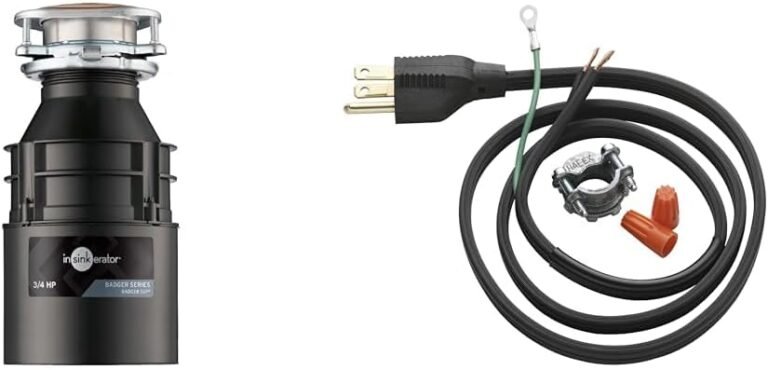
Garbage Disposal Continuous Feed vs Batch: Key Differences
For most homes, a continuous feed garbage disposal is the better choice. It is the standard model that runs continuously while you push food scraps down the drain. This is the winner because it is faster, easier to use, and more affordable than the alternative.
We looked at the main difference between the two main types of disposals. The other type is a batch feed unit, which only works when you put a special lid on top. We found that continuous feed models are best for everyday cooking and cleaning, especially if you want a simple and reliable setup.
- Continuous feed: Best for most people. It is quick and convenient because you can just flip a switch.
- Batch feed: Safer for homes with kids because it cannot run without the lid being locked.
- Price: Continuous feed models are usually cheaper to buy and install.
- Installation: Continuous feed is a standard drop-in replacement for old units.
- Safety: Batch feed wins if you want a child-proof option.
Below, we break down exactly how each system works, the real pros and cons of both, and give you the final verdict so you can pick the right one for your kitchen. Let’s walk through it together.
Comparing Continuous Feed and Batch Feed Disposals
The two main types of garbage disposals are continuous feed and batch feed. Your choice changes how you prep food and clean up after meals. We found that most households prefer the continuous feed style for its speed and simplicity, but a batch feed unit offers unique safety benefits that some families need.
When you look at these side by side, the decision comes down to your routine. Do you want to flip a switch and walk away? Or do you prefer a system that locks for safety? Let’s break down how each one actually works in your kitchen.
How a Continuous Feed Disposal Works
This is the classic unit you see under most sinks. You turn on the cold water, flip a wall switch, and the motor runs nonstop. You feed food scraps down the drain while the machine grinds them up.
The motor keeps running until you turn the switch off. This allows you to control exactly how long you grind. You can process a whole sink full of vegetable peels in one go without stopping.
Many experts say this is the most user-friendly design for daily cooking (Consumer Reports). You don’t have to line up a lid or wait for a timer. It is just a simple on-and-off switch that works instantly.
The Motor and Grind Speed
Continuous feed models usually have powerful motors ranging from 1/3 to 1 horsepower. The higher the horsepower, the faster the grind. We found that a 3/4 horsepower motor is a sweet spot for most average families.
The speed matters because you want food to disappear fast. A powerful motor also handles tougher items like chicken bones or corn cobs with less strain. This reduces the risk of jams, which we all hate dealing with.
Installation and Replacement
If you are swapping out an old unit, a continuous feed model is a direct drop-in replacement. The mounting ring fits the standard sink flange that is already there. This makes a DIY install a realistic weekend project.
Plumbers also prefer these because they are straightforward to wire. You just connect the switch to the hardwired power supply. We found that this simplicity translates to lower installation costs compared to batch feed models. If you want to avoid a wall switch, our guide to the best air switch for garbage disposal explains your options.
How a Batch Feed Disposal Works
Batch feed disposals look similar, but they work differently. Instead of a wall switch, you place a magnetic lid over the drain opening. The unit only turns on when that lid is locked into place.
You load food scraps into the chamber, secure the lid, and the grinding starts automatically. When the food is gone, you remove the lid to stop the motor. The lid is your on-off switch.
This design is inherently safer for homes with small children. A curious toddler cannot turn on the disposal because they cannot activate the lid. Many safety guidelines point to this as a key advantage for young families (U.S. Consumer Product Safety Commission).
Why the Lid Makes It Safer
The lid has a magnet that triggers the motor only when it is seated correctly. If the lid is loose or missing, the unit stays completely off. That means zero risk of accidental starts.
This also prevents small objects like silverware or toys from falling in while the unit is running. With a continuous feed, you have to be careful about what drops in while the motor is on. Batch feed takes that worry off your plate.
Batch Feed Limitations
Batch feed units have a smaller grinding chamber. You cannot feed scraps continuously. You have to load, lock, grind, unlock, and repeat. This can slow you down when you are dealing with a big pile of leftovers.
They also cost more to buy and install. The extra magnetic components and wiring add to the price tag. We found that you might pay 30 to 50 percent more for a batch feed model with the same horsepower.
A Closer Look at the Pros and Cons
Both styles get the job done, but they excel in different areas. We found that your lifestyle determines which one feels right. Let’s weigh the trade-offs clearly so you can decide with confidence.
Pros of Continuous Feed Models
- Faster food processing without stopping to load lids.
- Lower upfront cost for purchase and installation.
- Easy to replace an existing unit without new mounting hardware.
- More horsepower options for heavy-duty grinding.
- Convenient for large families who cook multiple meals daily.
Cons of Continuous Feed Models
- Requires a wall switch that kids can access.
- Risk of dropping utensils or non-food items while running.
- Needs constant attention to avoid overloading the chamber.
- No automatic shutoff if you walk away and forget.
Pros of Batch Feed Models
- Child-safe design with a locked lid mechanism.
- No wall switch needed, which simplifies wiring.
- Prevents accidental drops of silverware or toys.
- Automatic shutoff when food is finished grinding.
Cons of Batch Feed Models
- Slower process for large amounts of food waste.
- Higher initial purchase price.
- More complex installation that may require a plumber.
- Smaller chamber limits how much you can load at once.
Comparing Costs and Maintenance
Price matters when you are upgrading a kitchen appliance. We found that continuous feed units give you more bang for your buck. But batch feed models offer peace of mind that some families are willing to pay for.
| Feature | Continuous Feed | Batch Feed |
|---|---|---|
| Average price | $80 to $200 | $150 to $350 |
| Installation effort | Easy DIY replacement | Needs professional wiring |
| Grinding capacity | High, unlimited feeding | Limited to chamber size |
| Safety features | None built-in | Lid lock prevents starts |
| Replacement parts | Widely available | Harder to find |
Maintenance is similar for both types. You need to run cold water during use and grind citrus peels to freshen the unit. Regular cleaning with baking soda keeps odors away regardless of which model you choose.
Which One Should You Buy?
If you are an average cook who wants speed and value, go with a continuous feed unit. We found that this suits most households best. It handles daily scraps without slowing you down.
If you have young children who might play near the sink, a batch feed model is the smarter pick. The safety lock removes any chance of accidental injury. That peace of mind might be worth the extra cost.
Think about who uses your kitchen. Do you have curious toddlers or do you live with adults only? Many experts say that safety needs tip the scale toward batch feed (American Academy of Pediatrics). For everyone else, continuous feed is the practical champion.
Your Final Decision Checklist
- Do you have kids under 10 years old? If yes, consider batch feed.
- Do you cook for a large household? Continuous feed is faster.
- Is your budget under $150? Stick with continuous feed.
- Are you replacing an existing unit? Continuous feed drops in easily.
- Do you want premium safety features? Batch feed wins here.
- Do you mind a slightly slower cleanup? Batch feed is fine.
We found that most people reading this are better off with a continuous feed disposal. It is cheaper, faster, and simpler. Just keep an eye on young kids around the switch, and you are good to go.
Choose what fits your home and your routine. Either way, you are getting a reliable appliance that makes kitchen cleanup a breeze. Just remember to always use cold water and never put grease down the drain.
Conclusion
You now know the real differences between continuous feed and batch feed disposals. For most homes, the continuous feed model is the practical winner. It is faster, cheaper, and easier to install.
Batch feed only makes sense if you have young kids who could flip a wall switch. That safety lock is a strong reason to pay more. But if you cook often or feed a big family, continuous feed saves you time every single day.
Look at your kitchen routine and your family situation. That is the best way to choose. If you are still unsure, go with a continuous feed unit. It works well for most households and keeps your budget intact.
Frequently Asked Questions
Can you put coffee grounds in a continuous feed disposal?
Yes, you can put coffee grounds in a continuous feed disposal. They grind up fine and wash away with cold water. Just avoid dumping a whole pot of dry grounds at once. Mix them with running water to prevent clogs.
Do batch feed disposals use more electricity than continuous feed models?
Not really. Both types use similar motors and power levels. Batch feed units run for shorter bursts because you load and stop. Continuous feed models run as long as you hold the switch. Your electricity bill will not change much either way.
Can you replace a continuous feed disposal with a batch feed model?
Yes, you can make that switch, but it takes extra work. Batch feed units usually need a different mounting ring and sometimes new wiring. You may also need to remove the wall switch entirely. We recommend hiring a plumber for this kind of swap.
What size disposal do I need for a family of four?
For a family of four, look for a 3/4 horsepower model. This size handles daily scraps without jamming. It is powerful enough for most foods but still affordable. If you cook a lot, step up to a 1 horsepower unit for extra confidence.
Is it normal for a garbage disposal to smell even after cleaning?
Yes, some odors can stick around if food gets trapped under the splash guard. Grind ice cubes and lemon peels to clean that area. You can also pour baking soda down the drain and follow with vinegar. If the smell stays, check the rubber baffle for buildup and scrub it by hand.