Best Dishwasher Detergent: Top Picks For Sparkling Dishes
When you’re wondering what dishwasher detergent is best, the answer usually comes down to a few key factors. Generally, high-quality gel or powder detergents are your safest bet for getting dishes sparkling clean. We found that these formulations often contain a good balance of cleaning agents to tackle tough grease and food stains effectively.
Your dishwasher works best with the right detergent. Using the wrong type can lead to poor cleaning results or even damage your machine. We’ve seen that factors like water hardness and the type of soil on your dishes play a big role in performance.
- Look for gel or powder for best results.
- Consider your water hardness.
- Choose detergents with enzymes for tough food.
- Rinse aid can boost drying performance.
Let’s break down the different types of dishwasher detergents and what makes them work so well, so you can make the smartest choice for your kitchen.
Choosing the Right Dishwasher Detergent for Sparkling Dishes
So, you’re on the hunt for the best dishwasher detergent. It’s a common kitchen conundrum! We’ve all faced a dishwasher cycle that left us with cloudy glasses or gritty plates. Fortunately, finding the right detergent isn’t rocket science. It mostly boils down to understanding a few key differences in how they clean.
We found that the most effective detergents tend to be those with advanced formulas. These often include a good mix of enzymes and surfactants. These ingredients work together to break down food particles and grease. This means you’re less likely to find leftover residue after a wash.
Understanding Dishwasher Detergent Types
Dishwasher detergents aren’t one-size-fits-all. They come in several forms, each with its own strengths. Knowing these can help you pick the one that best suits your needs. Let’s look at the main players.
Powder Detergents
Powder detergents have been around for a long time. They are often a cost-effective choice for many households. We found that powders are great at tackling tough, baked-on food. They can be quite versatile, too.
You can easily adjust the amount of powder you use. This is helpful if you have a lightly soiled load. You just use a little less. For a heavily soiled load, you can add a bit more. This customizable dosage is a big plus for some users. However, some powders can be a bit abrasive. They might not be the best choice for delicate items or older dishwashers.
Gel Detergents
Gel detergents are another popular option. They are typically easy to pour and measure. We found that gels tend to dissolve quickly. This helps them start working right away in the wash cycle. Gels are often good at fighting grease and general grime. They can be a solid choice for everyday cleaning.
One thing to consider with gels is their effectiveness on tough, dried-on food. They sometimes struggle a bit more here compared to powders. Also, they can sometimes leave a watery residue if not formulated well. This is especially true in areas with hard water.
Pod or Tablet Detergents
Dishwasher pods or tablets are incredibly convenient. They come pre-portioned. You just toss one in the detergent compartment. No measuring, no mess! We found that these are often formulated with a good balance of cleaning agents. Many combine detergents, rinse aids, and even glass protectors in one convenient package.
This all-in-one approach is fantastic for simplifying your routine. It ensures you’re using the correct amount every time. However, pods can be more expensive per load than powders or gels. If you need to adjust the amount for a small load, it’s not really an option. You use the whole pod, no matter what.
Liquid Detergents
Pure liquid detergents are less common now. Many products that were once liquid are now gels. If you do find a true liquid, it might be good for quick dissolving. However, we found that they often don’t pack as much cleaning punch as powders or pods. They can also be prone to evaporation, which can reduce their effectiveness over time.
Key Ingredients That Make Detergents Work
What’s actually *in* dishwasher detergent that makes it so effective? It’s a smart mix of ingredients designed to tackle different cleaning challenges. Understanding these can help you see why some detergents perform better than others.
Enzymes: The Food Fighters
Enzymes are powerful little helpers. They are biological catalysts. In detergents, they are specifically chosen to break down food soils. For example, proteases break down proteins. Amylases break down starches. We found that detergents with a good range of enzymes are excellent at pre-treating and removing tough, stuck-on food. This means less pre-rinsing for you!
Surfactants: The Grease Removers
Surfactants are the workhorses for dealing with grease and oil. They work by lowering the surface tension of water. This allows water to spread more easily. It also helps lift grease and dirt away from dishes. Surfactants then keep the grease suspended in the water so it doesn’t redeposit on your clean dishes. Many experts say surfactants are essential for spotless results.
Builders and Bleach: For Tough Stains and Hard Water
Some detergents include builders. These help the detergent work better, especially in hard water. They can bind to minerals that cause water hardness. This prevents them from interfering with the cleaning process. Bleach, often oxygen-based, is sometimes included. It’s great for tackling stubborn stains like coffee or tea. It can also help sanitize your dishes.
Factors That Influence Detergent Performance
Choosing the right detergent is only part of the equation. Several external factors can impact how well any detergent performs in your home. Think of it like this: even the best chef needs the right ingredients and a good kitchen to cook a great meal.
Water Hardness Matters
This is a big one! Hard water has a high mineral content. These minerals can leave spots and film on your dishes. They can also reduce the effectiveness of your detergent. If you have hard water, you’ll want a detergent that specifically addresses this issue. Look for labels that mention “hard water” or “built-in rinse aid.” Many sources recommend using a rinse aid in conjunction with your detergent if you have hard water (Consumer Reports).
Your Dishwasher’s Age and Model
Older dishwashers might not have the same advanced cleaning technology as newer models. Some older machines might require a detergent that dissolves more easily. Newer, high-efficiency models often work best with low-sudsing detergents. Check your dishwasher’s manual. It often has recommendations for the type of detergent to use.
What Kind of “Mess” Are You Cleaning?
Are you dealing with daily light meals? Or are you facing baked-on casseroles from last night’s dinner party? For light, everyday messes, a standard detergent might be fine. For heavily soiled items, you’ll want a detergent with stronger enzyme action. This tackles dried-on food more effectively.
The Role of Rinse Aid
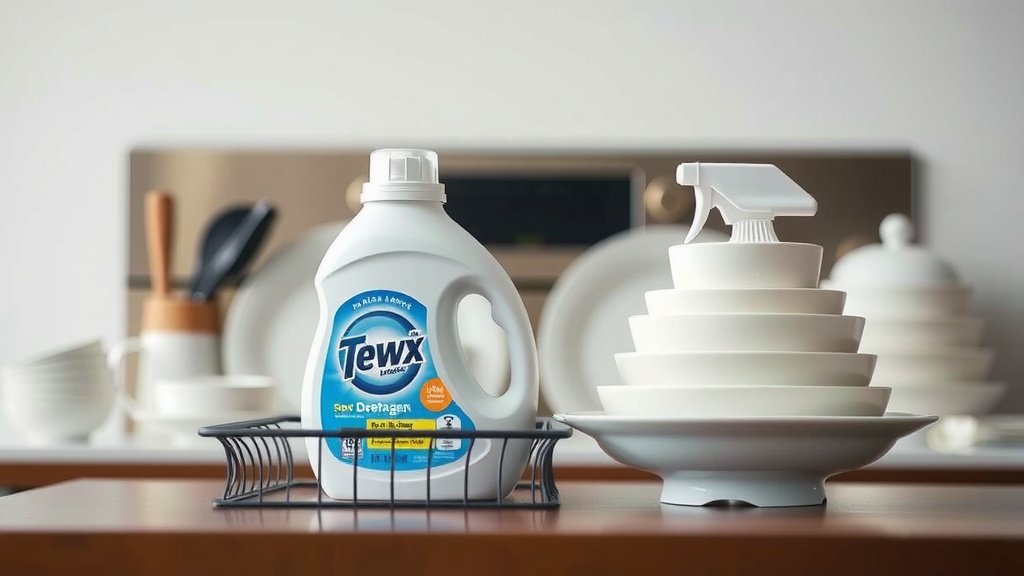
While not technically a detergent, rinse aid is your dishwasher’s best friend. It’s a liquid you add to a separate compartment. Its job is to reduce the surface tension of water. This helps water sheet off your dishes rather than forming droplets.
We found that rinse aid significantly improves drying. It also helps prevent those dreaded water spots, especially on glassware. If your dishes are coming out of the dishwasher still wet or spotted, a good rinse aid can make a world of difference. Many experts recommend using it alongside your regular detergent (Appliance Magazine).
Making Your Final Detergent Choice: A Quick Checklist
Still feeling a little overwhelmed? Don’t worry! Here’s a simple checklist to help you narrow down your options and make a confident choice:
- Check your water hardness: Do you live in a hard water area? If so, choose a detergent formulated for it, or plan to use rinse aid.
- Consider your typical load: Are your dishes usually lightly soiled or heavily baked-on? Opt for a stronger formula if you often deal with tough food.
- Evaluate convenience vs. cost: Do you prefer the ease of pods, or are you looking for a more budget-friendly option like powder?
- Look for key ingredients: Detergents with enzymes and good surfactants are generally more effective.
- Read reviews: See what other people with similar water conditions and dishwashers are saying.
- Don’t forget rinse aid: Even the best detergent works better with a good rinse aid for drying and spot prevention.
Conclusion
Choosing the right dishwasher detergent boils down to a few key considerations for your specific needs. We found that a quality powder or gel often provides excellent cleaning power, especially when you account for factors like water hardness and the type of food residue you typically deal with. Remember, understanding the role of enzymes and surfactants can help you spot effective formulas. Don’t forget the power of rinse aid for that final shine and spot-free finish. Your next step is to look at your water and your dishes, then select a detergent that addresses both for the cleanest results possible.
Frequently Asked Questions
Can I use dish soap instead of dishwasher detergent?
No, you absolutely should not use regular dish soap in your dishwasher. Dish soap creates a lot of suds, which can overflow your dishwasher and create a mess. Dishwasher detergent is specifically formulated to be low-sudsing and to clean effectively in the high-pressure environment of your machine.
How often should I replace my dishwasher detergent?
The lifespan of your dishwasher detergent depends on its type and how frequently you run your dishwasher. Powder and gel detergents can last for months, but liquid formulas might evaporate or lose potency over time. It’s best to store them in a cool, dry place and replace them when you notice a dip in cleaning performance.
What does “hard water” mean for my dishwasher detergent choice?
Hard water contains high mineral content that can leave spots and film on your dishes and inside your dishwasher. If you have hard water, you’ll want to choose a detergent formulated to combat mineral buildup, or ensure you’re using a rinse aid with every cycle to help reduce these effects.
Are dishwasher pods better than powder?
Dishwasher pods offer incredible convenience and pre-portioned amounts, which many people find makes their lives easier. While they are often effective, powder detergents can be more cost-effective and allow you to adjust the amount based on your load size, which can be helpful for lightly soiled dishes.
Do I really need rinse aid if my detergent says it has rinse aid in it?
While many detergents now include rinse aid, using a separate rinse aid can still make a big difference, especially if you have hard water or notice spots and poor drying. We found that an additional rinse aid boosts drying performance significantly and helps prevent water spots on glassware, leading to a better overall clean.